In conversation
Bringing Aboriginal voices into social policy
Sam Alderton-Johnson introduces the Impact Policy Podcast and its focus on lived experience, professional expertise and Aboriginal voices. He connects his work in youth justice and out-of-home care to the challenge of measuring outcomes that matter to communities.
Co-design beyond consultation: entering a changing river
Sam describes how public-sector work exposed him to both meaningful design partnerships and consultation relabelled as co-design. He introduces a river metaphor that explains why each project must respond to changing people, communities and circumstances.
Putting the most affected voices first
The conversation connects accessible research with the need to adapt participation to individuals. Sam explains how beginning with young people in prison gave their perspectives weight in later community discussions and helped redistribute decision-making power.
What power are designers willing to relinquish?
The speakers distinguish participatory co-design from consultation that leaves decision-making authority unchanged. A research-session anecdote shows how client assumptions about relevance can silence the concerns participants consider important.
Relationships, constraints and honest expectations
Sam argues that relationships and trust must precede design, while fixed budgets and predetermined outcomes can prevent meaningful participation. The discussion examines how public-sector agendas and commercial profit requirements constrain which ideas receive support.
Co-planning creates room for community priorities
Sam advocates developing project plans with communities before timelines and priorities become fixed. He describes a response to the Bowraville murders in which relationship building consumed the original six-month schedule, requiring leadership to support a much longer process.
Designing research methods with participants
An audience contribution describes the difficulty of building relationships for an education project with disadvantaged families in Pakistan. Sam then explains how involving court participants in evaluation-method design strengthened trust, participation and the quality of subsequent research.
Making participation safe and building local trust
Sam addresses recruitment barriers, masking and invisible disabilities through trauma-informed and strengths-based practice. The conversation explores trusted community intermediaries, local protocols and the relationships practitioners can build beyond individual projects.
Repairing research relationships through community agency
The speakers examine why institutional authority can undermine credibility with communities that institutions have harmed. Sam describes a domestic and family violence project whose participants chose a braided methodology combining academic evidence, community case studies and lived-experience stories.
Who controls the stories researchers take away?
A visit to Roebourne illustrates the importance of listening and respecting community concerns about representation. Sam explains how researchers exercise power through interpretation and reporting, and why collectively held knowledge demands accountability and returning findings to communities.
Q&A: sustaining relationships after the project
An audience member asks how designers maintain momentum after leaving a community. Sam identifies ongoing communication as essential, using a community-requested monthly newsletter to show how modest commitments can sustain relationships and explain progress.
Q&A: cultural governance and decolonizing design
A question about Indigenous researcher involvement leads Sam to explain cultural governance and accountability beyond the consulting team. The discussion connects meeting people in their own settings with decolonizing design and recognizing multiple valid ways to participate.
Q&A: shared benefits and community-defined success
Sam responds to a question about lasting capability by explaining how co-design can deliver benefits communities identify beyond the original project scope. He argues for defining evaluation criteria with communities from the beginning, so their understanding of success shapes future decisions, before the conversation closes.
So welcome, Sam.
Yeah. Welcome. Thanks for having us.
Real pleasure. Now can you tell us, just to begin, tell me a little bit about the podcast? Yep. What do you cover? Who do you who do get out to?
Yeah. Great. So we run a podcast called the Impact Policy Podcast. It's our first time recording a live episode of that, which is really exciting and cool everyone gets to be a part of. But basically, Impact Policy is a social policy consulting firm, so we really try and bring people into those episodes that have lived experience, that have professional expertise, so we can really try and unpack a lot of that sort of stuff.
I'm an Aboriginal man that grew up here in Glebe and Redfern. My family's from the Ewan nation down in Eden. And so a lot of our episodes have a really strong representation of Aboriginal voices at the forefront of how we start to really think about some of the some of the biggest sort of social policy things that we're trying to navigate, today.
That's awesome. Yeah. How many episodes have you done so far? It's been a few.
Yeah, man. We're up to episode 55.
That's great.
Yeah, we're going well. We're going well. Yeah. It's on YouTube. It's on Spotify. It's on Apple. We've got really a number of episodes that are specific to the design sector as well. So we do a lot of work in co design. And so we've got some amazing practitioners, far more experienced than me, that have shared their expertise in there, and a lot of people have have referenced that as really valuable learning resources as well in terms of connecting that to, yeah, the work on the ground.
So it's been good.
That's great. You've been here for the day. Has anything sort of jumped out or stood out for you, amongst the talks? I know, like, we were talking during one of the breaks, but what are you what did you wanna pick up on?
Yeah. Look. Was a bit nervous coming in here to speak today because, yeah, a lot of the work that we do is in is in social policy, and it's in, you know, very much working with community on the ground. Our most recent work is around working in prisons with kids coming out of jail and trying to design services post release to support young people's transition back into community.
We're doing research around evaluation design, and we're doing a lot of stuff in foster care and out of home care. And so coming here today and looking at the program, I sort of thought like, oh, I really hope that I can add some value to the audience because, you know, maybe there's not a lot of people here that work in social policy in terms of design.
But we're listening to the talks. There's so many threads that connect across. Know? A real constant theme around measuring what matters has been really, like, really significant for me to hear and to take away from. You know, we have we have a we have a real crisis today in in in Australia in terms of the out of home care system. Yeah. Particularly in New South Wales, have more kids removed from their families than at the height of the Stolen Generation.
Per capita, we have over thirty percent of kids that are taken from their families are taken because of issues around neglect, which when you dive a bit deeper into the statistics, it's it's it's more issues around poverty and disadvantage. So that but that's widely accepted in the sector. The minister's really committed to reforming that that that sector, so we're a big part of being involved in that journey.
One of the presentations, again, talks about, you know, measuring what matters and how do we look at metrics around, you you talk about user experience, well we're talking about kids coming through an of home care system and what's that experience look like and how do we really measure what matters when we talk about that journey designing that sort of trajectory for young people too.
When you talk about kids coming out of prison, I mean, that whole sentence is fucked up. But what, like, what ages are we talking about?
Yeah. Look. Kids from as young as 10 can be put into custody. You know, so the majority of kids sit around 15, 16 years old. The work that we do in that sort of space really came about so before impact policy, we sat in the public sector, And I don't have a design background, but I was a social worker for a long time.
And there's this real friction, I think, for blackfellas in community that for so long we've been designed for rather than with. And we see the manifestation of that with, you know, a range of social issues that we experience today, whether it's, you know, the life expectancy of our people, whether it's over representation in prison, whatever that might be. But in government and in the public sector, my introduction to design was procuring designers to come in and work with us around how we would design the very projects we're working on today. And some of those early experiences were fantastic.
Amazing designers came in from a social policy lens that really brought people together and really meaningfully designed great outcomes. But I saw this trend where suddenly co design became co opted into every second project being labeled a co design journey when almost it was anything but. And we reflected on that a lot, particularly as black fellas, and we felt that a lot of that was connected to the history of over consultation of our people and the fact that often that over consultation would lead to fatigue, lead to little change, then would heighten the challenge with engagement with our communities.
So then co design came in as almost this this magic bullet, you know, this Trojan horse, but it wasn't really, achieving that sort of stuff. So we fell into that world almost in spite of
it Yeah.
And really tried to champion what does what does meaningful co design really look like. And so at that point in time, there wasn't a lot of aboriginal professionals pushing that and and and driving that. And a lot of people would come to us and say like, oh, other designers in the sector, other people in the public sector, and they come to us and say like, oh, can you give us you know, you've got to give us a blueprint or or a a process map.
How do how do we do this co design with with with Aboriginal people or with with any any communities?
Yep.
And we wrestled with that for a long time because it was a real friction for us because we knew that no co design project should look the same. They should always look different. Because each community is different. Exactly. And that yeah. And it's not specific to our people. It's all communities, right, when we think about co design.
So we sort of sat with that for a long time. We and we come across this quote about the river. And it's this idea that you never step into the same river twice because both you and that river are in a constant state of change. And we loved that, you know? It lent into that lens for us as blackfellas in terms of connection to country, but it really connected a lot of dots for us in terms of how we thought about community and design.
And so that became our sort of framework for how we built out talking about how to think about co design. So now we do a lot of work, particularly, you know, a lot of people have talked about research. Yep. And thinking about how we think about research design, so we start to think about, you know, co designing research, how we start to think about how we plan for project work, you know, whether it's UX world or not, and starting to use that framework that we've got to talk about that more.
Yeah. I'm pointing to Chandra Harrison up there. Hello. Who spoke really well yesterday afternoon about a program of research around air travel and and what it's like to travel with varying disabilities Yeah. In an environment that's really not well designed for any of a whole host of conditions.
And and it was it was a lovely case study that you gave us yesterday, Chandra. Thank you for that. But it's interesting. The one of the things that I took from from that work and from that that project was the degree to which the program itself needed to be tailored and customized to the individuals that you recruited.
So, yes, you were recruiting a variety of different conditions and and and different, needs, but subsequently looking at it and saying, well, now that I've got this person, now that I've got this person, I need to tailor it. I need to shift my expectations. Our timing needs to be different. What we can expect needs to change. And I think that was really, really good lesson for the audience yesterday, and I'd encourage everyone if you can and when you can to have a look at that talk.
It's such an important point, and it comes back as well to the the talk just before us as well around lived experience and really embedding lived experience into the design journey. We're really bullish around making sure that that's at the forefront. When we talk about the river, we talk about the pebbles of the river, and we use pebbles as a metaphor for lived experience, you know, when you're about to step in the river, you're stepping across a range of different pebbles, but no pebbles is the same.
And it's the same when we think about our communities. A lot of people think about community as this homogenous group. Same thing with Aboriginal communities, and we've consulted with community, but what does that mean in the design journey? We talk about the prison system work that we're doing. When we started that, we sort of said we really need to be hearing from young people in terms of what we're trying to design. They went, yeah, that's fantastic.
Let's hold a workshop at the town hall or let's do some stuff in the high school. Like, that's that's amazing because your voice is so underrepresented in the design journey anyway. But we had to we had to go we had to go like, woah. Actually, hang on. What we're talking about is actually really making sure that the voices of the young people that are the end users of what we're trying to design together, that they're at the centre of these conversations. Know?
Because those young people in prison, they couldn't be part of the rest of the design journey alongside the broader community. So starting with those voices of kids in prison made sure that when we went and had those conversations more broadly with community, that they were informed by those voices and those voices had weight. That when other people outside of those outside of the kids in prison said, oh, maybe it should look like this or maybe it should be based there.
We had the ability to give those kids a voice and go, yeah, that might be really valuable, but what we've actually heard from these fellows out of Grafton is that, like, this is actually really important. And straight away, you see this there's this massive friction around co design with power
Yeah.
And who's holding power.
Yeah.
And that was an opportunity for us to actually try and really rebalance a bit of power and give that back to the young people in the process that were the most disempowered, but ultimately, ones that were gonna be impacted by the most throughout that design journey. And I think the the talk before us and, obviously, the case study as well, it really helps to reinforce how critical that is as well.
I think, Kaya Macurscher in their work around codesign and participatory methods and cocreation of services sort of sets out this idea that there are six levels of codesign. And what you're describing is up in that sort of fifth or sixth realm
Absolutely.
Where you've got a real shift in the power dynamic and who controls or who ultimately decides what gets delivered out into the world. And how much say do we give give, but how much how much of that power ends up in the hands of Mhmm. The people who are actually gonna be most impacted by it.
And a lot of what gets called co design Yeah. Is only in the research phase. Mhmm. It's more consultative than really participatory methods. Mhmm. And it ultimately doesn't influence and doesn't allow that power to shift in ways that really gives them a say or in, you know, much more than a voice or input into that process.
Definitely. Like, if if you're a designer in this room here and you're, you know, you find yourself in the co design world and on a project journey, the ultimate question is, what am I willing to relinquish as part of this journey together with community? Mhmm. You know, what power am I willing to give up? You know, my my organization, my team, my own, you know, design, lens might see a path forward, but the community I'm designing alongside might see something different, might identify something different.
And am I am I willing you know, what what parts of this journey am I willing to let go as part of that? And I think the friction that we find, we work, you know, 90% of our work is with the public sector, so the most inflexible, you know, predetermined sort of place that you could try and design alongside. But when we've seen the most success is always when those public servants or those leaders recognise that, and they pivot, and they respond and do that.
And where we see the most detrimental impact is when and that's where co design becomes harmful, is when we keep calling it co design, but we're not relinquishing any power in decision making. Yeah. We're just expecting people to come sit with us
Yep.
Consult with them. It's you know, it becomes just a consultation and engagement process Yeah. Too. But yeah.
I had a funny moment in some research recently, but someone from the client organization sat in on on one of the sessions. And, you know, like, we had research objectives. We had topics that we were sort of trying to cover, this kind of stuff. I asked a question, and the person went down a path of talking about that topic Mhmm.
Which was not in in the observer's mind Mhmm. Relevant. And you could see them get antsy. Right? Like, I could see them visibly getting antsy. And after the session and I didn't I didn't interrupt the participant. I let them talk about it because it was clearly of interest and relevance to them.
And this is the point. I asked a question, and they responded in a way that made sense to them, and I allowed them to respond. And afterwards, the observer was like, why did you let them just rabbit on about that thing? You know, like it wasn't relevant. Like, we're not interested in it.
Who fucking cares?
But that's that's
It's up to you in that moment to decide what's Right? Like, that's you imposing your idea of what's important on them. And that's, like, step one, I think, in co design needs to be what's important has to come from our audience.
Well, it's also even deeper than that in terms of it's relationality, you know? This is relational work, and that precursors the design journey. You know? When you come into Aboriginal communities, when you come into, you know, communities and you're doing social work, before we even start designing together, we to know each other, have to like each other, we have to trust each other before we go on that journey.
As black fellows, I have to know, who's this person from? What's their intentions? How can their work help me? I'm not interested in does this person have a PhD? Does this person graduated from the best design school in the country? Could not care less.
Yeah. I saw that post of yours
that other day. I ruffle a lot of academic feathers. I'll tell you that. Yep. But
Yep.
You know? And I'm not anti the academy either. But that's the reality on the ground, and that's why it is so relational, this work. And that's where the biggest you know, I will lean into the public sector because that's the majority of our work, but I recognize it might not for a lot of people here. But that's where they really struggle is because, you know, they're stuck on super tight time frames, predetermined budgets, ministerial agendas, and the most well meaning designers and public servants trying to do the right thing and just hamstrung, you know, in in those sorts of settings.
And so they hear Yep. Like you heard, you know, old uncle or someone saying something, and it might not absolutely be relevant to the design process and journey. And they're getting they're feeling the frustration of those constraints. But that's what we talk about when we talk about someone talked about the conditions for design.
Yep.
So, like, that's when we're making an assessment around the co design journey, these are the opportunities for us to actually sit there as designers and go, look, we started calling this co design, but really, like, the conditions that exist here are telling us that what community actually are here for is a really appropriate and, accessible consultation process.
Because we've already predetermined what's happening at the end, so we're not really designing anything together. Yeah. So let's build those conditions as opposed to keep trying to force this co design rhetoric when it's, you know, what what's in reality might look different.
Mhmm. Yeah. People who work in commercial environments for for profit organizations will be familiar with this idea that, one of the first hurdles that an an idea essentially has to pass is whether or not it's financially worth it to the organization. And a lot of good ideas never make it out of, you know, like, never get beyond a Post it note kind of thing because there's this sort of very rapid sense of, we're not gonna make any money out of that.
Can't there's no profit in that one. Yeah. So let's let's not waste our time exploring that idea because, you know, like, it'll never fly. And it's worse if you're actually eating into the profit. So let alone being profit neutral or cost neutral, but if you're potentially eating into the profit of a profit making organization, well, then that's even worse.
Yeah. Yeah.
So hands up who's run into that type of scenario where I did yeah. I didn't think I'd be alone. Yeah. And it's frustrating. And it's frustrating to sort of be in an environment where you know that the range of ideas that you can ultimately act on aren't being judged on the basis of merit or the resources available, but are really being judged on the basis of can we make money off this or not.
One of the things that I've been writing a book, and one of the things that we sort of talk about in this book is the way in which our our model of our economy and what we accept as being normal in a sort of neoliberal capitalist society that we're in is that the decisions on what gets done is largely shaped by whether or not someone can make money off it Mhmm. And not whether or not it's actually a value not whether or not it's of use or necessity even sometimes, but whether or not someone can turn a profit from it.
And we're in this sort of really wild situation increasingly where despite the evidence that says we should be doing one group of things because they're noneconomic and non, you know, nonprofitable, we're just not doing them.
Yeah. Yeah.
So, you know, large swaths of the of the population over here are crying out for them, but people who control access to the funding to do them, I mean, well, there's nothing in it for me, so we're not gonna do it.
Yeah. It's almost the polar opposite in some ways in some social policy spaces because we've got this plethora of evidence that reinforces how much money taxpayers waste, you know, for example locking up kids, that doesn't reduce offending. You know, we have all this evidence that really supports and reinforces what we know to be true and what can really invest and reduce those risk factors around some of those broader social factors that we experience.
But, you know, more of a political environment controls some of that agenda, yeah, we see that play out. But I think if I come back and think about some of the stuff that I've been hearing today and thinking about that through a co design lens, thinking a massive experience that we have, you talked about KAYM at Kirch's sort of six stages of co creation that that they talk about, and one of our podcast episodes is with them, and it's one one of the ones that I I referred to. So if you do get a chance to check out any of those episodes, that's the one as a designer that you'll get the most value out of.
But they talk they talk about those six stages, and one of them the first one is co planning. Yeah. And I love that, right, because we go and we deliver training in the public sector around co design, and the first thing we do is like, people will talk about all the problems and challenges with co design and and what they're trying to wrestle with.
We go, put your hand up if you've ever written a project plan, and everyone puts their hand up. And that's mad, like, you've all done a co design project plan. Now, put your hands up if you've ever designed a project plan alongside the communities that you're intending to do this work with.
Hands go down.
No one puts their hand up. And I go, okay. And then so, like, we're talking about these challenges around timelines, budgets, priorities, and all that sort of thing. What we can see is this massive opportunity at the forefront that again comes back to that core point around relationality Yeah. And relationships first, and and and really investing at the front end before the design journey even starts in terms of communication, engagement, and relationship building, and using that as the precursor to design.
And starting with, you know, co planning together and deciding together, sharing that agency and autonomy with the community that we're trying to design with and letting them determine, like, you know, obviously, there's there's constraints organizationally or whatever, and sometimes that can't change. But more often than not, there is the opportunity for us to unpack and understand at the forefront, like, okay.
Community, you're telling us it's gonna take six months. We only you know, you can unpack that stuff early. And, the biggest impacts that we've ever seen is when we've been able to do that at the start. And if we haven't been able to do that at the start, we've had leadership that's recognized the investment in terms of being able to pivot and not being, like, like, glued to a project plan like it's a binding contract that if it shifts, you know, like Yeah. The whole world's gonna explode.
Yep. Yeah. We're seeing bigger stuff. Yeah.
It won't explode. Yeah. Well, we could quite happily shift their timeline if their priorities change. So
Totally. Well, we came into a, there was this case in Boureville, and it's a thirty years ago, three kids went missing and were murdered within the space of three months. Mhmm. It's it's a very famous case. You can Google it. There's a stack of stuff. It went to the High Court of Australia less than ten years ago. It was the first case to ever test the double jeopardy laws in Australia that exist.
Our job coming in there was off the back of the parliamentary inquiry to co design a whole of government social policy response for that community. And they said, You've got six months to do it. And I was like, Wow, six months, that's amazing. I'm used to like six weeks, like this is going to be incredible. And so, you know, without going through that whole journey and that whole process, it took us six months because of the community we were going into, the history, the trauma, that justice journey was running parallel to our social policy agenda around the co designing this response, it took us six months to build a relationship to understand how to do that work and design that work together.
Luckily, because of the leadership and resources, you know, it blew out to eighteen months, and we had the investment to do that. And that's an extreme response, but it's just an example of how, if we're designing with communities, that piece at the forefront before we even start this design together is just so critical. Yeah.
Who has, sort of undertaken research where there is that much investment in relationship building with an audience before the work begins? Like, where we're talking weeks Bhavan? Yep. At Transwood. Yep. Okay. Last one?
Some work with the British Council for kids who have been out of school.
Okay.
And we wanted to use technology to bring back to some level of education for them. But even talking to them, I think the hardest challenge was how do we convince the families? One, the education is important because the kids there are so disproportionately poor and disadvantaged. They're daily wage workers and the parents would rather want them to work on a daily wages, do whatever make the living and not study because study is a cost, education is a cost, whereas the other one is the income for them.
So engaging with those communities, and the scale was so big, we're talking about more than the entire population of Australia for the number of kids out of school in Pakistan. It was quite an overwhelming task for us in that sense to build those community relationships. And I wouldn't say that it was a 100% success because it was a massive project, but we were able to influence at some level.
On the flip side, who's been involved in research activities where the relationship building is something along the lines of, Steve, this is David. He's your 04:00. Yeah? Certainly. Yes. A lot more hands. I mean, that investment is a complete shift in the way, like, a lot of sort of the research part, and certainly the research occurs, you know, towards the front of these projects.
Mhmm. It's a it's a complete reversal of the way in which the, you know, the whole program is laid out.
Absolutely. Absolutely. And it can be it can be really easy for for us as designers, for teams to look at if we use research as an example, to look at the project as a whole and just make the decision or the assumption that, well, this research can't be co designed. There's too much things that you know? And we've experienced that in practice, but if you actually look a little bit more deeper, maybe there's some significant parts of a research project that can be co designed, and that can share the most power and agency as well.
So, for example, we're evaluating prison court project. It's an alternative court in the Downing Center. And they came to us. There's a quantitative part of that journey, and they came to us and said, we're going do a qualitative evaluation of its success, but we really want to co design the method. Right. You know, we can't co design the whole evaluation, but we wanna share as much decision making around how this should actually happen.
And so same thing, we went and spent time in the cells underneath the courthouse, interviewing the people around how that sort of stuff should happen, all the stakeholders. And so at the end of now we're in the data collection phase right now. But the trust, the participation, and the quality of the data that we're getting is so much stronger because the people that we're going back to speak to, they either helped inform how the evaluation was developed or they know someone who's like, yeah, now we've seen them fellas, they came and spoke to us and yeah, they're here to do this.
It's, again, it's a relationality thing because they've they haven't just I'm not just some random that's popped up and said, hey, man. I'm evaluating the court. Tell me your life story.
Tell me about it.
It's like, no, like
What brings you here today?
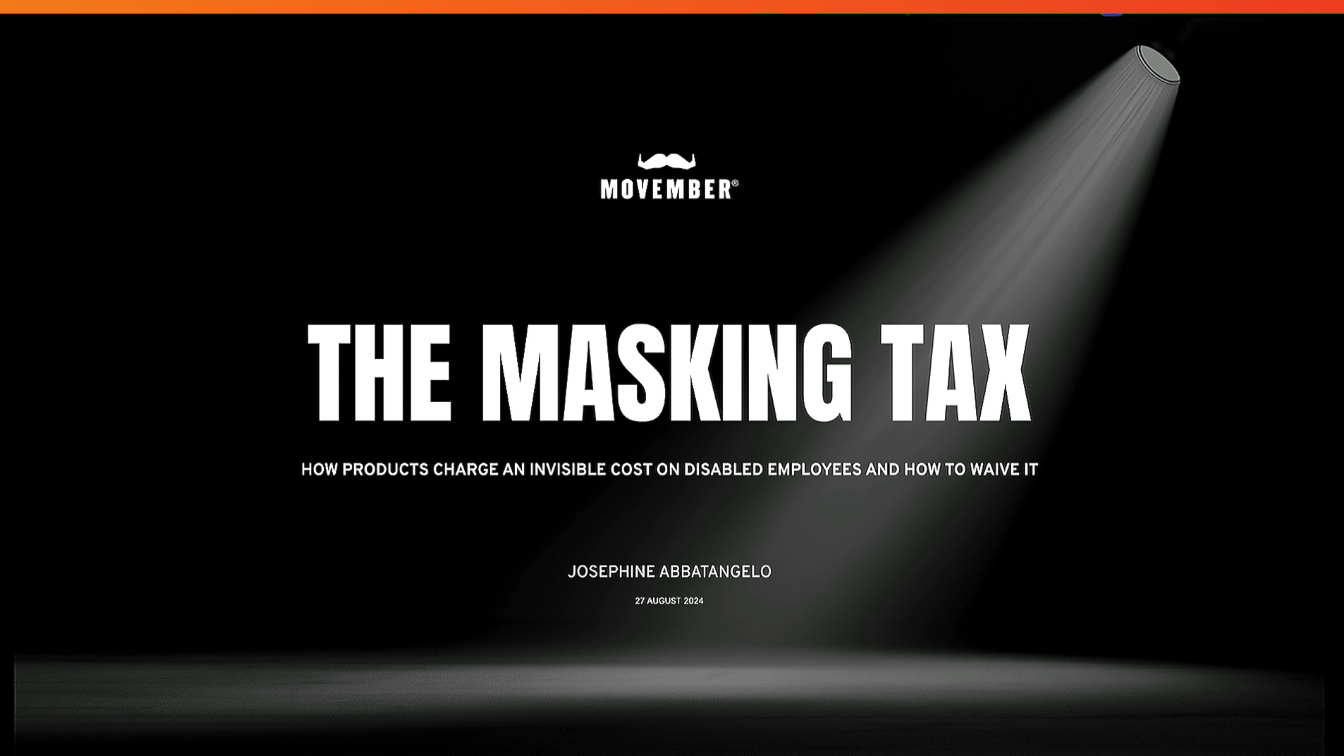
You know, like, Maz spoke to them last week or, yeah, Gabe, he he he helped them know what they're doing, so, like, yeah, trust them. Like, they're right. Share your story. Yeah. And, like, the data we're getting is so much stronger because of that. And, again, it comes back to, like, power and agency and voice, you know. Like, We're not just saying you can only do this one way, and I think we talked about the masking stuff in the presentation before us and really making sure we're designing stuff with those sorts of things front of mind too.
That that that's what's critical. And so I guess my message is, like, I've heard research come up a lot
Yeah.
And this is a co design yarn, but, like, there is opportunities to take that mindset to how you think about that work. So if you're designing a user experience journey and it's a research project, and you're thinking about the end users, well, how can you bring their voice into the research journey and maybe have them inform some of that sort of method for how you understand the success or how you test, you know, whether this is viable to proceed.
But, yeah.
Josephine made the point that it can be like, the way in which we recruit can itself be a filtering mechanism where we start to lose voices Mhmm. Before we even realize that we're losing voices.
Absolutely. Can
you like, how do you how do you deal with that aspect of it?
Yeah. I think that that one jumped out at me particularly because from the from that masking perspective, particularly, when we're working on social policy, when we're working on, you know, really complex community disadvantage and stuff like that, we know that there's a really significantly under diagnosis of people living with mental health, living with neurodiversity and different things like that that might impact participation, that might impact having their voice heard. So, look, people are masking, they've got invisible disabilities, how do you, you know, how do build the conditions to make sure that you can maximize that as much as you can?
For us, it's really about trying to have the most strongest principles around how we do this sort of work. One of them for us is around being trauma informed.
Yep.
And that's a significant principle to how we approach all the work. And that can look like a range of different things. It can look like how we set up a space. It can look like our language. And there's other things there around doing no harm, being strengths based, and a range of other factors that we think about too.
But it comes back to that process or I guess that frame for co design being a fluid process and journey that we go on when we think about design, and that people will fit into many different spaces and places, but each voice is as significant as the other.
Yeah.
And so, again, every project looks different, and we talk about getting into the river, but it's about bringing those principles to the forefront of that design journey, Nafin.
In at UX Australia in 2011, I think it was, a design researcher by the name of Lisa Harrison gave a talk, on doing design research with sort of subcultures within Sydney. And the one that she spoke about in particular was a graffiti culture, and the way in which you approach a group who are engaged in an activity that sits in a gray area as far as the law is concerned and are often in places where they're not, you know, supposed to be, and engaging in activities that they're not really supposed to be engaging in, but which is also a very legitimate, subculture and an important cultural group to understand and engage with. Mhmm. And she spoke a lot about the need to gain trust, to establish confidence and credibility, and the ways in which that happened were often through trusted, third parties or trusted gatekeepers into that community, so people who would vouch for you.
So you talk about, you know, that relational aspect of it. You know, I'll talk to you because you were, you know, such and such spoke to you, and and they've vouched for you. I can imagine that when you approach community, there's quite a protocol in place around how you go about doing that.
But there's probably sort of lessons there that can be more broadly applied to any group.
Absolutely. The same rules apply for us as as aboriginal designers. Each community and country is different. There can be an assumption that we can walk into any aboriginal community and people will just roll out a red carpet. You know? Like, the same rules apply for us. People have to know who we are, where we're from. Someone vouches that, you know, he's proper.
You can have a yarn with him. That's fine. You know, that sort of stuff is just as significant. And it's one of the biggest questions that we get when we talk about co design is people say, like, whether it's Aboriginal communities or the broader community, people will say, like, how you know, we've only got x amount of time or x amount of space.
Yeah.
You're talking about relationship building. Like, how do we do that? And and that's one way, like, trying to identify people across the community that are connected, that you have a relationship with, that can bridge a gap. Mhmm. But the others as well is thinking about this sort of stuff as long term relationships and connections.
Yep.
So we we, you know, again, I'm I'm always gonna bring it back to aboriginal communities, but no matter where you are or where you're based, you know, or what your design sort of, you know, area of expertise is or focus, it's about making sure that you're starting to think about what what does my own relationship with community look like, with communities look like across that spectrum of outside of my nine to five job.
Yeah. You know? And so we really encourage, like, you know, people come to us and they're gonna talk about, like, well, how do I strengthen my relationship with the Aboriginal community? It's like, what does that look like for you in terms of the community or country that you're on? We ask people, do you know the name of there's all these people blowing up about Welcome to Countries and all that sort of stuff, and however anyone feels in that room doesn't really bother me.
But my biggest thing I say to that is, do you know the name of the country that you're on right now? Do you know the name of the country that you were born on? Do you know the the country that you live and raise your family on? Our country is made up of like, hundreds of different Aboriginal nations and cultures here.
And when we encourage professionals and practitioners to start to understand that they actually have their own inherent connection to Aboriginal country that might look very different across the spectrum of people in this room, and that's beautiful. Yeah. You know, Aboriginal people have custodianship of country, but every single person in this room has a connection to country that is very unique to them and their lived experience and their family's journey and lived experience.
I should be proud and celebrated. It's not a diverse or negative thing. It's about collective strength and pride as a nation. You know? I'm digressing a bit because I get passionate.
No such thing.
Yeah. But I'm coming from a strengths based perspective. Hopefully, you're taking that out for anyone who's, yeah, on the other side. But, yeah, so, like, that's that's what we encourage. We encourage people to think about their their own design journey if they're thinking about social and human and community based policy and and projects outside of how they exist as design practitioners in the nine to five world. And that sort of stuff hopefully will flow into how they build better relational practice and how they can connect more broadly with their own communities, hopefully ideally as well.
I know one of the things for me has been a recognition that, you know, historically, I would rely on an appeal to authority to establish credibility. Mhmm. Like, I'm you know, my client is the government. Therefore, you should talk to me because I'm here on behalf of the government sort of thing, or I'm here on behalf of a corporation that you have a service with or you know?
Like, it's it's that type of that's the way to establish credibility. I think it's your point around institutions and, you know, degrees or, you know, like awards and and that kind of thing, is that same sort of thing. But it's it's the attitude of a person who's never been let down by institutions. Yeah.
It's a person who's supported and protected by those institutions rather than someone who finds themselves too often on the wrong side of authority and the wrong side of the system. Mhmm. And so I might I might feel comfortable trusting in authority and trusting in the government, trusting in the police force and the rest of it, but there are well and truly groups out there that would not respond in the same way and have every reason not to. Absolutely. And I've gotta take a different attitude into those communities. Like, I just have to.
Absolutely. And I think that comes back to, traditionally, research design from a social perspective in our communities, but across a spectrum of sort of, you know, justice, health and different spaces and places. Communities have been let down and have been harmed. And so there is this challenge that designers can come in and we can experience as well, that friction when we come in to try and design together and go on a journey with community about the real pressure on our own shoulders to be like, fuck, I don't want let this community down again because it's already been a mission to get them to the table and they've already talked to us about, oh, we had this researcher come out and do this project and they said all this great stuff, we've never seen them again, so Los Alts gonna be with you bud, you know, and you sit there going, fuck, it's gonna be a journey, you know, like, but that's the reality, because these practices have been harmful in many different ways to our communities.
You know, research was a tool of colonization. Yes. You know, it was used as surveillance. It was used to gather information and data, not for our community's benefits.
Yeah.
Luckily, language from this country and place still exists today because of that surveillance, but we're the most over researched people on the planet and it's been harmful in many different ways. And so when we come in, we talk about research projects with community, it's not meant it's not, we're not met with open arms. And so co but co design actually is a really valuable practice for us to start to actually give that power back to our community. And it's a new conversation because our communities aren't used to having agency and decision making in these processes and journeys.
So when I talk about that method design around measuring what success looks like in the prison project, that's an example. You know, we delivered a project recently around domestic and family violence, and we designed that research project with survivors of domestic and family violence and practitioners in the sector, and they informed how that research project should happen. And how that looked at the end was very different to what Department of Communities and Justice had commissioned us for.
And that was a friction. They were our client, and they weren't happy with us because we had to vary our contract three times because it blew out of time. And community wanted what was called a braided methodology. They wanted academic evidence. They wanted community case studies around community organisations of what's working on the ground, and they wanted stories of lived experience.
And we got there as a result of giving our people agency in terms of determining what that research design looked like. But it's not an easy journey, not for faint hearted. Not good for business either, but that's another conversation.
A few years ago, I went on a a charity bike ride up the West Coast Of Australia, and as part of that, we stopped in the community of Roburn, which is up in the Northwest Part of Western Australia. And it was, like, two weeks before we arrived, and there was about 50 of us.
We were raising money for the Black Dog Institute to help fund research into mental health and and the role of exercise in, helping with mental ill health. But two weeks prior, that community had been all over the news due to stories of, domestic violence family and domestic violence.
And so we arrived in this town and and into this community with this sort of, you know, cloud hanging over them. And we were we were welcomed in, and we were welcomed in as people who were genuinely interested in listening. So and they spoke about how, like, when we, you know, we we rode into town quite literally, but we we we rode we cycled into town, we arrived, and they had this, thing set up for us. But the they were happy that we spent most of our time listening.
We
weren't, we weren't trying to tell them things. We weren't trying to solve problems for them. We weren't, you like, know, a whole bunch of stuff. We were there to listen. We were there to understand. I was fortunate enough on that, trip to be with Adam Goods. Mhmm. He went out and visited the prison that was nearby, spoke to, the men who were there, and it was men that he went and visited. There was a a very short discussion where some of the other cyclists were like, oh, we'd love to come as well. Yeah. And Adam shut them down and just went, no.
That's not gonna happen. That's not Yeah. This isn't a a show. This is you know? But it was interesting just the way in which the way in which the community was really concerned about what stories we would take away and how we would represent them and their stories.
And so there was a like, some tension there around the elders wanted to speak. Mhmm. And particularly, the female the women elders wanted to wanted to speak. They wanted their stories shared, and there was some hesitation from other parts of the community around, well, what would we do with those stories? And, again, like, actually establishing any kind of trust from them Mhmm. Had occurred months before our visit.
It was the only reason we were allowed in there, especially when it hit the news a couple of weeks prior, But a lot of work had gone into establishing that before we arrived, but it was the only reason why they really spoke.
The story based stuff is actually it's it's a lot of power that we have as designers when we go into communities is the stories that we take away. Yeah. You know, we're we're as as a society, we're battling this rhetoric across communities around how we talk about, you know, kids kids in custody, for all kids in custody.
Mhmm. But, you know, you you design a service for kids in custody and you learn really quickly that much of those kids in prison have come from the most you know, experience the most complex trauma, living with complex health needs that aren't being addressed, know, a range of factors and present as any other kid that you would see in a classroom that's just, you know, living amongst these conditions.
The stories that we take away when we go on design journeys with communities are really, really important because they either become stories that do harm or do no harm, and give communities a bit of agency back. Media and representation is probably one of the most powerful tools in terms of negatively impacting different parts of our communities as well. So we have agency as designers.
We hear stories, we collect data, we interpret data, we decide what becomes a finding. We write a report, we present it back, but it's like we have power in terms of how we elevate those voices.
Every step of that practice, Every
step. And I think you talk about the stories that we take away, traditional design centres one person or one team. In our communities we think of design collectively. We experience these systems collectively.
We share knowledge and we share knowledge and hold knowledge as a collective. And so, like, you know, you might might be leading a research project with our community and your your name might be on the paper or you might be the person that goes off and drives a lot of that sort of stuff, but for us that's collectively held for us as communities.
And so I think they create really important responsibilities for us as designers when we do step away from those communities, which I think is important for us to start to think about. When we do make those decisions around what we're writing and what we're finding, we start to really come back as well to those questions around accountability and authority.
Know, when you're doing research alongside community or designing, you know, user experiences with our communities, making sure that there is some level of accountability to speaking back to those people too, and presenting that work back and making sure that those communities have a voice in terms of what came out of that. Yep. Too often, the design experience in our communities is that people participate and they don't hear from that again.
And that's fracture because that impacts future great design work as well.
That's right.
Yeah. But, yeah.
I'm conscious that we've been talking. Does anyone have a question they'd like to pose to Sam? Okay. So a couple of hands went up very quickly. So if we could get a microphone just here and then Chandra over there. Did I miss anyone over this side?
Great. Alright.
Go, please.
Love your podcast and love your work, mate.
I knew there'd be one person.
I just wanted to ask a question. How do you build the conditions for momentum after you leave? Yeah.
Think the biggest conditions for momentum after you leave with the work that you're working on or just from a relation? Yeah. Yeah. From from a from a from from a personal and professional perspective or from, like, an organisational team sort of perspective?
Anything? Both. Yeah. Yeah. It's a great question because it actually come up this week. We're doing some work around some remote and regional engagement and community work that's been happening. And that was one of the biggest questions is what happens after this is done and people go away. And the biggest things coming out of those conversations were actually not neglecting how critical communication is to the design journey, to relationship sustainability for the long term.
And we often think about communication as secondary to design, you know, that it sits in this world, you know, like in that it sits in a sector outside of this sort of space. Same thing with the policy world. But we're really actually really loud about how important it is that that communication and relationship doesn't end when the project is taken off or when it has completed.
And so what that looks like is always gonna be impacted by maybe some different variables. But in the example with the community at the start of the week that I was talking to, the team didn't have capacity to keep flying out to Moray and Tabulum and to keep having those conversations. But what they asked was, you know, can we at least make sure that we have sorry, I'm trying to give context so that makes sense with what I'm talking about. They were going out to missions and providing services specific to the houses on those missions and reserves, and they wanted to know what the progress and journey is gonna be around what they designed in terms of what's getting built there.
And so they their their example is, yeah, we've done all this great work together. This is a rarity for working with this government organization. How do we know what's gonna happen moving forward? And the community sort of said, like, at at the bare minimum, can you just provide some level of communication in terms of where we go to from here?
And when I say that out loud, it sounds like a really basic and stupid answer, but far out, man, the amount of times we just finish a project and community never hears from us again
Yeah.
Until our managers have tapped us on the shoulder and said it's time to go back out, you know, is like 95% of the time. So, like, little critical things about communication and what that looks like. And in that community, all they wanted was they wanted, like, just a monthly newsletter that just came out to community and updated them on the progress of the works around what they designed.
A different community might look like something very different. So in that community, it's regional and remote. So that was the best mode of ongoing communication to strengthen that relationship after they designed that. Other stuff in maybe an urban community or working with young people might look like where we're utilizing social media or really utilizing, you know, web based platforms to continue that accessibility and connection.
It's gonna look very different, but my biggest message is not forgetting how critical communication is to the design journey and how it doesn't just end once we've, you know, completed what we thought we've needed to do. I hope that's valuable.
Yes. Chandra?
Hi. Excuse me. Kia ora. I'm Chandra. I'm from New Zealand. Just for a little bit of whanau natanga. We in New Zealand, we actually have a whole concept around that who are we and how we can connect before we can, you know, get on with any kind of conversation. I have two statements, if that's no.
One statement and one question, if I could. I just wanna acknowledge your other colleague that was talking about masking. I see you. I hear you. I agree with you. I do think that your point around the person that is best placed to find the answers and to ask the questions is someone who actually is part of that process.
So my question is, in New Zealand, it's actually really required if we're doing any research with ethnic groups, whether that be Maori or Pacifica, a Maori or Pacifica researcher has to be involved in that process. Is it the same here in Australia?
I mean, it's mandatory. Every university has someone to help them navigate this space.
Yeah.
So my question is, yeah, how was it here in Australia?
Yeah. It's not mandatory. We see more and more, you know, if we use research as an example, you see more and more procurement of, you know, Aboriginal organizations and researchers to drive that work, but it still happens across, you know, the spectrum of professionals and researchers in that space. What I will say to that is something that we're really invested in is actually what cultural governance looks like for us as Aboriginal people as well in this space.
Mhmm. But that goes that's just yeah. That's from a cultural governance perspective. But if I use governance as the example of around lived experience, if we're working on a research project that's around masking and it might be around neurodiversity, that we have governance in terms of guiding that work, and that's informed by that lived experience as well in terms of that process too.
So from a cultural perspective, we recognise as well that even as a aboriginal team that's doing research, we need cultural accountability. We need to be accountable to people outside of our organization because we'll present our findings back to a a government organization who will look at it, you know, with the light shining off of it because it's being produced externally by an Aboriginal consultant.
But we know the proper way is actually ensuring that we also have accountability as designers and researchers to the communities in which we're doing that work for too.
That's amazing. Thank you. One other thing is that what I'm hearing from you is it's about relationships. Right? You don't just walk up and say, to someone. You would follow it up with goodbye or I'll see you later. We found during COVID that one of the biggest issues was that reaching out to disabled communities.
A lot of people were reaching out to disabled communities with no understanding of that community, asking them to come to meetings, as you're suggesting, rather than going to them and meeting them in the place where they are at. And I think that that's one of the big things that I always take away is you can't ask a deaf community to come to a, you know, a town hall community.
You need to go to them at their meetings so that they feel more comfortable. You're the one asking for something from them, not the other way around.
Yeah, definitely.
So thank you for your work.
It's also come back to that, you know, bang on about that river reference, but like, you would have seen in the description for this yarn that a big part of it was about talking about decolonizing design. And you know, that's not like a that's not designed to be like a what I mean when I talk about that is, like, colonisation taught us that there was often one way to do things, and that was the best way.
That West is best, white is right, anything that deviated from the state was a deficit or different. What decolonization what decolonizing design reminds us and gets us to remember is that design can look like many things. Mhmm. And so, you know, the workshop and the post it notes and that sort of stuff is one way, but that's not always the best way. And going out to that community where people are, you know, know, living with a disability and meeting them where they are and doing that design work, how that looks best for that community is as equally as valuable as the thousand Post it notes, you know, in the workshop room as well.
And so that's just the message around remembering that there is more than one way to think about how we design together, and meaningful and proper design with our people should look different, and it should be representative of those communities and countries that we're on too. One
more question, Amit, go for
it. You. Sam, amazing work, heartwarming and great to have you here. Just pulling a thread on Rusty Benson behind me around what do
you
do once you leave? Like how does the program or the project and the thinking continue to go? And pulling on the thread from the amazing people at DKEN around playbooks, have you considered ways that you can leave repeatable frameworks, methodologies, co planning, whatever that is, and leave that behind for, I guess, not just the community they've worked with, but the others who are going to be coming after you to continue that research and delivery and so forth, so that it scales and people continue to Can grow and you share your thoughts on that or what you've done?
Yeah, the capability building piece, right? Like, we're coming back to communities, they're meeting us, you know, different to where we started with them. I think what you reminded me when you were talking about was we talk about shared benefits of the design journey. So we come to the community. If I use the river system reference, we talk about what comes out of the river mouth at the end of that.
And from a co design lens, that can look like many things. And, yeah, the motivation for a project may have been to design a service for kids sorry. I'll use I'll use a real example. Yeah. It might have been to co design the method for the evaluation of this court program. That's great. But what we learned in the co design journey is that actually what people with lived experience really wanted was they were happy to contribute to design of a method, but what they actually really wanted was for their voices and stories to be heard and for that to be shared so that, you know, hopefully, other young people wouldn't go down the same path that they went on.
Now that's out of scope to the evaluation. In that example, what we're able to do, the client supported and said, hey. Like, yeah. That's great. We've co designed the method and valuable. And what we really need to do is we need need to find the resources to actually support what they've identified as as important. And so I think what I'm trying to say is it comes back to actually thinking about co design together, looking like, you know, we have our own, you know, agenda in terms of what we're trying to do, but also accounting for the reality that there should be shared benefits for community as part of coming alongside on this.
And that's just one example, but I think, you know, that sort of stuff can be really critical because when you're coming back to community again, you know, there's a tangible thread around how you're connected. It's not just been a transactional design journey. It's it's been something that's been able to evolve organically and meet the needs of the communities that you're designing with too.
It's a privileged position, right? Not every team or organisation will have the ability to do that. But, there's a range of different ways that can look. So like you talked about capability, how do we build community up? When you come back, a big thing that we're talking about, and it come back to the UX lens in terms of research, is actually in the design journey talking about evaluation at the forefront.
So yeah, we might be designing something together, but ultimately this is also going to be evaluated. And what we traditionally see in design is, you know, we design something, gets implemented, and then further down the track, else comes in and tells us if it worked or didn't. The opportunity here at the forefront in this co design journey is actually to get our communities and peoples to inform what good looks like, measuring what matters, that theme that's been coming up throughout the day that I've been hearing.
And that's one really valuable way because when communities come back in to be designed with or co designed alongside, communities start to understand their own metrics of success and what that looks like and start to have their own agency and power over the evaluation process, which sometimes can be the most, you know, powerful or detrimental thing for our communities. The amount of things that come in and get cut because it didn't meet certain metrics, but then you speak to a community in the ground and go, hang on a second, that was actually really good because it did A, and C, but the evaluation only looked at D, E and F.
Yeah, I hope that's valuable.
That's what we've got time for, Sam.
Alright, thanks everyone. Thank you.
Now, do you want to sign off the podcast before we we stop? Do you want to No.
That's what I'm saying. Subscribe. But my if you do go on the YouTube, my, daughter's co opted my phone, which is logged into the YouTube channel. So you'll see about a thousand shorts from an eight year old
Awesome.
Doing TikToks. But if you ignore those and go to the podcast playlist, you'll find the full Sweetener. Stuff.
Alright. Thank you, Sam.
Thanks, guys.
People
- Chandra Harrison
- KA McKercher
- Lisa Harrison
- Adam Goodes
Concepts & Methods
- Lived experience
- Co-design
- Evaluation design
- Consultation fatigue
- Connection to Country
- Participatory methods
- Co-creation
- Relationality
- Neoliberal capitalism
- Co-planning
- Qualitative evaluation
- Masking
- Neurodiversity
- Trauma-informed practice
- Do no harm
- Strengths-based practice
- Community gatekeepers
- Appeal to authority
- Braided methodology
- Whanaungatanga
- Cultural governance
- Decolonizing design
Organisations & Products
- Impact Policy
- High Court of Australia
- British Council
- Black Dog Institute
Works
- Impact Policy Podcast