Unplanned Disruption: Mind the Gaps
When a Missing Train Becomes a Crisis of Confidence
Elise Loeuille introduces a three-year disruption program that grew beyond improving customer communication. Through a familiar station scenario, she shows how uncertainty leaves passengers struggling to decide what to do next and undermines their trust.
The Many Organisations Behind One Journey
Loeuille traces a simple bus trip through councils, operators, control centres and customer information teams. Disruptions add emergency services, resource shortages and urgent decisions to this network. She identifies coordination between these groups as the hidden problem behind missing customer information.
Four Gaps That Break Coordination
Loeuille identifies early awareness, system, organisational and meaning gaps as four ways coordination breaks down. Making these gaps visible changes conversations from defending individual responsibilities to improving customer outcomes together. She frames the response around shared visibility, shared language and shared action.
Mapping Journeys to Replace Blame with Empathy
Loeuille explains how familiar service design methods help teams understand their dependencies and make decisions together. Mapping customer stories alongside employee journeys exposes the pressures behind delayed information. Interviews with passengers, frontline staff and operations teams turn assumptions about other teams into empathy.
A Shared Language and a Monthly Practice of Action
Teams combine conflicting disruption models into a shared life cycle covering awareness, assessment, response and recovery. Monthly workshops give operations, communications and technology colleagues space to share challenges and solve problems across transport modes. Regular follow-up and prototyping help turn those conversations into changes supported by common definitions.
Turning Alignment into Better Disruption Information
Loeuille describes how roughly 100 people now work toward a common customer outcome through a coordinated program and governance. She presents three initiatives: round-the-clock disruption coordination, more consistent customer messages and more visible alert banners. Changes to the operating model and seating arrangements help information flow between operations, communications, frontline teams and passengers.
The Human Relationships That Keep Coordination Working
Loeuille reflects on how informal conversations over biscuits and coffee helped build a community across teams. Those relationships make it easier for people to call someone they know when the next disruption occurs. She closes by positioning service design as the work of creating conditions that help every layer of a complex system coordinate.
For the last three years, I've been leading an unplanned disruption program of work for Transport for New South Wales. And obviously, every time a disruption happened, I received 10,000 messages saying, this is not clear, what's going on? Can I go home? And I'm like, ah. So I need to call people and say, well, can they go home? Anyway, at the beginning, I was really thinking it will be a short project and I will improve the customer communication and it will be done. Unfortunately, it's been three years and it's much bigger than just the customer communication.
So this is what I would love to share with you today. It's the story became about our service design and complex organization to coordinate under pressure. I don't want to say that transport is very complex, but it's kind of complex. So let's start with something I'm pretty sure everyone experienced one day.
You're waking up in the morning, you're a bit grumpy, you haven't got a very good sleep, and you need to go to work on top of this. So you're trying to just rush to the train station, arrive at the platform, and you're like, where is this bloody train? You're looking at the screen. We call this speed because we love acronym.
You look at the screen, nothing. There is no audio enhancement. You're looking around, people are starting to look at their apps. Maybe they will see delay, but not much more, and maybe they will start to look at the news, look at the social media, try to find out what's going on. And this is where everyone starts to become a transport analyst.
Everyone tries to figure out, should I wait? Should I move? Should I give up? Should I start deeply regretting not to take an extra coffee to survive this one? And this small moment is very important because this is where disruption become a customer experience.
And it's not only the delay, it's the uncertainty. It's the lack of confidence on what to do next. And this is where the trust can raise or fall. Let's start with something quite simple, the customer experience.
This is where I started for my project, by the way. I said, okay, so for going from A to B, you're looking at your apps or you're not, if you know already where is your bus stop, you're taking the you're going to the bus stop, taking the bus, travel on the bus, arrive at your destination. It's quite simple.
But behind just this simple trip, there is an entire system. And what I want you to understand, it's that's why it's not only my fault, transport is not owning the full part of this system. You have other agencies, and it's kind of a mix of different agencies. So council is owning the bus stop, so it's not us. If the bus stop is not good, blame the council.
The curbs, the local road infrastructure are also council. Then you have the operator. So the operator are not transport. We have six different bus operator just for around Sydney. So yes, six operators, the light rail, the metro, I will forget one, the ferry, all these public transport are different agencies that we are working closely with.
And these people are owning the vehicle, the depot, the drivers, and, like, owning, managing, and the day to day service delivery. On top of this, they have a small room where we call this the operation center, where they have the bus network.
They can see their bus network and track their bus. This is? Problem, sorry, I had a mic problem. But what we have in transport, which is my best place, I always want to go there, it's called the transport management center. Well, you can't visit it if you're not from transport.
But it's a room, I think it's as big as this. Everyone is sitting in front of one wall, and on this wall, you have CCTVs, system to track every single mode, and you can really see the full state of transport. So you can see the roads, you can see the boats, and you can see everywhere everywhere we have a CCTV, you can see what's going on for the full network.
On top of this, transport is involved in service planning, contract, accessibility requirement, minimum service level. We have also customer information teams who update apps, website, screen and feed the third party communication. And all of this is just for this single trip.
It's just when anything, like nothing is going wrong. When something goes wrong, the complexity multiply, so you can start to have bus shortage, driver shortage, school services to maintain, accessibility needs, traffic condition, replacement bus and urgent customer communication to update.
On top of this, you have new agency coming to the mix. So if you think about it, like, unfortunately, we had two fatalities on the Cinerborg Bridge recently. The first people who are on-site are the paramedics and the firemen and the police. So all of these people are trying to keep the place safe, close the road, and keep people away from that.
So they are very, very a big stakeholder for us when it happened because they have to call transport sometimes. If there is a fire, transport will take some buses from the network and just evacuate civilians. So it's really, we need to have a good relationship. We have some people who are also from the ex policemen who are just dealing with this communication.
So it's really a complex system. It's not just a bus trip, it's a real network of teams, asset, contracts, system and everything needs to be done in real time. And when I started this project, something became very clear very quickly.
Everyone works pretty hard to keep the network running, to keep the customer informed. But everyone is looking to the problem in a different way, and this is really what we are not seeing straight away. We are seeing the customer communication. I don't receive any information on my apps.
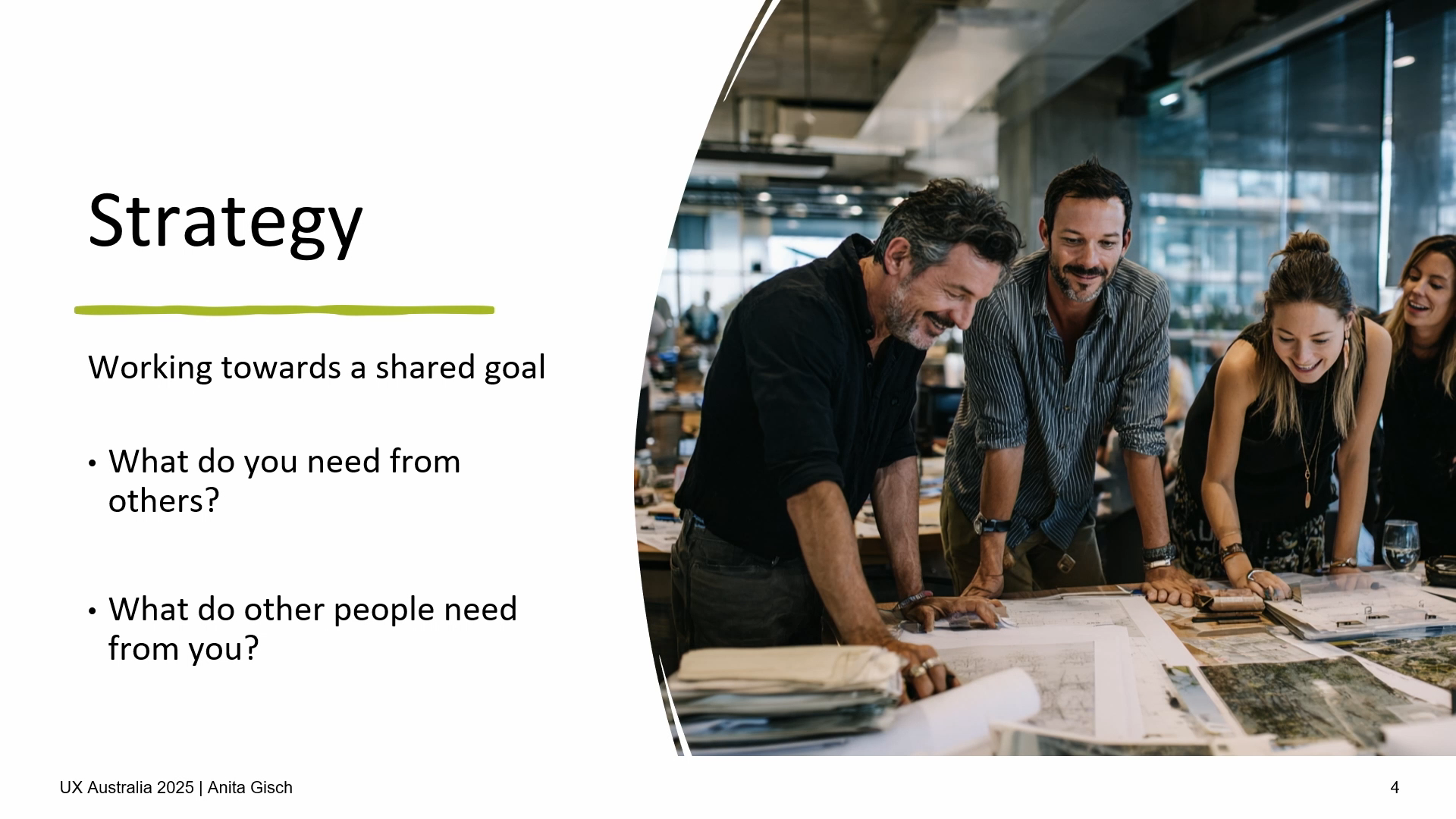
I don't know what's going on. But behind this problem, you have the hidden problem, which is the coordination. And this is a very, very different problem to solve, and that's why I'm there, I've been three years trying to help this thing. So the service design problem became how do you create shared visibility so teams can act together under pressure?
And that was a shift. We were not trying to make the message nicer. We were really trying to make the system seeing itself. Once we were looking at this entire system, the story became about coordination. We have to adjust when there is a disruption, every disruption travels through different multiple organizational layer, the frontline staffs, the customer communications staff, the operational people, the governance, the strategy, and every single layer has different information, different teams, different priority, and different constraints.
And as this information is moving across all this layer, small misalignments start to accumulate. And this is where the gaps became impossible to ignore. What surprised us is that these gaps are not sitting in one team on one function.
They are sitting between teams, between Andover, between timings and sometimes between what organization know and what the customer need to know to move forward. All of these gaps are fitting in in four categories. Every time I would I would like to have only three, but four. So the early awareness gap, the system gap, the organizational gap, and the meaning gap.
Doesn't work. In disruption. Ah, here we go. Okay, so the first one is the early awareness gap. Customer and frontline arrive at the train, like are at the train station and know something is happening since minute one.
So much before, the organization has all the answer. The second one is the system gap. Information is spread across multiple tools, multiple channel, and they are creating different version of reality, so it's very confusing and it's, again, in real time in kind of a traumatic time.
So everyone has a kind of a different version of reality. The last one is the organizational gap. So when you want to go from a to b, you say, okay, I will take the bus, I will go there, I will take the bus on the light rail, and for you, it's one network. But behind this, the organization is working across many teams and responsibility. The last one is the meaning gap, is the difference between when we say there is a problem and when we say there is a problem, this is what you can do next.
I don't see them like four different problems. I see them like four different way to see how the coordination is breaking down. And when we could see those pattern, we knew where the service design could add the best value. Knowing this, the first thing we redesigned was not the service, even if I'm called service designer.
We started to redesign the conversation. Once people could see the same system, the conversation started to change. It changed from, I don't know, it's my part of the process after it's someone else problem, to how do we really create a better customer outcome together.
And it didn't make the system less complex. We were still having competing priority, legacy system, decisions that has to be made without the complete information. But something important changed. The complexity was no longer hidden. People could see it, they could talk about it, they could understand each other's reality, so they could make better decisions together.
I think this is one of the most important things that service design can make in complex organization, not by removing complexity, but by making it visible enough for people to coordinate with confidence. Oh, it's working. The good news, thanks god, is I didn't have to redesign all this layer.
I just had to add the layer to work better together. And looking back, so I didn't, as I go, I didn't really organize everything, but now that I'm looking back at it, I think what I created is three things. The shared visibility, so helping people to see the same system rather than just their own part.
A shared language, helping people to understand each other's reality and build a common understanding of the problem. The third one is helping people to make decision together and coordinate. Together, this created a better customer experience.
Even if it's still traumatic, like disruption will not be perfect, but we are trying our best, trust me. And everything you will see next will fit in one of the three ideas. Because in complex organization, it's not that people don't care, It's that they you want to do something? I just need your privacy.
Yeah. It's running away. Do you want to put it there? Okay. I'll just try to you don't need to put a scarf. No. I think that might hurt. Let me just bring it higher. I think it's better now. I don't know. Do you want me to speak in French? So if everyone understands in French, I think it would be fine.
No? Okay. Maybe at the break. So yeah, I think the idea is like, it's not that people don't care, it's that they can't always see, understand, and act together when we are on this kind of crazy company where there is so many people who have to be coordinated together. So the next question became how service design can help people to coordinate across all these layers?
And interestingly, we didn't start with technology. We started with design. The GeoName map helped people to see the customer experience along the side of operational reality. The ecosystem map made dependency visible. Shared definition created a common language.
Customer story aligned teams around the same outcome. Workshop built trust and ownership, and message testing translated complexity into decision customer could act on. None of these methods are new, and individually, they are very familiar service design tools. But bringing them together at the right time, it makes something much powerful than just a tool.
The deliverable was not the artifact. The artifact was creating the condition for people to make better decisions together. That's where design, service design gave us the tool to make invisible relationship visible. So let's start with shared visibility.
Shared visibility is understanding each other's reality, and the first thing we've done is bringing the customer story into the room. Instead of talking about incident process, we were talking about people who wanted to go to work, pick up their kids or go to a medical appointment. Then we mapped this story along the side of the employee journeys. For many people, it was the first time they could see how their decision affected someone several steps later in the process, or how the pressure they faced was connected to someone else's pressure. So if you look on the top one, the messy one, the first one was my plan at the beginning, mapping the customer journey. But when I started to interview people, they were so frustrated about the frontline people and said, yes, they don't give me any information, blah blah blah.
So I like, okay, let's try to understand why the frontline people doesn't give information to the customer. So I started to interview these people, and they were like, look, we would love to have information because we are facing this customer from minute one, and we really don't know what to do. It's just like we don't have any information, these bloody people from the center are not giving us information.
So we're like, okay, let's go to see these bloody people in this operation. I went there and I started to ask questions to them, and they were like, yeah, yeah, the comms teams want to have information, but we can't give them information because we are helping the police to evacuate people, because we are trying to make the network running again, and it's impossible for us to do both of these things, sending email, calling the operator, so it was really difficult for them. And this is where we really changed the mindset between assumption, because to really empathy, people were starting to look at this journey in a way that it was a conversation starter.
It was not the end game. It was just to say, look, this is my problem, and try to link everyone together. This this tool was really powerful for that. Can you see, like, people are almost happy on the second slide. The next one is the shared language. So we mapped also the ecosystem, who is doing what, what are their tasks, and something interesting happened, different team has different language to describe disruption. So across document, playbook, operating procedure, the phases had different name, different boundary, and sometimes different stage altogether.
It made it surprisingly difficult for people to connect their work across teams because everyone was working from a slightly different model. But what we have done is we brought all these perspectives together and co create one shared disruption life cycle with common phases such as awareness, assessments, response and recovery.
And it was not just agreeing on rewards, it was giving a way for people to describe where they were, what needs to happen next, and how their work was connected with everyone else. That shared language made coordination much easier because people no longer had to translate between different frameworks, they could just make decisions straight away.
The last capability is the shared action. Shared visibility and shared language are very important, but by themselves, they will not change the customer experience. We need to bring the right people together to coordinate, and this is why I had a workshop on Tuesday during the disruption.
So every month, we are organizing a workshop where we bring everyone together to discuss about problems. So when I say everyone, we have the ops team, the comms team, we have Lina, who is Lina, Lina. We have Lina who is coming from product and solutions from the tech part. So we have really everyone who try to come together to solve problems. And, oh, okay, do I have a bit of time or no? Yes.
Yes? Okay. We have a very cool activity on the first part of the workshop. We do the introduction, and after, we are doing burning questions and good ideas. And every time it at look at Lina's face shield, I don't know. We are hijacking this workshop because everyone speak about their their thing. So at the beginning, everyone was bragging.
Yay. I've done this. This is amazing. I'm amazing, my team is amazing. But after a while, everyone started to just be more vulnerable, start to speak about their challenges, and this is where the magic happened. We have Tim from Light Trail. Tim is the best storyteller ever.
So every time a light rail disruption happen, we are almost excited about. So he's he's coming in front of the room, and he's, like, telling the story about this poor light rail who had, a tree falling on himself, or do you have some fire, do you have some floating? And the good thing is, like, he's taking always good pictures. So we have the picture, and we can start to discuss about it, and he's very detail oriented.
And when he's doing this, train and metro and bus are like, yes, I had a problem. I also had a tree falling on the track, and I had to call these people, these people, these people. And by doing this, they are all solving problems together. And we when sometimes we don't have, like, a great idea, we brainstorm about this idea and try to find a new way of working, new new new solution, and we prototype them.
And because we are catching up every month, it's not staying in the workshop, because this is how many times you go to a workshop, yeah, that was great. We will do all of this, and nothing happened. So this is why we are following up every month, and we are prototyping staff before rolling them out to the network.
We have also something very simple. This is our shared definition, like, I don't give you the full wording, but this is a very simple example. It's our shared definition of what means disruption. But this is a foundation, it's simple, but it's the foundation for governance, better decision making, and more consistent customer communication.
I will not just go off script cause I have only ten minutes. I will try to make my mess. This is where we realized that service design was not about the workshop or the framework. It's helping the organization to move from alignment to coordinate action. So before I show you some outcome, it's important to recognize that the biggest change was not a new tool, a new process.
Before this work, teams were often trying to solve a problem independently. There are different definitions, different priorities, and, yeah, individual projects. Now we are 90 I think we are up to 100 people who are aiming for the same customer outcome.
We have one shared language across modes. We have one coordinated program, road map and governance. What changed was not the work, it was how people work together. Okay, let's go on this one. We have here are there is three different deliverables that we have done, and they are all starting with the same principle.
We have a shared understanding. Then we accelerate the delivery. The first example is a is a twenty four seven disruption coordination. I will not go to far, but this is this is TMC, so you have the desk, and you have the big things in my favorite place. It's very techy, but it's very nice. So what we we have done is this journey mapping reveal a gap that was existing for years.
Operation continued overnight, but customer disruption didn't, and this is where this insight led to a new operating model. And the cool thing is that they had to renovate this place, so we had a chance to redesign the floor, to redesign the way where people were sitting. So now the ops people and the comms people are, like, closer together, so the communication is flowing better from the operational part to the comms teams, to the frontline teams, to the customer.
The second one is really about the consistent customer message. So we have done a lot of research around how do we communicate disruption, and how people can go to the next phases and don't ask, Should I wait? Should I go? Should I grab another coffee?
We really try to find a way that it's clearer, and also that it's the same message across modes. Because every mode, not every mode, but few modes are doing their own message. So how do you keep the consistency between all these teams? So we are working on it, we are still working on it. The next one, and we have Lina again.
We have the banner alert, so she's responsible for this kind of banner alert. So if you want to blame someone on the the that's why I invite you, Lina. It was just to so we we are we created a new banner alert banner alert because, like, customer wants earlier and more visible information when something happens.
Five minutes. Great. So these three initiatives could look like different initiatives, but I don't see them this way. They are all helping the customer to navigate through uncertainty and try to know what to do next. Looking back, what I'm the most proud of is not the framework, it's the community we formed.
Look, this is us. I look almost happy. And at first, it was not really easy. It's it was after COVID. Everyone was kind of comfortable staying behind their desk, not going on face to face workshop. So this is where we decided to bring team times.
And at the beginning, it was just a small gesture. But after people were starting to enjoy these team times and say, yeah, every month, I have team times for free, we'll come. So they came and just started to come earlier, staying longer, and some of the most important or interesting discussion was not during the workshop, it was around this TeamTimes and coffee during the break.
Because coordination is not only built through process and governance, it's also built through human relationships. People stop seeing function, they start seeing people, And when the next disruption happens, they are not escalating a problem. They just take their phone and call someone they already know.
This is where I realized that we were not achieving only better coordination, but we were building a human connection behind it. We often talk about service design as designing journeys, but in complex systems, maybe your real job is creating conditions for coordination.
Service design is not about owning another layer of a complex system, it's about helping every layer to work together. I'm in Islay, I'm working for Transport for New South Wales, and if you're passionate like me, I own a complex system, I think we have the break just after, so I just want to be on time. Maybe you have team time for the break.
No? No? Maybe. Thank you so much. Bye bye.
Technologies & Tools
- CCTV
Concepts & Methods
- Service design
- Shared visibility
- Early awareness gap
- System gap
- Organisational gap
- Meaning gap
- Shared language
- Journey mapping
- Ecosystem mapping
- Customer stories
- Message testing
- Employee journey mapping
- Disruption life cycle
- Shared action
- Prototyping
Organisations & Products
- Transport for NSW
- Transport Management Centre