How Do We Design Vibrant Communities?
A Headscarf Becomes a Seat—and a Design Challenge
Nila Rezaei introduces a stadium seat made from a donated Iranian headscarf, connecting public infrastructure with women's exclusion and resistance. She challenges designers to become professional optimists who make better futures tangible through dialogue, connection and collaboration.
Belonging Starts with Curiosity
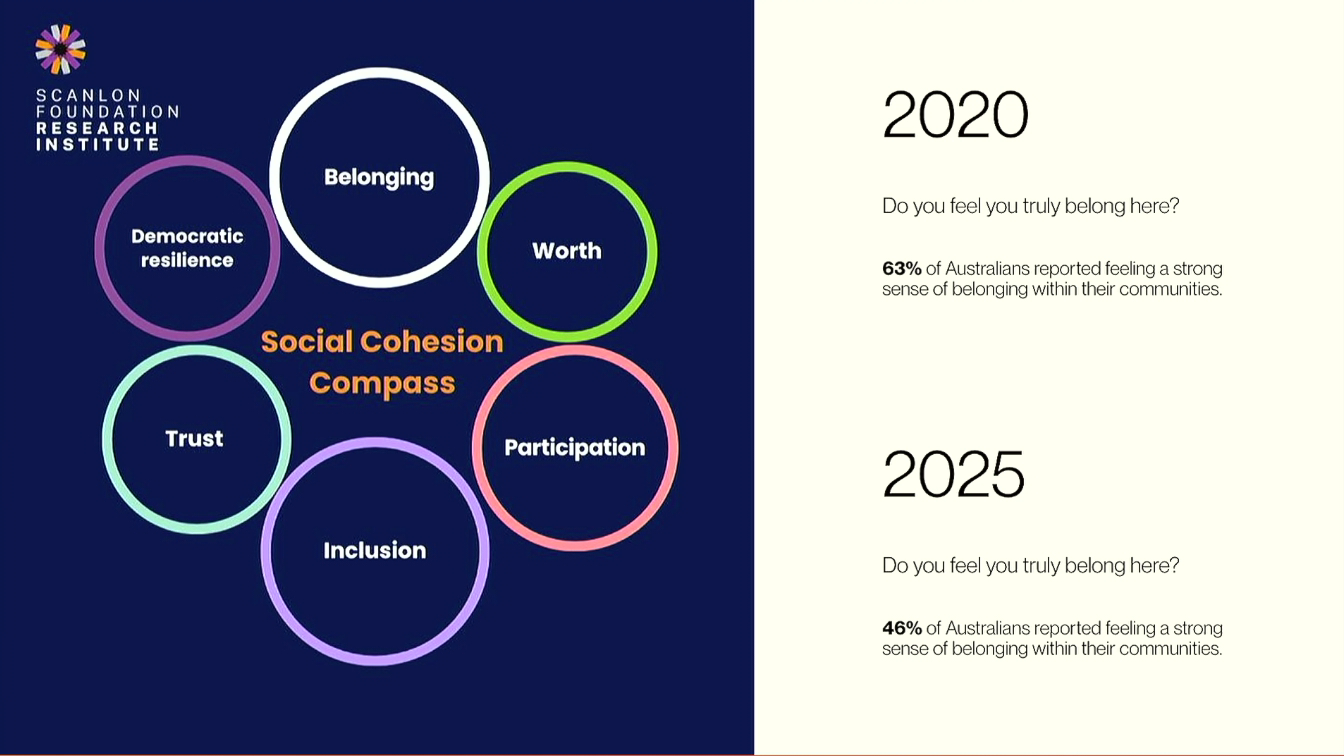
An exchange of words in different languages invites the audience to practise connection. Rezaei explores how personal boundaries shape communities, draws on Ezio Manzini's account of socially constructed war and peace, and presents research reporting declining belonging in Australia.
Three Foundations of Community Are Fading
Rezaei identifies participation and cooperation, custodianship, and physical memory as three foundations of vibrant communities. She examines how competitive measurement, property ownership and disappearing shared rituals weaken people's capacity to build and care together.
Design the Proximity That Makes Care Possible
Rezaei uses Herbert Simon's definition of design to connect preferred futures with practical action today. Drawing on Manzini's principle that caring requires proximity, she asks designers to create conditions for relationships and invites the audience to identify something that depends on ongoing care.
From Frictionless Convenience to Public Luxury
Rezaei questions whether seamless individual experiences sometimes remove opportunities for human interaction. She proposes designing public luxury through collaboration and proximity, deliberately protecting forms of friction that sustain connection.
Million Wells: Give Communities Room to Act
Bengaluru's Million Wells initiative connects residents seeking groundwater recharge with traditional well diggers, supporting livelihoods and intergenerational knowledge. Rezaei uses the project to distinguish technical possibility from the social permission and practical means people need to act.
Community Gardens Turn Ownership into Custodianship
Rezaei traces how New Yorkers transformed abandoned lots into gardens and secured institutional support for their continued care. Through John Thackara's discussion of the commons, she shows how leases, platforms and repair policies can make custodianship durable.
Crafted Liberation: Making Protest into Public Infrastructure
Rezaei explains how the Woman, Life, Freedom movement inspired Crafted Liberation, which transforms donated headscarves and plastic waste into stadium seats. Nearly 600 contributors become co-creators of objects that carry their stories of resistance into shared public space.
Boundary Objects Hold Different Stories Together
Rezaei introduces boundary objects to explain how a single seat can support protest, celebration and material innovation without requiring agreement on its meaning. Copenhagen's Superkilen park extends this idea through culturally familiar objects that create opportunities for recognition, conversation and empathy.
Participation Requires Sharing Power
Rezaei connects the audience's shared stories with Victor Udoewa's radical participatory design, arguing that communities must help choose approaches and methods. She closes by asking designers to recognise the care and ingenuity communities already practise and help them connect.
Before I start this talk, I wanna give you an image that I want that you hold on to for the next hour. Right now, somewhere in the world, in Australia, there's a seat, there's a stadium seat that is made from a headscarf. And that headscarf is donated by an Iranian woman who decided she was done wearing it.
She just decided she does not want to wear this anymore because she's been protesting or the rules don't apply to her anymore. She's saying no. And that headscarf is then transformed into a piece of public infrastructure. Now, here's why why I'm telling you this. After Iran's revolution in 1979, women were banned walking into a public stadium, public football stadium.
In 10/09/1981, that was exactly the last day a woman could buy a ticket and go to a public stadium and watch the the, you know, soccer match with their friends. And now that ban is still enforced today. There's a really cool movie about it called Offside. So somewhere in that seat, there's a woman who once wasn't allowed to sit on one, and now she's creating her own liberation.
So I want that you hold on to this, and I'll come back to it later. So looking at this beautiful room, we're all, you know, designers coming from different disciplines of design. We probably know more about design than any generation before us. We know all the tools, methodologies, frameworks.
There's so much that we've learned. We've been to all the talks, conferences, we've done all the certifications, and yet I sometimes wake up in the morning and I feel, what's this all for? Why am I doing this? And maybe you feel that too. I don't know. You look at the state of things, you look at how the world is, and it's really hard not to feel like something's coming apart.
It feels like sometimes, someday's world is falling apart, even though we're doing so much as designers. We're getting better and better at our craft. We experience the power of division probably more strongly than power of unification today, or I do. I can't speak for everyone. And we still long for that coexistence.
We still want that coexistence. Sometimes we don't know how to really achieve that. And we should acknowledge that we are in a very difficult moment in history, socially, environmentally, politically. So we must be professional optimists. Our job is to be professional optimists and use our tools and work to make the situation better.
Why? Because we're probably the only profession or some of the only people whose actual job is to prototype a future that doesn't exist yet. It's literally our job. So we can make that future visible enough to people so they can buy into it. They can come on board as well. Design can change mindsets and it can inspire new ways of thinking for everyone. But how?
What does that actually take? It takes openness, curiosity, cooperation, humanity, negotiation, that's an important one, and most importantly, community spirit. We can build proximity.
We can build connections, and we can enable collaboration through the actual artifacts and the systems and the things that we create through our work. So if you're if you're working in the built environment for cities and districts, we're transforming public spaces into places of dialogue. We make it attractive for people to come together and have a dialogue in the public space.
If you're in the business of creating digital platforms, digital tools, products, you help establish communities, you help communicate knowledge, you help people connect even though they might be far apart. And if you're like me in the business of creating products and physical things, you know, design can help establish, design can help sort of take away the barriers.
It can make products accessible. It can create impact physically. So the design of that future, we don't need to map everything out. We don't need to know everything about that future that we wanna create, but it actually calls on us to be personally involved in creating that future that we want. And that's what I'm gonna be spending the next hour talking about, how do we actually get involved.
To warm you up a little bit, to warm things up, I'd like to start with a little activity. I want that you turn to the person next to you. I'll give you a minute. Turn to the person next to you. If you're sitting by yourself, maybe sit closer to someone next to you. Introduce yourself. You have thirty seconds each to teach that person a word in a different language.
That's your mother tongue or a language that you've learned. It could be something that doesn't make sense in English, but teach them one thing in a different language. You have a minute. Go. So did everyone learn a new funny word in a different language? Generally, when I teach someone a new a word in a in a different language, it's generally a swear word or a funny word. I don't know why.
I don't know what you learned. So let's look at the characteristics of a community. Where does it actually start? So it actually starts at a personal level. Every day, we as individuals, since, I guess, we're born and since we start thinking, we're we're weighing an inner sense of who we are against the world.
So it's us and then the feedback that we get against the world. And that back and forth is really what decides what we let in and what we shut at. It forms our world views. And over time, this is, you know, shaping our outlook as well. What it also does is it shapes how whole groups, organizations, societies, and communities come to see themselves as well.
So it's all those small decisions. Now I think a vibrant community usually starts with someone or a person or a group of people starting to notice patterns and questioning whether those boundaries that we are setting up for ourselves, if they're working, if they're in the right place. So a community doesn't really come to life with a clear plan or a beautiful strategy.
Those are part of it, but those are not the only things. I think it really starts with someone or this group of people actually starting to notice these patterns and these differences and questioning. So to do this, we need curiosity and openness. And that kind of active attention, you know, that sort of looking actively to then find the patterns, that takes a lot of effort for a person. And what happens is a lot of us, including myself, we're so busy getting through the week.
We're so bombarded by all these complexities, by the news, by the climate crisis. It becomes harder and harder every day for us to keep that active looking and active attention. Last year, I was at a really good, cool conference, not better than this one though, called Design for a Sustainable Life.
Someone who I really look up to, Ezio Manzini, he's the father of design for social innovation, and he started the DESIS Network. He opened this talk with one line, one sentence, which really stayed with me, and that was war and peace are social constructs.
They're not natural states. They're actually built ones. Humans design the context for war and they design the context for peace. So how do we actually design that context for peace? And I think it raises the obvious question for a room full of designers and to me that if something that large, that horrible and large, gets built on purpose, what about designing smaller things?
What are we actually building every day without even noticing? There is a Australian study called mapping social cohesion by a Scanlon Foundation Research Institute, part of ANU, Australian National University.
For many years, they have been measuring this feeling of isolation. They're measuring different factors, but this feeling of isolation is one thing that they measure. So researchers ask the same question every year. Do you feel you belong here? From you know, they ask that from Australians. So in 2020, sixty three percent of Australians said yes.
In 2025, that number was forty six. Now, if you're a millennial, it was worse. Two in three said yes a decade ago, now it's one in three. So why is that? And I think there are three things at play. I feel like there are three things fading. So I'm gonna use these three lenses, and then I'll come back to them with how we can actually design to make the fading go away, make the fading fade.
The first thing, I think, is participation and cooperation. So a vibrant community isn't just made up of people who are using something, It's actually a group of people building something together. So it's not just about taking and consuming and using, it's about building together even in small ways.
Now take that away, take that building together away, and a community is just an audience list. Now, I think one of the things that I'm noticing is this idea of competition. Competition is always easier to see working than cooperation. In a competition, you can point to a winner, you can point to there's a scorecard, but cooperation doesn't work like that.
It's slower. It's harder to say exactly who's succeeding in a context of cooperation. So over and over, I think we are trained to then default into the thing that's easier to measure because we need to quantify everything we're looking for data. Over and over, we're defaulting to measuring one winner sort of defaulting into this mindset of competition rather than cooperation.
Sometimes that competition isn't the thing that's holding people together, it's actually the cooperation and participation that we need. So how do we measure that? The second lens, the second thing that I think is fading, is what I would call custodianship. Somehow, we turned shared things into property.
We drew boundaries around them, we put someone's name on that deed, so things became property rather than shared assets. And once something is yours to own, the incentive flips. There's no reason left to look after it for someone else. You only look after it till you use and consume it completely and then let it go, let it run dry.
And I think there's a human cost buried in that too. People start getting treated as units of labor, just another input to keep the system running. And you all know the name for that system. I think most people couldn't tell you exactly why it feels wrong, but you can physically feel that that's wrong when I say that people are treated as units of labor.
In a real physical way, you can feel that. So I think custodianship is fading as well. Now the third one was the harder one to name, but I think things that you can touch, the physical memory, the physical rituals, those are potentially fading. Objects, places, rituals that carry community stories, forward, not just, you know, frozen behind glass or in a in a museum.
You stop passing anything down and a community stops being a community. It becomes a postcode, you know, a sort of a holder of of multiple people. I think we need those rituals. We need those physical interactions and moments in our social relationships to be healthy as a community. And that gives people a a sort of a feeling of belonging and this emotional stability because you're still you're feeling your truth.
Now, what would it take when all those three things, the participation, custodianship, and this physical memory, what would it take if they were sort of working together instead of each fading away? Now, I always love going back to this definition of design. I'm pretty sure everyone in this room has has seen this.
So by cognitive scientist, Herbert Simon, He defines design as everyone designs, who devises a course of action aimed at changing an existing solution into a preferred one. I think it's a really sort of goes into the absolute fundamental of what design is doing.
So a decision that something could be better, something's wrong, something could be better, followed by actually doing something about it, taking action, could be very small as well. I think it's a process that we all use at at our work, and it's a process that you might use to form a more vibrant community as well.
Design is an indispensable tool for overcoming limitations, So it makes a vital contribution to the act of dialogue and contribute and communication, specifically in this context of, you know, UX design and user experience. I think it's really important that we look at design as a as a tool for dialogue and communication because we take the liberty of questioning everything. It's literally like our brains, they're wired to question everything because we're looking for an alternative, and we rethink everything to unlock new perspectives.
So what could be a design move? I think thinking about a community, vibrancy in a community, it's not just about happiness. That's an outcome. But one thing that we can do, a design move that we can sort of implement is thinking of a community, of a group of people who are holding two realities at once.
What a future could be, what a positive future could be, what we need, what a community needs in the long run and what needs to happen today. And then thinking about this in between, between today and that long run, that future, and enable the conditions for people to care on this continuous basis from today till that future, so that we don't lose that sense of care.
Now, there is a name for this sort of mode of thinking. Ezio Mansini calls it caring requires proximity. So you can't design people. You can't design for people to force people to care for each other. That's very hard to do. If we say that, hey. We're gonna design something which makes people care, that's that's really, really difficult. But what you can design is proximity.
You can design the proximity, the the conditions that put people close enough together for participation, for custodianship, for connection rituals to happen on their own. So you create the sort of the foundations and the conditions for it. Think about how we as designers can connect the various players, the disciplines, the fields of work in, you know, in our work and in our life more naturally and automatically to let that sort of care happen naturally.
Now in the face of growing automation, virtualization, how can we actually apply our specifically human potential more effectively to create that proximity? Now, communities result from human relationships. Like that activity you just did, you learned a new language. As designers, we need to create the context and the condition for those relationships to form.
Now with that in mind, with that context and condition, let's have a quick think. I'll give you another minute for a second sort of activity. Turn to someone near you. It could be someone different, someone that you haven't spoke to, and think about this question.
Tell them one thing in your work or in your community that would absolutely fall apart if no one actively looked after it? What what would that one thing be? And it could be anything. It could be the coffee machine. So I asked my co founder yesterday, he's like, oh, yeah, the coffee machine. So and keep that in mind.
Keep the answer in mind because I'm gonna ask you in the end. So I'll give you a minute, starting now, to to tell that person what is the one thing that would fall apart in the community if no one looked after it. So try to try to remember what your peer sort of said to you because we'll we'll ask you in the end.
So now I'm moving on to, I guess, we we defined, you know, what a community is, what's needed, what's happening. I guess the second half of my talk is going to be around how do we actually achieve, how do we deliver that. And I'm going to do that through case studies rather than try to explain methodologies and design methods, because I think you'll be hearing from experts about those methodologies.
So I think if we lost that feeling of vibrancy and prosperity, we can get it back. We are designers. That is literally the thing that we do. We can build that back, design it back. But I wanna be specific about what that actually means. How do we deliver it? A lot of this is an interesting choice of image.
I don't know why I picked the iPhone, but you'll see why. I I wanna see if you actually agree with me. Now a lot of what our industry rewards is this removal of friction. I think, Amir, I was I was seeing that you were sort of, how do I turn this on? So I think there's what iPhone did, they literally removed absolutely all of the friction. So you look at this screen, and you have to guess how you do anything on this screen.
We know it because we've been using iPhones for many, many years, but if someone never seen an iPhone, you just look at it on the screen. Okay. Do I tap? Do I swipe? So it's seamless experiences. Fewer steps, one tap everything. A self-service that removes, you know, the need to call someone, or wait for someone's help.
Now, most of the time, by removing that friction, we've made one person's life easier, but we engineered everyone else out of that interaction. Now that's what I would call private sufficiency, wearing the costume of good design, easy, frictionless, but potentially alone.
So what we actually lose along the way, things a whole community used to share and look after together. A public forum, a shared local service, a piece of shared infrastructure. They get replaced by something that's built for one person in their domestic life and their seamless, frictionless experience.
There's a reason those shared things are so easy to lose for us as modern humans today. They're not things that any one person invented. They're things that a whole community inherits, water, land, public space. Nobody built them alone, and nobody by themselves fully owns it.
So that property mindset sort of then makes us think, oh, it's not mine. Someone else will look after it. The moment something can be priced and sold, our instinct to look after it for whoever comes next gets replaced by the instinct to take everything out of it right now. So how can we refocus from designing private sufficiency to designing public luxury?
By designing collaboration proximity. So creating the proximity for people to collaborate. Designing people close enough that they actually need each other. They start to collaborate. And our job is not only to remove all the friction and create the most seamless experience for individual customers, but our job is to decide deliberately which friction is actually connection in disguise And how do we protect that?
Sometimes we have to be Robin Hoods, you don't want to say, Oh, I am going to leave this friction here. But how do we actually protect some of those? And we are creating the conditions for cooperation. Now, remember the three sort of lenses, the three things that were fading? I'm gonna use them again to actually then say, how do we deliver this vibrancy?
So going back to those through case studies. So the first was participation. I'm going to talk to you about one of my favorite projects. In Bangalore, in India, there's a citizen led initiative launched to recharge the city's depleted shallower aquifers and ease water scarcity.
It's called the million wells by Biome Environmental Trust, and they've been running it since July 2015 because the city was running out of groundwater. Now there's a community there called the Manu Vadars, and they've been digging wells by hand for generations. Well digging is an intergenerational knowledge in that community.
Their work had nearly disappeared because machines and bore wells pushed it out, automation pushed it out. This campaign brought that work back. Households and neighborhoods set their own targets, they fund wells, and the manuviders do the actual digging using knowledge passed down through generations and families. So the campaign connected those two.
So a few really good things happened all at once in this project. Obviously, the first one is the water table recovered. That was the the goal of the project. A trade that was missing, it was the trade that was dying, I must say, they get paid work again, and intergenerational knowledge is preserved. Now compare that to most to how most things get delivered to us as customers.
Something arrives, it's finished, it's ready for us to unpack and use. And all we get to do is to just use it. So the moment you're only just consuming something, you stopped being part of it. A community of users isn't really a community. It's just the customer list. Now, most of us were trained to believe that our job is to figure out what people sort of want secretly or not secretly, and then we go and ideate and we prototype and refine it and build it for them.
That's sort of that's what we we are trained on as designers at design school. Now we must acknowledge no one can actually get inside another person's head. That's really hard to do. We talk a lot about empathy and sort of putting ourselves in someone's shoes as designers, but that's really, really difficult. You can't get into someone's head.
What we can do, trying to, you know, guess what someone's want, what what we can do instead is to think about widening someone's field of action through our design. So rather than just guessing their wish and building for their specific needs, give people more room and more opportunity to act on things themselves, to have that flexibility, to have that condition for choice.
Now, I think there are two levels of widening you know, when we're talking about this widening field of action, there are two levels. One is a bit more technical, which is generally what we as designers sort of get stuck in, and that is what's technically possible that wasn't before. So how do we you know, what can we do technically to widen the field of action?
The other one, the other level is whether someone can actually act on it and whether people around them will let them act on it. So how do we widen the field of action? Now, the second layer is, you know, does is that condition going to enable that person to do something about it? Are they even allowed?
So most of our design work stops at the first level. You know, we create we do the technical thing, we create the solution. But I think Bangalore worked at that second really harder level in both directions. Citizens get a practical way to act on wanting a well, a target, and a way to fund it.
And they get a direct connection to people who can actually dig the well. And the manu vadars, the community, they get something back too. People actually asking them to do the work that they've been doing and their families have been doing for hundreds of years instead of a machine doing it faster and more efficient. So they've been given the permission to actually have that, you know, create that opportunity as well.
The second lens was the custodianship, so moving from this mindset of ownership to custodianship. Now, when you own something, you know, when I own something, I say, this is mine, and I will use it up, and it's my property. When you're the custodian of something, the mindset is around, well, this is mine. It's mine to then hand over to the next person.
These are completely different mindsets. Your mindset is not just about this is mine, so I'll use it, and when it breaks or when it's finished, it's done. It's about how do I protect it as long as I can so it can be passed on? How do I maintain it? During the financial crisis of the nineteen seventies, many parts of the New York City, suffered.
There were a lot of vacant and abandoned lots, both public land and newly public land acquired by the foreclosure. They were endemic. So a group of New Yorkers started squatting on vacant, I guess, rubble strung lots, and they turned them into public gardens. So they turned them into gardens to start with.
Now, they didn't really go for permission or funding. They were just a group of people who decided that a wasteland deserved better, could be better. Why is it just sitting there by itself? Liz Christie, who you can see in that image, I believe, was founder of Green Gorillas. Now, Christy lived on Mott Street on the Lower East Side Of Manhattan, and together with other volunteers, they spent a year removing trash, adding topsoil, installing fencing, and otherwise, I guess, beautifying a lot on the Northeast Corner Of Bowie And Houston Streets.
What happened is this didn't stay informal for too long. Within a few years, the city recognized what was happening, and they made it official. They made it a proper program, leasing the land and providing support to these groups. That was 1978, so eight years after. Now in the beginning, the city allowed neighborhood groups to use the parcels for a token sort of lease.
Sometimes it was just a dollar a year. As the program became more and more established and partnerships between city and community groups strengthened, this arrangement then shifted to a licensing agreement. Although gardens were strictly temporary, and the city reserved the right to develop vacant lots whenever they wanted, the community gardens became an important institution, and many of the sites remained as gardens despite the pressures to build housing or other infrastructure.
Now, I think it's a great example of building public luxury. Once it got backed, it lasted, and it's still there for fifty years and coming. Now, author and designer, again, another person who's my mentor, John Sakharov, He has a word for what those gardens were actually doing.
He calls it the commons. He has a lot of beautiful literature on this idea of the commons. Now last year, exactly actually at this time, I spent ten days at a residency program with John, and we had some really good conversation around the role of designers to help with commoning. So land, water, shared knowledge, anything a community depends on that no single person owns. And his point was really sort of good and simple and understandable. Once you start treating something as a commons, your relationship to it changes.
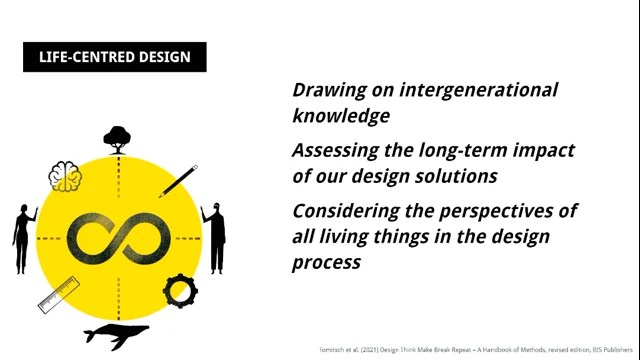
You stop being someone who just uses it, and you become someone responsible to handing it handing it on in a decent shape. Now, design can bring forth custodianship by building the structures that lets caring continue and persist. Us, as designers, we can't force people to to care for the commons, but we can create the infrastructure that's needed to let that caring persist.
So then it becomes permanent, and not just by asking people to feel more caring, similar to the garden example. Now, this could be a lease, it could be a platform, it could be a repair policy instead of a replacement policy, something that makes a specific person or a specific institution actually responsible for what happens next after something has had its life instead of goodwill.
Now last one, last lens, is physical objects and rituals. Now this one is, I guess, a lens that I look at everything in the world from because I'm in the business of creating physical products and objects, naturally that's my way of thinking. So remember earlier, I talked about this this stadium seat that's made from, you know, someone's headscarf. We're gonna go back to that now.
Crafted Liberation, is a project that myself and my cofounders started a couple of years ago. I was born and raised in Iran. Now, I grew up hearing the women in my family, my cousins, my mom and just my friends, talk about that stadium ban and other restrictions the way that you would talk about weather.
It was part of life, you had to go around it, and it's just there every day. Now, in 2022, a young woman named Massa Gina Amini, she died in the custody of Iran's morality police. We have this thing called oh, I may think that we don't have it anymore. They are still there.
Morality police is this car with a few people in it, going around the city and then stopping people for not wearing their headscarf correctly or wearing too short of a, I don't know, jacket or something. Now, she was taken by these people, and while she was detained, she lost her life. Her death sparked, I would say, the biggest grassroots female led revolution, women life freedom, or San Sendeghi Azadi.
Iranian women started publicly rejecting a rule they'd been forced to live under, the mandatory headscarf. Many people wear it by choice. However, there's a lot of people who are not wearing this, headscarf because that wasn't their choice. So as a result, you know, being a member of the diaspora and being absolutely devastated by not being in Iran and not going to these protests and not supporting, started thinking, okay.
What can we do? So we started a project called Crafted Liberation as a Response, making stadium seats that are made from those rejected headscarves, or textile waste in this case. So we started gathering these unwanted headscarves from all around the world. People mailed them to us.
In Iran, you know, my family sort of gathered them and then did a big freight to Australia. Now, we took those headscarves and, using a manufacturing process that we developed here in Sydney, we then sort of created this new material, which is textile waste and plastic waste.
And the material then became sort of the foundation for the seeds that I described at the start of my talk. Nearly 600 women in Iran and around the world have sent us their headscarf in a sign of participation and a sign of protest. So by creating these products, now we have public infrastructure.
And each of these chairs are representing a story of an Iranian woman who has decided to take action. A woman once banned from sitting in a public stadium, now in a roundabout way, is making those seats with their own stories. We try to build that same kind of participation into the physical product itself, into the materiality of the product.
Someone donating her headscarf, they're not a customer. She's choosing to be part of this object before it even existed. They are the co creator of this piece of public infrastructure. Once it's built, it doesn't ask people who sit on the chair to feel what she felt, that's not the ask, it's asking people to sit down with that story and just be with it.
So it took me the the project really kicked off. Right? We started in '23, and in '24 and '25, the project really, really kicked off. Now it took me a while to understand why is why is this working so well? Why is it resonating? So last year, during my residency with John with John Thakara, that was sort of one of the questions.
Actually, I went in to explore that question with him, that what is happening here? What is it that I'm not seeing? So how would an artifact, a product or an experience empower a community together the way this headscarf turned seat seemed to be doing, in a way that I couldn't explain. He gave me an interesting word to go and look into and understand a bit more: boundary objects, a concept from sociologist Starran Grismeyer.
He said to go and look into what boundary objects are and if these materials, these co created objects, can actually be boundary objects. Now, a boundary object is a thing, usually an abstract thing, a map or field notes, which is shared between groups of people, and it allows those people to collaborate.
That's what a boundary object is sort of defined as. Now, they are plastic, they are interpreted differently across communities, but they have enough immutable content, like a common identity across social words and contexts, to maintain their integrity. They could be maps, field notes, information.
The idea is that the idea is a thing that can mean something completely different to every person, so each of us could interpret that object differently, but they can still that object could still be the exact same thing that we used to collaborate. It's a really interesting concept.
It doesn't need anyone to agree on what it means. It just needs to be sturdy enough to hold all those meanings. So I think I see why John sent me down that pathway, because I think, looking at these seeds, or an object that is made from a material that is donated by a community, I think if you think about it, an Iranian woman who lived under that force, they see that seat as rejection, as protest, and as empowerment.
Someone who's going to a football match in a stadium, they see it as an object where they can sit and be united and celebrate. A curator might look at it as material innovation, a new way of storytelling. And none of these people are wrong. The object doesn't ask them to agree with each other to agree on the exact same concept, but ask them to sit down together with the same thing and collaborate.
I think that's a way that we can deliver a physical ritual and relationship to achieve a vibrant community through our work. So this very interesting park, Super Killen Park in Copenhagen, I think they're potentially doing this at a larger scale.
Designed by architects BIG Group, Bjork Inglis Group, in collaboration with Danish group of artists Superflex, and Berlin based landscape designers Tocotek. So these studios are absolutely amazing. Now, in this park, you have benches, swings, signages, things that are pulled from over 50 countries.
You know, a Moroccan fountain sitting next to a Chinese neon sign, next to a Brazilian paving tiles. So to one resident, this park is literally home. You know, they're around objects that they grew up with, now relocated. To someone else, it's just really good public design. And both of those groups get to sit in the same park, on the same bench, at the same time.
I think it's really a built manifesto of global solidarity. People meet and start chatting because that smart design references topics such as migration, cultural identity, isolation, and it makes it visible to everyone. Now, a chair is as about an ordinary as an object it can get. It's really ordinary.
So is a park bench. No one looks twice at either of them until it's carrying someone's story, until it's cocreated with them. And then we're intrigued. Oh, what's this? Why is it different? Now you can scroll past a stranger's life on a screen in half a second. I think we do that on an ongoing basis every day. You cannot scroll past sitting next to them, physically feeling and understanding their story in a new language, a new material language, a new design language.
So when designing public luxuries, we can awaken and reinforce empathy with stories, with perspectives, and spaces, and objects created by people, for people, that display compassion and humanity. So we need to learn from each other. If we are to continue developing and advancing with each other as a vibrant community. So it happens with all of us.
Now, show of hands, who remembers what the person next to you said that would fall apart if nobody looked after it? Great. Now that is power moving, sitting with and learning someone's stories and then taking action about it.
Now, to wrap this up, I think design can build social bridges, create spaces, change perspectives, but collaboration doesn't happen automatically. It needs a helping hand to occasionally progress. There's a service designer who I really like the work of, Victor Odeova. He works for NASA, he worked for NASA, which I think is really cool. He has a really good phrase for what ties participation, custodianship and this physical memory together.
He calls it radical participatory design. Actually has a really good paper and a few pieces of literature about it. Radical participatory design. It means power actually has to move, not just talked about in a workshop. Participation is in a box that you tick halfway through a brief. It means the people you're designing for, they help choose the approach, they help choose the methodology, not just react to it once it's all done and polished.
It means the knowledge that matters doesn't only come from the people with the right qualification, doesn't always come from designers or doesn't always come from engineers in our case. There are already communities out there who are already designing. They've been designing their own survival.
They've been designing their own way of caring for each other. They've been designing custodianship. Now, our job as designers today, I think, was to never bring design to people. It was to notice what they already built and help them collaborate and help them connect. Over the next two days, I think you're going to be hearing about methodologies, frameworks, processes and tools, concepts, thinking from experts in your field doing exactly this kind of work.
So remember, all of that work is in service of that one piece of humility. Without it, participation is just consultation with better branding. And I generally like ending on this term, which is we're not passive victims of complexity.
We built this. So we can actually design our way out of it. And that woman in the stadium seat, the one I asked you to hold on to an hour ago, she already knew that, and she's designing her way out of it. Thank you.
People
- Ezio Manzini
- Herbert Simon
- Liz Christy
- John Thackara
- Mahsa Jina Amini
- Susan Leigh Star
- James Griesemer
- Victor Udoewa
Concepts & Methods
- Social innovation design
- Custodianship
- Physical memory
- Caring requires proximity
- Private sufficiency
- Public luxury
- Widening fields of action
- Community gardens
- Commons
- Commoning
- Woman, Life, Freedom
- Boundary objects
- Radical participatory design
Organisations & Products
- DESIS Network
- Scanlon Foundation Research Institute
- Australian National University
- iPhone
- Million Wells
- Biome Environmental Trust
- Green Guerrillas
- Bjarke Ingels Group
- SUPERFLEX
- TOPOTEK 1
Works
- Offside
- Mapping Social Cohesion
- Crafted Liberation
- Superkilen