You’re Not Designing the Experience. You’re Inheriting It
The healthcare experience starts beneath the product
Mina Giang connects her experience as a patient to the burden of fragmented healthcare systems. She explains how legislation, funding, clinical standards and infrastructure shape products before designers arrive, and why simplifying an interface can unintentionally remove safeguards.
Why electronic prescriptions become a management nightmare
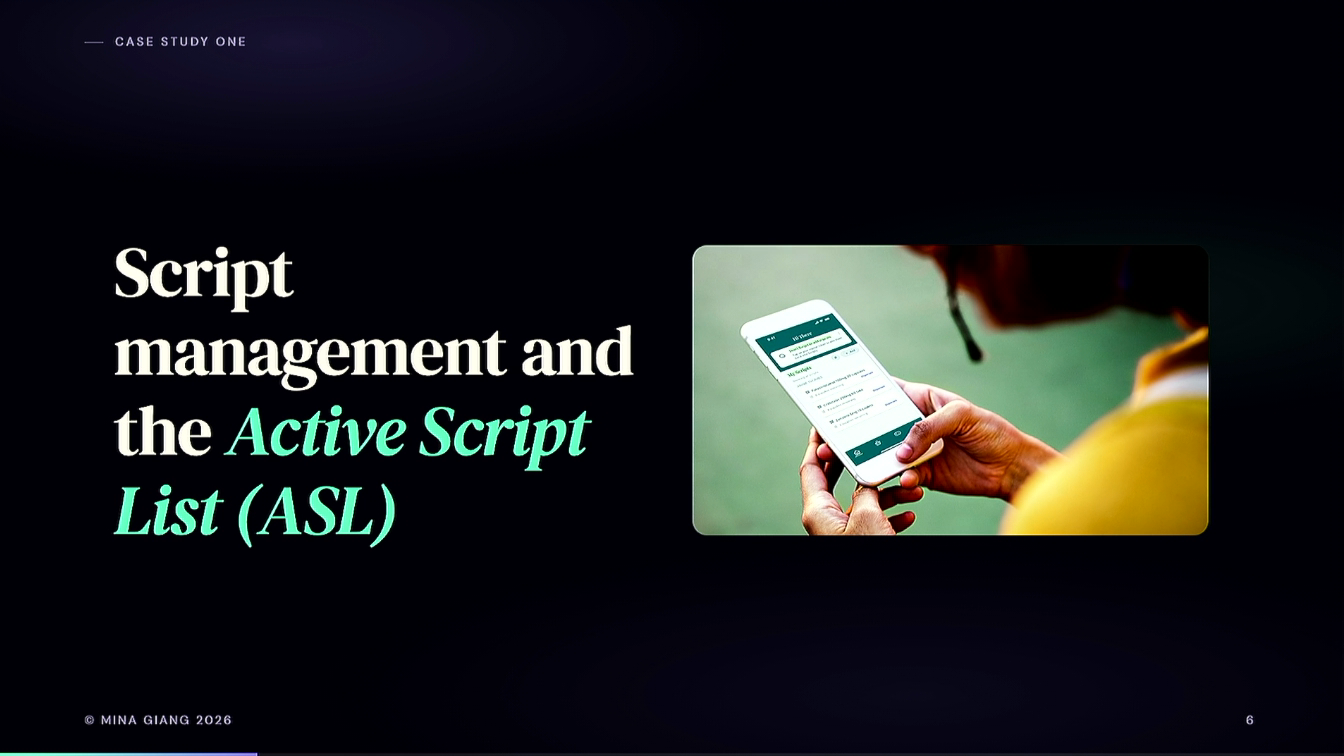
Giang traces how electronic prescriptions and repeats generate confusing chains of text messages, compounded by inconsistent medication naming. She introduces the Active Script List and shows how Scripty presents available prescriptions with clearer, more useful information.
The gates between patients and their own prescriptions
Giang walks through the registration, identity checks, consent messages and activation code patients need to access their prescription list. She describes an unavailable self-registration pathway and explains how pharmacy incentives and limited education undermine patient access.
Building the missing education—and exposing a consent gap
Scripty inherits poor reviews and support requests when patients encounter prescription rules, pharmacy refusals and incorrect activation codes. Giang describes creating pharmacy guides and training, then escalating a more serious problem: shared access codes offer no clear way to revoke access when relationships change.
A vaccination booking carries funding and clinical decisions
A personal vaccination appointment reveals how medical eligibility can change which vaccine a patient receives. Giang follows the dependencies behind booking forms, from funding and workforce qualifications to clinical records and reporting, then shows how changing state programmes, stock limits and prices complicate the experience.
What a shorter form can cost downstream
Giang explains how interface choices must account for the Australian Immunisation Register's supported data and the risks of translating additional responses. Collecting too little information can shift work to clinicians, delay reporting and introduce errors, while confusing eligibility and pricing can discourage vaccination.
Find a seat where healthcare decisions get made
Giang urges designers to influence inherited constraints through standards groups, consultations and conversations with patients and clinicians. She describes her role assessing connected apps and recommends Sparked and Australian Digital Health Agency learning resources as ways to participate in safer digital healthcare.
So I spend a lot of my times in working groups in the industry, talking to clinicians, debating with competitors and terminologists. It's very unglamorous, but the reason I do this arguing about interoperability is because, you know, I want to make sure systems can connect to each other and can understand each other and support continuous care.
And I became passionate about this not because I only just build products in the health care space, but I recently got diagnosis, had to have surgery, and then there was a recovery. And when you're navigating the health care system, and I'm very grateful for the Australian public health care system, you realize that your information doesn't flow very well with you and how hard it is to actually access the information you need, the point of care.
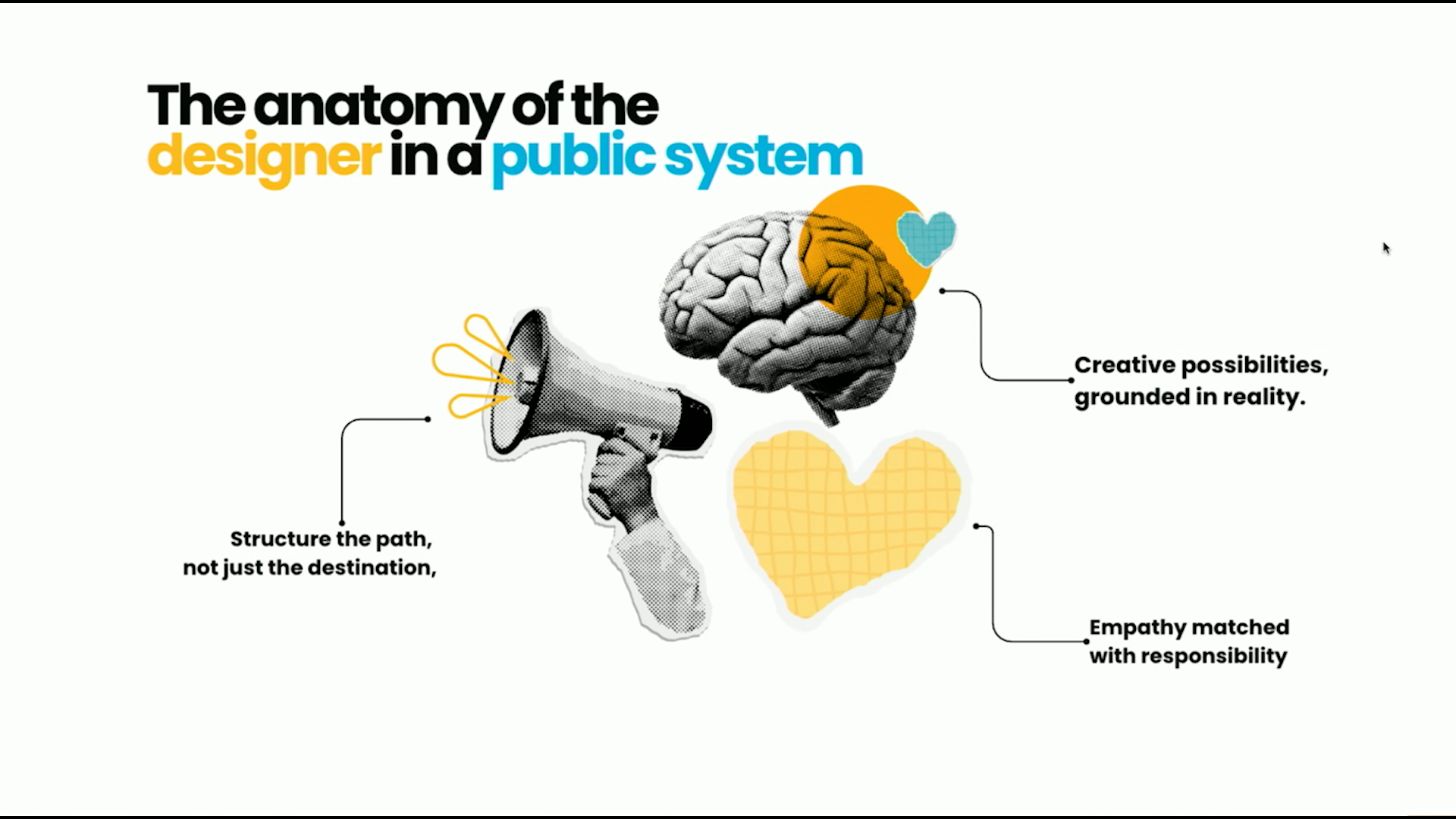
So it's why connected care really matters to me. And when the systems don't connect, the patient, like myself, ends up carrying the burden of the fragmented system, and that's a design problem. And so you wanna just get in there and just go and wonder, how can I make this better? But actually, most of what shapes the health care experience is decided before you enter the room, just what Steve said, which is, there's a legislative and jurisdiction requirements.
Federal and state don't always agree and always align. You've got conformance requirements. You've got funding models to consider, clinical standards, terminology, technical infrastructure all that before your product is there, then you want it to reach to the consumer or the patient or the carer. So most of this was decided before you were in the room. But if you don't understand what sits beneath the product you're building, you're actually not practising Health Care UX, you're actually decorating risk.
Because sometimes making something faster, easier, more convenient might seem good at that time, also remove a safeguard that's been put in place or have a impact downstream that that information can't be easily shared across another system. And the difficult thing is that the patient might not realise it, the clinician might not realise it, we in the room might not even realise it too until it might be too late.
So I'm going go and talk through two examples, which is one is about script management and the other one is vaccination bookings. So with script management, I'm going to talk about the active script list, and I'm gonna start with a question, which is who here has received an electronic script before? Amazing. And who of those has heard about the active script list?
Sorry, I've got my other co founders with his hands up. Look, I'm not surprised. I can tell you that I was at a Connectathon two days ago with clinicians and nurses who hadn't heard of it either. But actually, all of you, whether you've had a script before or not, are actually entitled to an active script list. It's actually a government approved system that's designed to help make script management easier. If we go back to just explaining how e scripts works, I'm sure a lot of you are familiar, so because you've also a lot of you raised your hands, but what happens is when you go to your doctor and you get a script, you'll get an SMS. Some still provide you with paper.
I think that's a habit. You tap on the link, and then it opens up this web page which has a QR code. That QR code is scanned by the pharmacist is what you show to get your script dispensed, and then that changes the moment it's dispensed. The QR code is removed because you can no longer redeem or get that script dispensed.
Then you'll get a new text message. If you have repeats on it, that's your second text message. So that's how it works for a single escript that has repeats, and you and that'll keep happening for that chain. So if you've got five rep five supplies remaining for, say, this Lipitor, you'll get additional five text messages.
So if you're on five regular medications, you'll get and you have five repeats on each. I promise I didn't do the maths wrong. It's because it's like there'll be six altogether because you get the first one, then you have five repeats. That's six, six by five, you get 30 text messages. So this is what it can feel like trying to scroll through when you need your scripts.
And can you tell which one you need, which one is still valid, has it expired? There's not enough information here. It is a nightmare. And I'm there going, who the f decided to design it like this? Where were we in the room explaining why this would be difficult? So I also wanted to show you another challenge we have.
So this is one of my scripts. I have bad reflux at times. So I've got a pantoprazole. That's what the doctor prescribed me, but then when I went to the pharmacy to get it dispensed, you can see that trompezole in the bracket Sandoz, that's the brand. So it went with it prescribed with the active ingredient, depending on the pharmacy's dispense system and their software, it might return slightly differently.
It's it's a nightmare for a lot of people. They're accidentally deleting their scripts, not deleting anything because they're worried that they need it. And the active script list was meant to solve this problem. And so the active script list is just as it is. It's a list of your active scripts. And if you have an interface that can link to your active script list, which is Scripty, that's one of our apps.
We were one of first to launch the active script list functionality. It'll automatically update, and all you will see is just the scripts that you have available that you can go and get them dispensed or ordered, and you can see much more useful information than with the text messages. So it's your list, right? That's your data. But let's actually now look at what it takes for a patient to actually see their own information.
There are two pathways, and the first is self registration, that you're supposed to be able to register for your own phone and verify you are who you are because it is sensitive data, you want to make sure it's only you or who you've approved has access to it. And that little snippet I've got there is that's the government's requirements that if the system permits self registration via mobile device, the system shall validate the SOC, subject of care, identity by an agency approved identity management system.
There is not one approved. So that gateway or pathway is not an option. The only other way right now is assisted registration, where you've got to go to a pharmacy, verify who you are or prove who you are for the pharmacy to set you up. Now you're thinking, well, why can't the doctor do that? Because they're the one issuing you the script.
Well, the prescribing system or the system they use has to put that functionality in there. They're not mandated to do that. It is optional. And what's the ROI for them doing it? Unless the doctors all demand, one, the doctors need to know about it, two, demand for it for them to build it into their roadmap. So you want your data.
Now the only way to get your data is the pharmacist. So now the pharmacy is this kind of this pseudo bodyguard, guarding your information, and they're the ones to unlock it, to unlock your meds list. It might make sense, but when I break down all the steps, you can see how many things can go wrong and what I'll be able to share a lot of our Scripty users and all their stories that they've shared with us.
So this is what it takes to get access to your own list. Get a pharmacy. You prove who you are with a 100 points of ID. You reply to a consent SMS. That's like it says something like, do you give permission for your accurate list? Reply press 1 to reply. I think we're like no 2 for no.
And then you get a second one if you say yes, is that you are consenting for this pharmacy to also see your active script list, and I think you can choose between, like, is it for forty eight hours? Sorry. Was it for a day, two days or, you know, indefinite? But you giving that permission, saying yes, is only that the pharmacist can see your list in their system.
You can't even see it yet. You know, what what is this? So you now need to voice up as a consumer or a patient and say, excuse me. Can I have my code so I can see it? So then they go and generate the code, then you enter into the code, into the app of your choice so you can finally see your own list.
So Scripty has this functionality, so does the one eight hundred Medicare app. I think it was called My Health app before. I'm sure as all of us are thinking how many things can go wrong, you know, in each of these steps. So I talked about how we have our product Scripty, but what we inherited were, yes, protective friction for this because it's protecting sensitive data. We need to have a way that has some safeguards in there, but we also inherited this tension of traditionally pharmacists are so used to, we own your scripts.
We keep your scripts here. We'll provide you with the reminders. You'll come back in and get them. You know, it's good medication adherence. So then when you tell them, I'm gonna give you a code that gives you access to your script list, and you can go and take this anywhere, to any other pharmacy you'd like, there is a mental block in their mind with, hang on, you're going to go anywhere, you're not going to stay loyal, you're not going to come and ask me about your scripts, Oh, dear.
So therefore, they weren't actively promoting the active script list. Let me hand out your code. You know? You have freedom. And there was a lot of conversations we had to have with pharmacies' owner with, like, that's not where we're at. You've to move forward past that. You've got to go beyond because, actually, they already can go everywhere.
You making restrictions using software isn't helpful, you're gonna lose their business. But there's they weren't scared because a lot of people don't know about it, so, therefore, they don't know to ask about it. And, you know, it was all this that we inherited and that the fact that a lot of people, including myself, even building in the health space weren't brought along.
So I just was wondering, where's your implementation plan? Where's the activation guide? Where's the education? So I was that annoying person emailing Australian Digital Health Agency every month going, where is this? Where is this information? How are we bringing people on the journey? Okay. You've put this out, so what are we doing about this now? And being one of the first products out there with the active script list with consumer facing app, what I also inherited was some terrible reviews because of not understanding how the escript journey worked.
And it's not what I didn't design this. I inherited it. And it takes a lot of education to explain, like, what I explained to you with the steps of how it works, plus this happens every repeat. We don't have permission to add your next repeat into the app. You always get it as a text message. I cannot hijack that text message That comes from the National Prescription Delivery Service. Now there have been vendors out there that have found creative ways, but it's not compliant because on the other side, if they're like, oh, yeah.
We we'll manage your scripts for you. We'll make you convenient. We'll get your meds delivered to you. Then what happens when you go, actually, thank you, but I actually know a pharmacy I'd like to get that dispensed or fulfilled for. They'll then charge you like a hefty admin fee. You know? So there's always like a, you know, just you gotta balance. There's always a trade off sometimes.
But what we also got was a lot of support questions with, can you help me find a pharmacist that will give me the active script list code? I've been to multiple. They won't give it to me. Patients were being rejected. It was not a good feeling for us, we would try to get on the phone, explain to the pharmacist, but they don't have time for this, they don't understand.
Or a patient would come in with our Scripty app and it'll have like steps, like how to have the conversation with the pharmacist, like step one, step two, step three. It also even have a show this guide to the pharmacist so that they would know how to deal with this. And they were really, really grateful, but there was you know, how many people would push past that?
You know, there's not. I think you just would feel a bit defeated. So the other challenge we had was the code. We're talking about this is an active script list code that's yours, but the code that the pharmacists give us sometimes actually the rightly or wrongly, I don't know, maybe they just didn't understand, they would give it an activation code for their own pharmacy app.
So we were getting a lot of errors, but we're like, that's for something else, not your active script list code. So when it doesn't work, what again, like what we inherited was that they blame the product that's in front of them, not that this is how e script systems work and we had to try to be diplomatic and try to explain that, that it's not us losing their scripts, it's not us trying to be difficult, but we were basically being asked to solve an experience that we inherited and the product couldn't control.
And I touched on a little bit about this, but we built what was missing, which was the education piece, where we provided an active script list guide for the pharmacist, which showed them where you could find in their system, I think there's about six systems, to show where you could find that code. I worked with LearnRx to create a course to explain active script list and all the functionality because there wasn't FAQ guides, there wasn't here's your 101 for pharmacists, and also how to have that conversation, how to handle tricky situations, but also to I did a bit of that psychology piece because I needed to switch there and reframe the thinking of you're not losing a customer by giving them their freedom, You're actually gaining their trust.
You're showing yourself as a technology leader. Like, you understand that, hopefully, with that good customer service, they will stay loyal to you. And all this was all unpaid, unaccounted for that benefit the whole industry. We had competitors use our content, but it's okay. Like, we did it because we wanted everyone to benefit.
We didn't want our family members to continue to suffer. We wanted them to be able to have access to their active script list. And it was recognized at the one of the largest pharmacy conferences by the operators of the National Prescription System about innovation, our commitment and contribution to it. But then I found another problem.
That activation code that I'm saying that's so important that you need to access the code, it can be shared. So as in you could give it to someone or someone who went into the pharmacy with you to go, hey. I wanna give my know, this is the code. We want to have the active script list. You know, could be a partner who picks up your scripts.
It could be a parent managing your medications. It could be a carer. So that code is not a one time code. It's just your your indefinite code. I asked what happens when a relationship changes, when that child turns into a teenager and wants to have, you know, their parents not seeing what they have, and what if, you know, the relationship breaks down? What happens? How do I revoke access?
And there wasn't a way to revoke access. So there wasn't a clear solution designed that. I looked at the framework. I looked at the tech. I talked to my CTO. I'm like, am I just nuts here, or, like, does this just not is this not being considered? So I wrote impact statements. I I think it was like a four page essay.
And then I sent it to, like, Medicine Safety, sent it to Australian Digital Health Agency, sent it to the Department of Health and Aged Care, and it's reached the risk register. So we're in these working groups and I can see verbatim by like use case or written there, so that hopefully can inform future conformance profiles. So sometimes it's the people that are building this and using the technology and looking at the technical implementation guide to see things that were visible that weren't visible to everyone else.
And I'm just wondering, where were we in the room? Where must have just been was it just, like, the clinicians and the technologists? Like, were they the only ones that made the decision about how this work? So I ask if you are definitely, like, in the digital health space or just in health care that you do think about every decision that you could make can be used by someone navigating the worst moment of their life, recently being diagnosed, being told these are all the meds you need to take, you need to have surgery.
That person might be you one day, it might be your family, and that governance belongs to everyone. So that's one example, and then I wanna talk to you about vaccination bookings. And I wanna share that in Queensland, it is free for us to get a flu shot, so I made my booking. I filled out a prescreener and then went in for my appointment.
And because I filled it in, it seemed fine. My pharmacist had already had the vaccine prepared for me. It was a government funded vaccine. So I don't know if you know, but there's private stock and then there's government stock. So but through that conversation when he was just double checking that prescreener with me, I divulged. Oh, actually, I've just been reading you know, I just had been diagnosed with this health condition.
And, you know, he went, oh, actually, you now qualify for a different vaccine under the government national immunization program. Let me go back. So then he went back and got the other vaccine. So, you know, as a consumer, you don't need to know about this. But when it comes to, like, on the other side coming and being building booking systems for clinicians or for pharmacists, I thought, booking form, that's easy.
Like, you just need to know the who, what, where, when. But in health care, that's a totally different story. It has to translate way more than who's available. It has to consider funding, like whether it's gonna be federal, state, private, and when it comes to private, it could be corporate funded, so it's like your employers funding it for you, or it could be you as a patient funding it out of your own pocket, clinical guidelines, stock, workforce, because some are trained to immunize and some aren't, and some are trained to immunize in particular vaccines, and then there's the immunization register.
So the booking form then feeds into a prescreener that then feeds into a clinical record, and then, you know, the patient has the service, and then if you are vaccinated, it needs to go into the Australian Immunization Register. So that's the law, that every time you get vaccinated, it needs to be uploaded to the Australian Immunization Register.
So when you're thinking about, I'll just change things for the sake of it, or I think that the patient should also have these options and things like that. You might be doing a disservice downstream. So I guess I wanted to also just showcase that I know you can't really read it, but I just wanted to give a sense of our booking form has to also consider the National Immunization Program schedule that has considerations for the demographics you're in.
If you've got particular medical conditions, you might qualify for a free vaccine than the state, this is WA, who went, oh, we'll also do some free, and they've even particularly told you what brand is free, depending on what. But I think what became more and more shocking for me and confronting was that your care actually depends on your postcode.
So again, it just happens to be where you live and what that state health minister decides to announce for that period. In for this flu season, Queensland, New South Wales, and WA offered it for free. Sorry for those that live in New South Wales. I don't think you were offered anything except FluMist. So who here has heard of FluMist?
Great, yeah. So that is actually a needle free vaccine targeted for kids. So what we inherited, while we're like, Yay, the booking system is working, was all of a sudden, and the announcement was, we'll fund 5,000 units of this to be delivered in pharmacy, not per vendor, not per pharmacy, just across the board.
And once it reached 5,000, we'll see if there's more funding for another block of 5,000. Queensland did offer it for free. They didn't have the blocks restriction, but they kinda went, yep. We'll make it for ages two to five. And then I think a month or so later, it went, oh, the stock is about to expire, and we've got lots of it.
So let's extend it to six to seventeen years. So the booking system and the clinical system has to keep up with this, and there's also a price with all this as well. I sort of talked about that this trying to, like, keep this going. There's a big difference between a free vaccine versus something that might cost you $300 because of your eligibility requirements.
So if we're not showing the right information, that person might not vaccinate. Or if you said it was 300 but they, you know, it was supposed to be for free, or if it was free and then they went to pharmacy and then the pharmacist said, oh yeah, that's $300 That's a big disconnect. So it's a lot of things that you inherit, and let me tell you this, I cannot tell you how many media announcements are made throughout the flu season that you just have to keep up with. You are given no notice.
I ask also the pharmacists that are doing this, they also get no notice. They get the same notice as a software vendor does. Having said all that too, though, I sort of mentioned about, you know, adding additional fields or adding additional responses. You know, I think gender is a very topical thing where there are some forms you fill out, there might be, like, six options or even more. But the Australian Immunisation Register only really supports three or like an empty field.
So you might think you want to make it, you know, more inclusive for the patient, but if there is extra mapping involved, you're causing a risk as well. You have to translate that information because I think for all of us, we are kind of taught, and the desire from the business is always everything quicker, everything faster, minimum.
But when it comes to healthcare, that minimum information collected can cause massive delays and impacts downstream. So if we collect too little, the pharmacist or the clinician has to do more, And if there's more mistakes and they're not captured at that time, it can continue flowing on all the way down to, like, the Australian immunization register not getting your information in time and or the pharmacist is going, yeah.
I'll fix that later, doesn't fix it. Or the wrong information is uploaded, and then they have to correct it, but they haven't had time to correct it. It was on their task list. What can end up happening is either people not you know, when you're reviewing the register, thinking, oh, no. I didn't get that flu shot that I thought I got, or people have been almost vaccinated twice.
Like, have bad memory and forgot that, you know, actually, they actually got vaccinated six months ago. So it's kind of this things, I guess, aren't always what they seem, and you need to keep asking, actually, what are the impacts beyond maybe your tasks that you've been tasked with or just your product? But definitely in health care, I would say that a form can have far more consequences beyond the form itself.
I kind of already reiterated this where the patient is confused, don't book, they don't vaccinate, and we've actually, through this period, had a lot of health departments come to software vendors asking how can we help because coverage is actually falling at the moment.
And I think it's because the I mean, there's many reasons. One being, when it was COVID-nineteen, there was like mass campaigns everywhere, so, you know, you knew that it was impacting your day to day life. But, you know, there are still lots of death rates due to influenza, but I guess it's just not covered, you know, you don't see it in mass media as much.
So, you know, for us working in this industry, yes, you know, we have people that subscribe to our software who need it to be optimized, who need it to be more efficient and but overall, you think about how this can impact population health and what we can do to help. And the reason why I spoke about these two examples is because I want you to look beyond what you're designing and think about what sits underneath. And you know, if there are legislative requirements, I know that you can't necessarily change that.
But if we all don't speak up and ask to be at the table, then we're just gonna continue to inherit these experiences and be forced to work within these constraints. So if you see something that hasn't been considered and you've already escalated with you on your organization, go beyond your organization.
Find those community groups or the standards working group or there are consultation papers that are out all the time. They're lengthy, but they're there to allow you to have to provide your feedback. So if your table isn't in the organization, find one that is. You know, participate in standards, talk to patients, talk to clinicians, because if you're not there, you and your users or your family members one day will inherit that decision.
And when you do work in digital health, you do have this extraordinary responsibility. And in health care, I really, really believe it is about providing a journey that makes it more about an informed patient, like are they informed and a safer system for everyone involved? And it can be rewarding.
I know I talked about all this complication, and, know, you should be involved in all these things, but, you know, because if it's not us doing this, then who? Like, if it's not us having a voice and and and providing feedback and advocating for our patient, advocating for ourselves, then it's not gonna improve. It's not gonna shift.
So, hopefully, I haven't scared you off digital health if you're not in that space, but here's the little like, this is the ecosystem that I do work in. I have a we have a clinical system that's used by pharmacy up the consumer facing app, Scripty, and I have a intermediary gateway to b to b products where my other hat that I wear is I'm an assessor.
I assess downstream apps, consumer facing apps that want to connect into the National Prescription Delivery Service, and I'm the one going, fail, fail, pass, pass, and giving them insight as to, yes, I agree with you, that was a stupid requirement, but that's what the government provided. So let's get your feedback.
Let's advocate for that change. And then yeah. So I highly recommend I'm not endorsed by these bodies. Alright? I just I really believe in community. I believe in collaboration. So Sparked is amazing. You don't have to be a technical person to join. You don't have to be a clinician. It is there to understand basically how decisions are made.
You know, there was an hour arguing about a null state. So it can be dry, but it's quite fascinating to just hear from different stakeholders. There's terminologists in there, clinicians in there, and technologists in there, and the agency people, policy people there.
And then there's Australian Digital Health Agency that does have some online learning courses, understanding clinical safety, a bit of governance, a bit of what tools are available. And then if you want to connect with me on LinkedIn and hear about my rants about navigating the health care system, Thank you.
Technologies & Tools
- SMS
- QR codes
Concepts & Methods
- Interoperability
- Connected care
- Electronic prescribing
- Identity verification
- Assisted registration
- Protective friction
- Medication adherence
- Access revocation
- Risk register
Organisations & Products
- Active Script List
- Scripty
- Australian Digital Health Agency
- NPDS
- LearnRx
- National Immunisation Program
- Australian Immunisation Register
- FluMist
- Sparked