Designing for belonging: finding and keeping close people in the modern world
The Last Great Friendship
Ryan Hubbard opens with the late-life friendship of Colin Angus and Colin Bogner, whose shared interests and daily rituals created an unexpectedly profound bond. He introduces Hinterland’s use of design and systems thinking to address entrenched social challenges, arguing that belonging depends on broader social conditions as well as individual support.
Mapping Friendship Through Shared Meaning
Drawing on a design research project about close friendship, Hubbard asks what friendships look like, how they deepen, and what enables them. He reframes relationships as connections built through shared places, interests, activities, enjoyment, and hardship, then shows how people must actively invest in friendships and carry them through major life changes.
Building Islands of Social Density
Modern life offers far more choice than earlier social environments, but that choice fragments where and how people meet. Hubbard challenges designers to create small, dependable islands of social density where repeated participation and shared culture make connection easier.
Bids, Trust, and the Dance of Vulnerability
Hubbard moves beyond vague advice to “be vulnerable” by introducing John Gottman’s concept of bids for connection. Turning toward a small bid builds trust and permits greater vulnerability, while social containers such as conferences can lend participants enough trust to begin that cycle.
Backup, Breakthroughs, and Friendship Thresholds
A young woman moving interstate recruits a distant friend as emotional backup while she risks attending unfamiliar social activities. Hubbard then explains that friendships often deepen through thresholds—unexpected help, intense shared experiences, or introductions into important parts of someone’s life—rather than through steady linear progression.
Mobility Outpaces Social Infrastructure
Epidemiologist David Bradley’s family history illustrates a thousandfold increase in lifetime movement across four generations. Hubbard argues that cultural norms and social institutions have not kept pace with this mobility, leaving people with greater freedom and opportunity but fewer structures that reliably sustain close relationships.
A Standing Date Holds the Group Together
Craig’s dispersed group of childhood friends loses its former church-based structure as work and parenting take over their lives. A recurring monthly dinner becomes a dependable container that keeps the group’s “beating heart” alive, illustrating why regular structures outperform good intentions and difficult calendar negotiations.
Designing Containers with Structure and Space
Hubbard identifies the ingredients of effective physical and digital containers: regularity, intentionality, repeated encounters, and an activity that relieves the pressure of direct connection. Using Alfred Hitchcock’s MacGuffin as an analogy, he explains that a shared pursuit can drive participation while relationships provide the deeper meaning.
Repotting Relationships and Designing Belonging
Rowan compares friendship to a plant that eventually outgrows its pot, suggesting that relationships must move into larger contexts if they are to deepen or survive institutional change. Hubbard closes by inviting designers to imagine and enact social futures through many small spaces, practices, and interventions that make belonging more possible.
Hello, everyone. Just wanna start by acknowledging the land we're on the lands today of the Wurundjeri people, acknowledging elders past and present, and recommitting as Hinterland to working together for a better future for all of us. So when he was 87, Colin Angus moved next door in a retirement unit to a fellow named Colin Bogner.
And they discovered over the following weeks that they had all of these interesting surprising shared interests that they they both loved some obscure classical composers. They both shared a love of the German language and also of course good whiskey. And about every morning, Colin Angus would come out of his retirement unit and he would walk down to walk next door, collect Colin Bogner, then they would swan on down to the local cafe and they became fast friends over this time.
They became known around town as Colin A and Colin B because they were so often seen together. And I got to speak to Colin Bogner about a year after Colin Angus had passed away. And he told me that he felt so incredibly lucky that in this late chapter of his life, he never thought he would meet such a great new friend.
Right? He said for him, it was his his last great friendship. So I've had every job in tech from sort of help desk to QA, developer to director of product, but I'm not gonna talk about any of that today. And in this talk, I'm hoping to offer something a little bit different. So rather than there won't be any screens, there won't be any suggestions for how you do usability guidelines, nothing like that.
It's all gonna be more about some an exploration of the materiality of belonging and a friendship that you can then use as you will in many, hopefully, many different ways. So at Hinterland, what we do is we take the tools of the design world from product design, from user experience, from human centered design thinking, the tools from systems thinking in that world, and apply them to big stuck social challenges.
Right? Like some of the wonderful things that Mae was just talking about before. Wonderful and very difficult things. Right? And and it's all about how we bring the rigor and the heart together in one place. We do that with lots lots of different organizations in government, not for profit, social enterprises, and business, but all with that purpose in mind. When I no matter what we're doing, we're always trying to think about, well, you know, if this is society behind me, this big circle society, we often end up with with folks that are having a difficult time.
Maybe they're bit left out. Maybe they're having some struggles with alcohol. Maybe they're, maybe it's bit of bushland, actually, that's overlooked or needs help. Maybe it's someone experiencing homelessness. And our general approach to that is we we what we're looking for often is a silver bullet that's going to really solve whatever the issue is the person's facing.
And that's, of course, never never sufficient. At at best, we need a whole network of supports and services around somebody, and that's really important. But always, and inevitably beyond that, there's a whole set of conditions in broader society that allowed for that challenge to develop, that made it in many ways almost inevitable. And that is especially true in the space of belonging and friendship in the modern world.
So what I'm hoping to go through today is a bit of, as I said, this exploration of the materiality of friendship, some of the context around that that makes it so difficult in the modern age, and some ideas for what it means to work with it and design different kinds of services, experiences in your own personal lives, but also in the work that you do to enable it.
So this all comes from a design research project we ran a few years ago as sort of a passion project of on the side of our work that was using many of the research methods you guys will be familiar with. Right? There were we did can ethnographic studies. We did architectural inquiries. We had cultural probes. We did the whole package, soaked people from, you know, eight 18 to 80. And we were trying to understand first, if we're going to work with friendship, what does friendship look like?
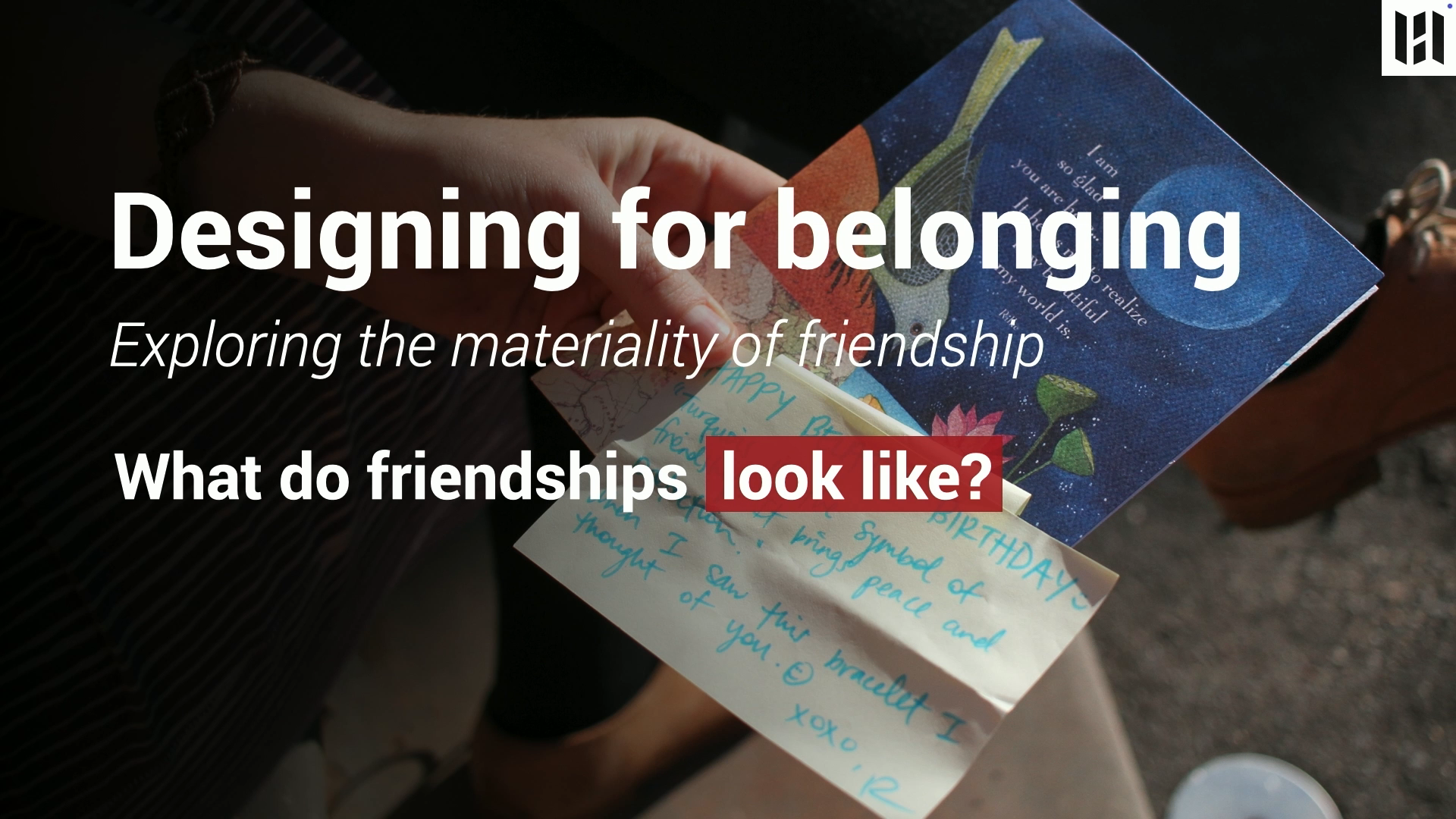
And I guess we're looking at belonging, but we focused in on close friendship in particular for this particular study. What do friendships looks like? What how do they deepen? And then how are they enabled and supported? This is where really the design piece comes into it most strongly. So I'm gonna run through those three. So the first one, are okay.
What are what is this thing that we're talking about when we talk about friendship? If we go back to our old mates from earlier, Colin and Colin A and Colin B. If we were to draw their friendship, you know, we might draw a social graph. They're connected. Great. They have a connection. But if we even think about the small vignette that I painted for you already, you know, they had they actually connected through a number of different things.
They lived in proximity to each other, they had some share a shared love of language, of music, they had of good whiskey. They then chose to do things together, to go to cafes together, to join each other in various activities, and they built this really rich dense network of meaning that developed over time.
And this is what when when we think about designing rich close relationships for the people in our lives that are important to us, this is what we're trying to make. We're trying to make these shared networks of meaning that are often invisible, but they're very important. And they're built through the the pool of enjoyment of going along to things together that are fun and enjoyable, and and the push of difficulty of going through hard times together.
And this this framing of let's we shouldn't think that we connect to people, but we connect through is quite instructive because it can help us think about, okay, well, if we connect through things, what can we learn from that to design experiences that help enable connection? If So we think about column a and column b, there was sort of an interesting case because they were what they described as strong from the start.
They had a lot in common, and it's particularly helpful to meet people who have values and deeper things in common as well as surface level interests. And they both invested in that relationship. They chose to build. Right? They chose to do stuff together. If one of them wanted to to the cinema, they'd say, I wonder what Colin's up to.
Maybe he'll come with me. As opposed to doing it alone. Right? So they invested in those relationships. And we also spoke to people that described that it was important to not only, you know, find people from whom you are strong from the start, find people that you need and choose to build that, but also to bring people along with you through change and difficulty. And this is a woman we spoke to named Ali, who she highlighted the importance of for her, when she had a child, there were some particular challenges that meant her entire life context changed quite dramatically. And this is the case for most people, but for her quite particularly. And she had some very dear friends that lived kind of in her old life over here.
Alright? Over over here. And she realized that if she wanted those friends to be part of her new reality, she needed to do some effort to invite them along, to help them see some of that experience and bring them in. And, you know, it's it was a it's a two way street. People need to offer that as well.
But understanding that her world had changed so much, she there was some work to do to bring them along. And if this is something we're trying to build, these dense relationships, there's some societal trends and contexts that make that particularly hard right now. One of the ones that I think is most salient is if we you know, if you're thinking thirty or forty years ago, if you wanted to see your friends, you might just go to the pub because pub was where your friends were.
Right? That's why there was only one place to go. There weren't any other places. There weren't any other options. These days, of course, there's thousands of things you might do, which is great for people like me. I don't drink heaps, so I'm not usually at the pub. But if I wanna find my friends, I can't just go to the pub to find them.
I've got a message, I've got a text, I've got a line calendar, it's all a bit of a mess. Right? So the the great thing is there's many wonderful things to do in our society, but there's much more fragmentation. And so as we're thinking about designing, the design briefer challenges, how do we build these islands of density within the midst of all that choice in fragmentation?
How do we build those small pockets where you might have even the this morning when they were discussing the, you know, the subcultures of those musical groups, those are great small dense islands of connection within a much larger context. So the second one is, you know, how do friendships deepen? When we were investigating this, one of the terms that comes up a lot is vulnerability.
So I don't know how many people have heard of, like, Brene Brown. Yeah. Got a few here. Yeah. So there's a lot of like popular society talk about if you wanna want deeper connections, you gotta be more vulnerable. You gotta open up. Right? And that makes sense intuitively, but it's also extremely vague. And it's also very clear that you're like, well, how much?
Like, you're there's definitely too much. Like, you know, and and as a as a bloke, like, you know, even a little bit's a bit hard. What what's the right amount? And so it didn't it seemed like almost right, but there's some other layer of something that could be helpful. So we did a whole big search through different kinds of literature that describe this in different areas, and the thing that we found most helpful comes from a fellow named John Gottman, who's a couples researcher in The States.
And they've done all this work videoing couples, married couples, and their conversations and coding all of the, like, explicit things that are happening in the subtext of also what's happening. The work that they did is fascinating for couples research, but it applies to any relationship. And they had to invent this new term to describe something they saw over and over again that they called abid.
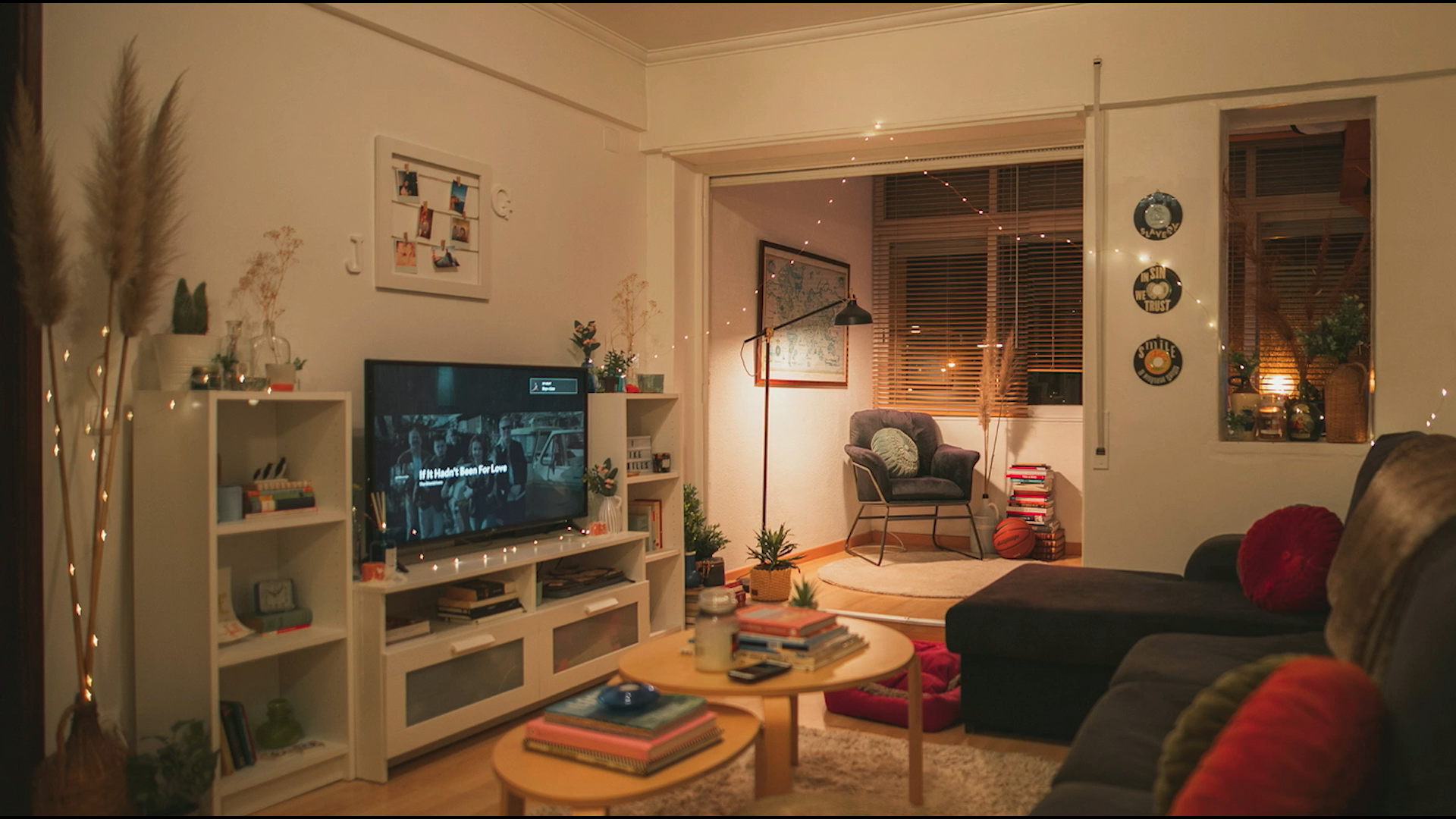
And so the canonical example that he gives of abid is with some partners sitting in a living room at home, and maybe one of them is doing the crossword, another one is sitting on the sofa reading a book. And then a a bird flies out past the window, and one of the partner reading the book sees it.
It's like, oh, look, honey. It's a golden finch. I don't I don't know birds. Is that that's a bird? Sounds like a bird to me. Yeah. Great. Look, honey. It's a golden finch. And the person doing the crossword says, you know, they have a choice at that moment because that the pointing out of the golden finch isn't just, oh, look, it's a bird.
Like, that's a little it's a little offer for connection, a little bid, really, a little like a reaching out. And there's some vulnerability in that because the person doing the crossword can say, oh, wonderful. That's yeah, we that that's it's so early this year. Usually, maybe that comes in November, but it's coming or or they could say, we saw one on our holiday last last last year.
Or they kinda just grunt and keep on going, and they kinda like can shut that down, that little bit of vulnerability in that offer. And so the they they described in this this cycle of bids as anytime that happens, anytime that you're offered a bid, you can turn away, you know, or you can turn and that that shuts it down, or you can turn toward.
And if you turn toward, that builds trust. That's the thing that's building. Right? So that's the the the the bid is the vulnerability. But then, I guess, the understanding that it's a it's a dance between two people. And if it's accepted, then that builds trust, which makes space for a bigger bid because there's more trust, a more vulnerable bid, and then that makes space for a bigger one again.
And so you get this kind of virtuous cycle of deepening. Right? And it helps that this is also instructive because it helps us think about, well, okay, if friendships deepen through this virtual cycle of of bids of increasing vulnerability and increasing trust, then there's skill in that. You know, there's skill in that, and there are structures that can enable that.
So there's skill in starting that cycle. So someone needs somebody's gotta go first. Right? If no one starts, the cycle never starts. But the person who goes first probably should go small. Yeah. There's skill in keeping it going. You know, you've got to respond to those bids. If someone's reaching out to you and you want that relationship to deepen, it's helpful to respond.
If you don't, that's that's also okay. Right? That's how things wind down. And you've to show up. And these sort of things are the things that help help get this cycle going, both in our own personal lives, but we can think about contexts that derisk it. Right? So you can borrow trust from a context. So right now, we're at a conference.
You can walk up to a stranger at a conference. We've all got badges well, I left mine over there. But you've all got badges, and you see someone else with a badge, you walk up and say, oh, hi. I'm so and so, and you see their name, and then you can have a conversation, and instantly, you've borrowed the trust of this container that we're in this conference.
And so we can design different kinds of contexts that allow people to borrow existing trust and can kick start those relationships. One of the other stories that we heard that I I love a lot is this young woman who was moving from she was moving over to Sydney, she was moving interstate, and she had had started that move, and she was really worried about building community because she was quite introverted.
But she knew it was gonna be very important to do that for herself, she really wanted that for herself. So she recruited a friend back home who she could call after she did something that was a little bit scary for her. So she knew she was gonna go along to like a, you know, a meetup group or go join a pottery class or something, and she was worried that it might not go well, and it might not, or you know, she might have a bad time, but she might have a nice time, she didn't know.
But she said when she did that, she recruited that friend to say, I'll call you at eleven when I get home, is that alright? Yeah, that's great. And then she felt comfortable going to the meetup, and then she knew that even if it was a total flop, she had a good story to tell her friend when she got home.
And so she said she felt like she had backup with her, someone sitting on her shoulder the whole time, and it made her feel much more comfortable putting herself out there in the world. So I wonder too, what are the technologically enabled solutions that allow for people to feel more, have a sense of companionship or not feel totally alone in vulnerable situations?
One of the other things that we heard a lot from people was that the the deepening of friendship itself wasn't often experienced linearly. Most people felt it happened kind of in particular moments, and there were thresholds that you crossed. So these were often times when people something happened that made someone realize that someone was a closer friend or a more important person in their life than they otherwise had thought.
So these were often times when someone needed significant help, or help that was significant to them, and someone showed up that they didn't expect would show up. I remember an old friend of mine describing to me something that I actually don't fully remember, of a time when she had a cat who needed to go to the the vet late at night.
We lived in DC. At the time, I had a car, she didn't have a car, and she messaged me if I could take her and her cat to the vet. And it was, you know, fine, I was happy to do it, wasn't a problem. And I literally don't remember doing that. But for her, it was a moment in her friendship, was like, oh, yeah, okay, this is a friend that I can depend upon, and that sort of we went up a level, I guess, the friendship. There are also intense experiences that you might share that you go through together, or or maybe introducing someone to a significant connection, maybe another friend who's important, a family member, a parent, a spouse, right, and that relationship going well, and then, oh, okay, this person kind of fits in a different circle now in my life.
Onto the last bit, which was really trying to understand what enables, you know, the formation of these friendships, the deepening of these friendships, the the sustaining of them. What are the different kinds of structures that help? And I think what we learned here is best told through the story of a fellow named David Bradley, who we did an interview.
He's an epidemiologist who studies how people move and how that's changed in the last few generations. And he wrote a great paper, where he used his own personal life story as an example of the data that he'd analyzed from around the world, because he realized his own life story was emblematic and almost perfectly matched the data, which was that his great grandfather, in his entire life, he was born in Northamptonshire in England, he had traveled in his whole life a little square, about 40 square kilometers. He'd gone to the next town a few times and another town over, and had traveled, but never very far.
His grandfather had traveled in a, you know, a rectangle about 400 square kilometers in Southern England. His father had traveled throughout Europe about 4,000 square kilometers, and then David Bradley himself had traveled all around the world, you know, in a square of about 40,000 square kilometers. And this particular case exactly matched the overall statistical data he was looking at from around the world, which is that our lifetime movement on average as humanity has changed by a thousand times in just four generations, which is wild.
You know, and then that's the obvious like, that's just one thing. Right? Obviously, we talk all the time about the pace of technological change early. You saw that people feel like society and technology is changing faster than ever before, faster than they want it to. Right? There's so many things are changing around us that our cultural and social norms, our institutional structures, our ways of relating to each other haven't caught up to that change.
Right? That's the hard part. The exciting part is that as designers, this is our job. Our job is to help imagine different futures, help imagine different capabilities, structures, to help fill the gap, to backfill, and make sure that our different social and cultural norms, our structures and practices match this new reality, and help us still have those close relationships, even in in especially in the world we live in today.
So we have this greater mobility and opportunity in this modern world. The downside, right, is less structure. So if you lived in that small town in Northamptonshire in The UK, if you were a bit different, you might have had a hard time. Or you might have just been weird Eddie and everyone knew you were weird Eddie, that was also fine, you know.
But probably, like, if you're bit different, you had a hard time. Like, there are only so many ways you could be in that town. Now, you can go many other places, you can be lots of different things in the world, that's wonderful. But the good part of that small community was that naturally, over time, you got to know the people around you quite deeply.
Some of them you grew closer to naturally, others you didn't, but you had your people. These days, it's very easy to take advantage of the opportunity, but also still drift apart from that sense of closeness. And we see that in the data, I won't belabor you with all the statistics, I'm sure you've seen it in the news.
The loneliness epidemic, its killing us, it's worth worse than smoking, and all of these things. Right? The other story that we heard in this part of the research that I found very instructive came from a fellow named Craig. And it begins to offer some solutions to this challenge. So he was from Adelaide originally, and he had a very close group of like young male friends when he was in his teens that all knew each other through church, originally.
They all then set off around the world. They all left the church. They all went off and did their own things. He particularly went to Sydney and Northern Rivers, and then he moved back, and they all moved back at some point, and they're all having kids. And they used to be their, you know, they're sort of like lifeline. They're like, these are the people these are my people. They help me keep me me, keep me sane, help me know who I am in the world, what I stand for, what I do. But they just stopped seeing each other because they were so busy. So he, you know, he said they were all having kids, they were just exhausted all the time, and they just never saw each other. And of course, they didn't belong to the church anymore either. Right? So they had no structure.
And one of the friends had enough. He called all the other guys. He's like, look, this is ridiculous. Like, I actually really need you guys right now. This is the busiest and most difficult time of my life. We need to prioritize our relationships. I'm gonna book a standing dinner at the local pub, like, every Sunday, on the first Sunday of the month.
Show up if you can. If you can't, no worries. It's 5PM every time. He said, it's gonna be a mandate to have a man date. I'm gonna do it. And so they did this. Right? So they just twelve twelve dinners a year, and Craig said he might make six, you know, might make about half of them. But he said this became a way to keep the sort of beating heart of that little community going.
You know, he said, if you go to one, then you catch up with people, you hear what's been going on, you plan other things in between, oh, yeah, your birthday is next week, let's go do something. Oh, did you hear about that performance at the whatever, let's go. And so it became a way to keep that that going. It became a a container, right, to hold those friendships.
And I guess the big finding here, right, is that I don't know what your experience is, I have definitely had the experience of friends saying, oh, we must catch up. Let's just we'll just I'm gonna check my calendar. I'll I'll I'll get back to you though. I'm not sure. May maybe next weekend. Maybe look. May it might have to be November.
I'm not sure. What's in the the what happens then is the friendship just slowly drifts apart. Right, with despite best intentions, because it's just very difficult to manage the logistics of that. Whereas if we can put stronger structures around them, stronger containers, it's much easier for those to form, to deepen, and to hold on to them. This these two women deepened their friendship through a a whole community campaign to save a yeah, to save an old heritage building that was very successful and and beautiful to see.
Often volunteering, that's a great way to do it. And we heard from people all of these different fantastic examples of diverse new structures and containers they were experimenting with in their own lives. So we heard about fortnightly drinks, pottery classes, community projects, kite surfing clubs, nature playgroups, neighborhood dinners, swing dance classes, intentional living communities, yearly camping trips, WhatsApp groups, online tools, all, you know, all of the above. And so people are, you know, people are finding their own way, patching things together.
But I think there's an opportunity to do a lot more. We heard a few things about what it takes to design a good container structure, whether that's physical or digital. Seb actually spoke about some quite quite like eloquently about those musical communities, right, that create the design of creating the space and the vibe and the emotions of that this morning.
The the structure of it itself, I think, is quite important, whether it's a physical structure or a regularity, right, with the like, with with the musical community, it would have been the regularity of gigs. I mean, you'd see the same people at the gigs over time. Right? There'd be a set of bands that would always be playing you'd always go to, I'd imagine.
For other people, we you know, having a physical place or having that, like, you know, same one Sunday of the month that Craig highlighted, the structure, the physical structure. Also having some intentionality, the fact that it's about connecting is important. So the idea that, you know, it's if and and then having some space about about being about something else.
So if the connecting part is like making eye contact, that's great, but it can get a bit intense, and so the the space is also like, let's let's focus on something else for a little while too. And containers for forming new friendships, they need a lot of space. Right? They need a lot of of air, you might call it. Right? And containers for for old friendships or deeper friendships, that's much more about intentionality.
That's you can catch up just for the sake of catching up because you care about each other, and that's enough, and there's no vulnerability or risk in that. Right? There was a maybe I'll share one more thing about that, which is that I think that have you heard of the term MacGuffin? Is that new to anyone? There's a few people who heard it.
Yeah. Great. So it was invented by Alfred Hitchcock, I think probably in the, you know, in the early days of film when he was trying to describe the thing in a film that drives the action, but it's not the thing you mostly care about. So it might be like stolen nuclear a suitcase of stolen nuclear codes, and everyone's chasing it around the world, and that that drives the action of the movie.
And it keeps you interested and engaged, But what you usually care about, what you usually walk away from the movie with is a sense of the characters, their relationship with each other, how they changed and developed over the course of the film. That makes it a satisfying film. But you need both, like, need the characters and the relationships.
You also need the MacGuffin to drive the action. And so I think often, the the MacGuffin is like the, you know, the air, the the the the spaciousness. Right? And then the relationships and the intentionality are on this side. You need you need to balance both of those in your design. The last story is a way we spoke to a fellow named Rowan, who gave us this quite beautiful analogy about growing friendships.
And he said that for him, he often thought of friendships as, you know, a plant in a small pot that you might water every day through daily contacts. So if you know someone at work, you might might see them every day, you're watering and deepening that relationship. And it grows over time. But at some point, it's gonna reach the size of the pot that it's in. So a work friend, at some point, will get a certain amount of friend, and then that's about the amount of friend they're gonna get.
If you would like that to be a bigger friendship, or you want it to persist once you leave that employer, you need to repot, he said, that relationship to a bigger pot, or a bigger kind of you might invite them out for a drink after dinner. You might invite them over to your house for dinner with your family, a much bigger pot again.
Right? And so one of the ways to think about how we deepen that, yeah, is to to take this this I guess, the the take the structure of the container. Alright. There's a whole lot more, which you're welcome to read. There's a free much much longer sort of mini ebook, really, report online here. I'll put this QR code up in a second again, if that's helpful. But just to round us out, listening to Seb this morning, he spoke about that as designers, that our main responsibility is to help people imagine different futures, and then make and enact those futures, which I think is a really beautiful way to think about what we're what we're trying to do.
And so my hope, my invitation in this this talk is that you take little bits of it for your own life, and then also for the work that you do to think about other places that we can so if you remember back to the big circle at the beginning, there's like, you know, there are big structural things in society that make this happen, make it inevitable, make it hard to have close friendships.
The only way that's gonna change is by many many thousands and millions of people taking lots of small actions to try to shift and change that. Right? All of us in our daily lives, in our work, trying to build spaces for belonging, for connection, to deepen and and counteract and really backfill, you know, the the changes in modernity so that we can still keep up.
So thank you for your time. I appreciate it. Enjoy the rest of your day.
People
- Wurundjeri people
- Colin Angus
- Colin Bogner
- Brené Brown
- John Gottman
- David Bradley
- Alfred Hitchcock
Concepts & Methods
- human-centered design
- systems thinking
- ethnographic studies
- architectural inquiry
- cultural probes
- social graph
- bids for connection
- turning toward
- borrowed trust
- friendship thresholds
- loneliness epidemic
- social containers
- MacGuffin
- friendship repotting
Organisations & Products
- Hinterland