Fireside Chat
From Electronic Music to Tactical Media
The conversation traces Seb Chan’s path from Sydney’s early-1990s electronic music scene into media production and event-making. Chan describes how computer labs, warehouse parties, zines and tactical media fostered a participatory culture in which people could pull technology apart and repurpose it.
Seams, Friction and Collective Agency
Chan contrasts the malleable early web with today’s controlled platforms and critiques the ideology of seamless, frictionless design. He argues that visible seams help people imagine alternatives, while safe communities and public visibility enable solidarity and collective change.
Making Museum Collections Playable
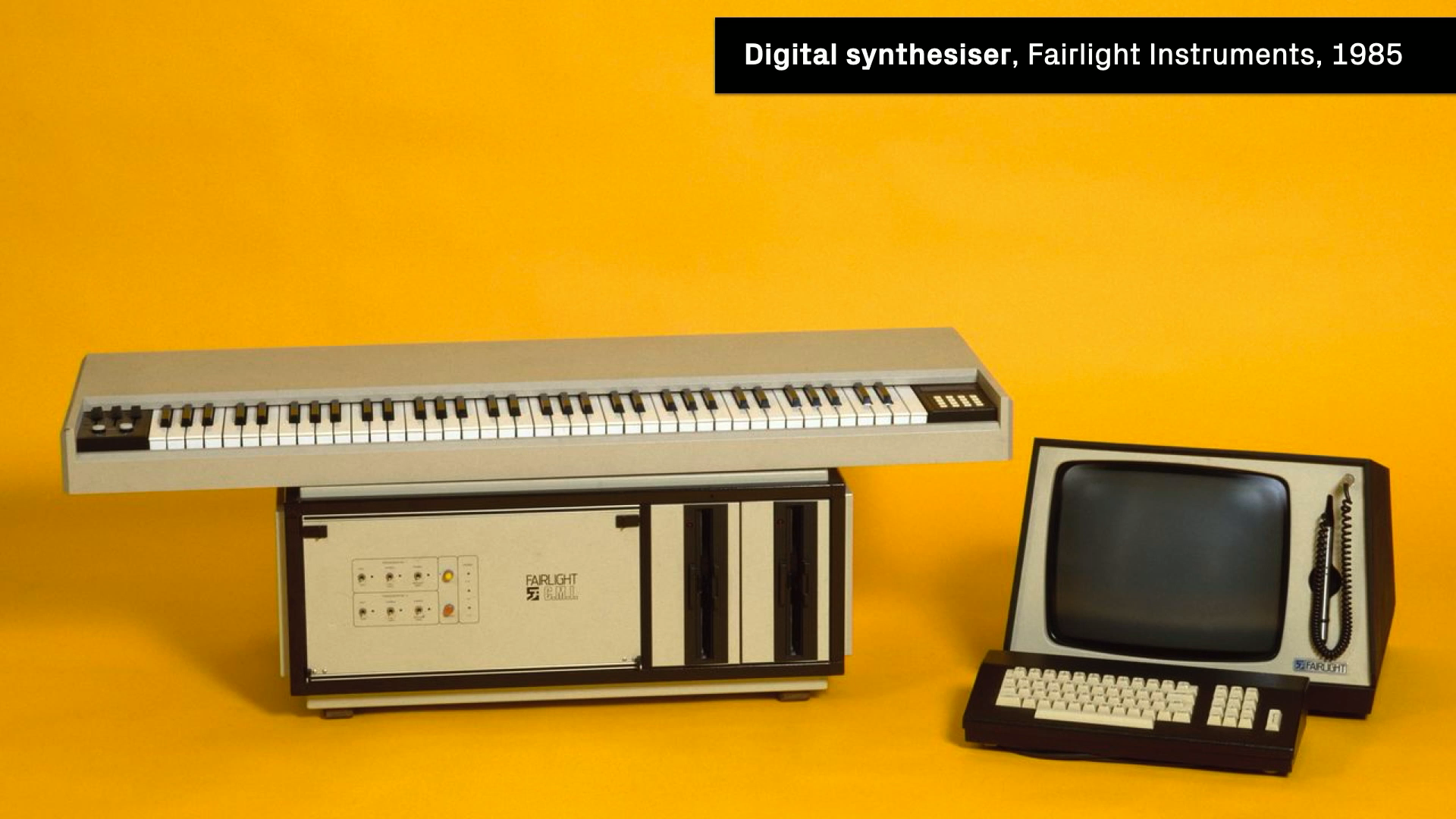
Chan recounts moving from social work, music and technology into the Powerhouse Museum, initially as a Y2K consultant. Faced with silent photographs of historic synthesizers, his team created an interactive project that let students hear, sequence and collaboratively remix their sounds.
What Does a Digital Museum Collect?
At the Powerhouse, Chan studied how visitors used online collections and opened collection data to broader audiences. His work raised a deeper preservation problem: when culture consists of software, games and networked services, museums must preserve experiences rather than merely physical objects.
Rebuilding Cooper Hewitt Around Participation
Chan explains how Cooper Hewitt treated its collection and renovated building as a primarily digital experience without isolating visitors behind headphones. Working with Local Projects and manufacturing partners, the museum developed a physical pen that invited every visitor to collect objects and make designs.
Designing Museum Time and Attention
Chan connects Cooper Hewitt’s pen to ACMI’s cardboard NFC-enabled Lens, which visitors use to collect exhibits and revisit them later. These physical interfaces deliberately slow visitors down, making time and sustained attention central materials for experience, service and interaction design.
Public Institutions Between Subculture and Scale
Reflecting on his transition into institutional leadership, Chan says a strong focus on citizens and public value distinguishes his approach from a purely commercial executive model. He positions museums as bridges between experimental subcultures and mass audiences, creating safe settings where unfamiliar work can reach meaningful scale.
Legible, Accessible and Memorable
Chan introduces ACMI’s three experience principles: legibility, accessibility and memorability. Audience research tests whether experiences meet diverse visitors where they are, while purposeful friction makes encounters memorable enough to build trust and introduce unfamiliar ideas.
Trust, Technology and the Public Imagination
Chan links declining institutional trust and privatisation to a widespread feeling that technological change is happening without public control. Looking back to the recession, subcultures and early web of the 1990s, the speakers argue that today’s anxiety may also contain openings for new alternatives.
Turning Archives into Remixable Media
Chan identifies renewed agency as the central challenge for designers, then describes ACMI’s work with machine learning since 2016. Computer vision and audio analysis can turn copyrighted film, television and game archives into searchable, remixable resources, provided the museum manages privacy, ownership and innovation risk carefully.
From Experimental Search to Live Collection Tools
Examples from artists and early subtitle-search projects show how media can be indexed by dialogue, setting, image and sound. Chan demonstrates ACMI’s live collection search, which finds spoken words, barking dogs and visual subjects, and generates supercuts from machine-created metadata stored in Elasticsearch.
Open Knowledge and the Next Social Contract
Chan describes the leadership tension between sustaining daily operations and preserving room for experimentation during difficult economic times. He advocates sharing public-sector innovation across institutions while calling on profitable technology companies to return value to the open-source and cultural ecosystems that developed their tools and talent.
John, thanks, HCT.
Hey. Thanks, man. Alright. So I'm gonna tell I'm gonna tell you how I No one, John. So I knew Seb or well, knew of Seb in Sydney. So I I lived overseas for quite a few years in the early nineties and came back to live in Bondi. And now we might think how glamorous and glitzy that let me tell you, Bondi in the early nineties was not glamorous and glitzy.
Two people were shot in my street the year I moved in. Right? It's a very different world now.
It was actually affordable perhaps.
Well, it was totally affordable. People literally said to me, why would anyone wanna live in Bondi? Right? Anyway, so but the reason I bring that up, used to I worked from home. I had started a tech we didn't call them startups. Right? Had a software company and I worked from home and I religiously listened to the Sydney equivalent of two triple r.
Right? It's two SER. Yep. Student in educational radio, I believe that s e r stands for. It's UTS
I love that.
Yeah. University. And Seb, I found out many years later, had a show on that. So Seb Seb was in a a a kind of seminal electronic music act you may have heard of. If you haven't gone look them up, I'm sure there's stuff on the Internet.
There probably is.
Yeah? Yeah. Called Sub Base Snarl. And so that was my first introduction to Seb. So, mate, why don't we start there? How did you end up in that electronic music? Well, when that was incredibly novel, like making music with computers Yeah. Still very new and young. How how did you get there?
I mean, the nineties were another world, you know. I think we we were sort of at that time where the Internet I I got access to the in the in the Internet through my bandmate, Luke's student account at uni because he was studying computer science, and the the only people who had access to the computer labs to get on the Internet before the web were computer science folks. And, you know, you'd be downloading as many floppies, three and a half inch floppies of doom.
Yeah. Things like this, you know, early nineties. And then the music scene kick kick kicked off electronic music scene kick kicked off out of the parties in Sid Sydney. So I was a DJ with Luke. We had a crew. We played big big day outs and all sorts of other things. So we got quite big. We had this radio show, and I was involved in a lot of media production as well as event production.
So organizing and taking over venues or spaces that are not usually used as venues, like warehouses and stuff for one one one night, and that sort of was the beginning of my what you might look back on and renarrativize as a design career. Yeah. I was spaces.
Because that's not a word we would have used for that back then. Like, the what did the word design mean? Let's say 1990. When would you have identified in any way as a as being involved with design?
Not not capital d design. Capital d design was, you know, all all the the fashion and things Yeah. Things like that that were very fancy. Yeah. And we were sub subcultural. Right? We were trying to not kinda be that. We were photocopying. We were making zines.
We were photocopying things. We were doing radio shows. We were doing all sorts of stuff which was sort of what we called at that time or later on in the mid sort of nineties there was this whole thing called tactical media, which was using the tools of the media to sub subvert the media. So you had ad ad buster Adbusters.
Fantastic. I used to subscribe to them. I used to get them. Yeah.
Yeah. He Actually in paper. Right?
Yeah. That went and they were beautifully produced, high quality, super ironic.
Yeah.
He ended up being behind Occupy. Yeah. Yeah. Yeah. So yeah. Super interesting folks there. I've always had this thought about so if you look at even a little bit before then, the Macintosh computer comes along. Right? So we and and you found whether it was, like, the kind of software people were using to develop the zines or music.
The Mac was kinda instrumental in that. And it seemed to me it created this kind of group of people who when the web arrived, they were ready to fill it with stuff.
Yeah. It was that. It was also the cult culture of modding and and cheat code sharing from Commodore six sixty fours and these sorts of things where there was a sense that software and the plat platforms and distribution and all the things that are all hard to control now were under your control. So, you know, we we have a big exhibition on video games coming up in a couple couple of weeks.
Everyone has to come back to that. It's a
big killer. Anyway, there's there's, like there was a period of time there where technology was in the home, but there was a culture of pulling it apart. Yep. And that's what I felt also with the early web. And nowadays, you know, for the last decade, you know, you're gonna make a website, you're gonna use Squarespace, most people.
Yep. Nineteen nineties, you were learning you were doing it by hand in notepad. Maybe you had a pirated copy of Dream Dream Dream where you Hot Hot from Australia.
Was a
lot of interesting like, it was that sense that it was malleable, and that was that sense of democratizing the tools of design, the tools of making, the tools of production, but also the means of dis distribution. So you had the means of production and the means of distribution were radically up in the air.
But, also, there was a culture then where, you know, we were live living in a recession in the early nineties.
Oh, yes. The recession we had to have.
Apparently so. So it was really tough.
I heard a chuckle from the old people in
the room. But but it was interesting because I con con con contrast with that with my my family now is that it feels kinda like that now, but without any affordability of housing, any affordability of going out to things, and any control of the means of production or distribution. Yeah.
So what we had in the nineties was really a Gen X bubble where you can get nostalgic about it. But there were a lot of lessons from that period, and I think that's informed a lot of what what I try to do and sort of a more radical practice around the possibility of things and using media tools.
This is a museum of media. Using the tools of media production and distribution to make those tools of tools available wide widely and also to get people to look for the cracks, look for the edges, look for the scenes. I I think there was this big push throughout the 20 tens of seamless seamless kind of design, frictionless design.
I think actually seams and friction are really important things. Yeah. They're super important. And that whole round rounded corners, all that stuff, the the sans serif fonts, all these things, they are political decisions. They have an ideology that forms around them and forms out of them. And I think there's a lot of lessons to be learned about how those how the smooth edges, the seamless seamless seamlessness exclude people, but they also stop allowing people to dream of alternatives.
Right? So the biggest challenges we have can only be worked through with imagination. But if everything is seamless, there's no space for that. Right? And we you know, John and I are probably old old enough to grow up on all that's possibly in our very early years of the seamless chrome chrome polished futurism.
Yeah.
But now it's all dystopian futurism, but there's no sort of middle ground in that. There's no sort of place where there's autonomy and agency to do stuff. There's no sort of or there is actually a lot of that going on, but it's disconnected. And I think the decentralized nature of that is, you know, the dark, dark, dark forest theory that Yancey Strickler and other people carry on about, that your own anonymity and the ability to fade away and disappear disappear from from the the in the Internet is keeping you safe. Mhmm. That actually disaggregates your ability to form coalitions of power and actually make change.
There's a point at which we need to get back into being visible, but you need to form safety safe communities in order to create that. And that's really if I think back to all the parties and other things I was putting on in the nineties and the February, all of the music scenes that I've been involved involved in over the years and all the sub subcultural design production and all that stuff, If that was mass scale, they would not have been safe. So there's a very similar thing in that that that the way communities feel safe, particularly if you're not you don't feel you're like other people, you feel safe by disappearing Yeah.
Often. But the disappearance also opts you out of the future you need to be part of. So how how do we form solidarity with others and coalitions to make change. That's really important. That's, you know, one of the the big ideas that I have around this place, but also much much of the other work that I do, is about trying to find ways for people to feel safe to imagine diff different things, not to just feel safe.
Because if it's just feeling safe, it's it's very easy to come back into the warm comforts of modern consumer society, which is actually part of the problem. Right? So that is my screen. There there there you go. Those those emojis capture the the feeling of the era at the moment.
Right? And so so I think we are in a very interesting time, and perhaps we'll have an arc that ends up and we'll we'll spend some time at the end talking about what letters.
There's two letters. Right? The a and the I letter. Right?
Yeah. Well, there is that. But but I think to be quite as I'm not sure whether that's of the time or whether it's creating the time or whether I think it's kind of compounding and Yeah. As a feedback. Yeah. But let let's come back because I think, you know, because I think and then there's a whole bunch of stuff happening around distributed social media. Yeah. Like, whether it's AT Proto Yep.
You know, whether it's, you know, the Blue Sky, the Mastodon. There's a bunch of really interesting things here, which feel
like SIGNAL. DMs the DM your stuff.
Yeah. Yeah.
Yeah. All those things.
Yeah. So perhaps we'll we'll we'll save some space at the end to think about where we are and where we are going. Yep. Because it's easy and I don't think entirely inappropriate to feel a lot of anxiety and, you know, concern about where we are, but I think there are the possibilities of optimism. I think I think we should also, just before we continue on this this journey, we should think about the world of the early nineties. Right? It it was the probably the that was the end of history. You know, Francis Fukuyama, you know, this idea that somehow, you know, neoliberalism had kind of become not just the dominant ideology, but just how the world was rightly structured.
You know, if you were, you know, gay, if you lived outside the mainstream, it you know, this was really the height of the AIDS epidemic.
Yeah.
You know, you were really, really marginalised. And so, you know, I I think, you know, it it was a time of of crisis in a lot of ways, and this new technology came along that opened up a huge amount of opportunity and possibility. And for the the next decade, at least, I think it embraced that. So and so where were you on that?
So so you moved into a a kind of more kind of traditional career role to some extent?
I guess so. I mean, I I kinda started out so that's those are sort of flyers from that era, the early nineties, you know, and I ended up working in IT.
Ricky lubes.
Sorry. Fundraising benefits. Six six six thousand people, yada yada, all those things. So I ended up working at the Powerhouse Museum at the RNP. Sort of end of nineteen ninety nine, and I was their y y two k con consultant. Like, the the crisis is gonna happen. But I'd actually trained as a social worker.
Right? So I trained as a social worker. I was putting on all these parties. I was doing lots of media production and media stuff. And I came to Powerhouse to fix their computers, right, like like you did. And it was really a job that, at that point, allowed me to go out on tour and play gigs Thursday, Friday, Saturday, sun that's Sunday night, collect a nice public sec sector paycheck, have flexitime. And then I discovered the powerhouse had this amazing collection of synthesizers. Right? I was like, what?
Right? And and this is something that stuck with me all the way. Right? So so this time too, the the powerhouse was very, very early on in Australia thinking about what what the web meant to museums and what digitizing a museum collection meant. Right? So I I ended up there. And because I was, you know, doing lots of stuff in the tech world, I was also reviewing video games.
So I was writing for various video game magazines and stuff too then. So I had this sort of weird hybrid career, what we used to call a slashy career there. It was like you're this slash that slash that slash that. Anyway, that disappeared later on. But, anyway so the powerhouse was digitizing, I e photographing all the things in their their collection.
They're still doing it now. But the problem is when you photograph a thing like this, which is from the museum's collection or this, you can take beautiful photos of them, but you can't hear them. Alright? And, like, what's the point of these if you can't hear them? So one of the very early projects this is probably about 02/2023. We got some fun funding, so I started running the web team there. And we we got some funds from the New South Wales gov government to create a way to digitize these that would allow students to play them again, right, to hear their sounds again.
And that that was interesting because it was digitization going beyond just taking photographs, but actually the use piece. We think about what the work we're doing here now around preserving video games. Yes. We can take photos of box art and stuff, but actually wanna be able to play that video game. You know? Just wanna be able to play play that video game in its newest remake, I e, star star Star Wars style with films where it's con continuously remade until it no longer exists.
But the video game as it was in 1987 or in 1999 or whenever. And so those sort of ideas around making old things relivable has stuck with with me. But, anyway, with this, we designed a website that allowed you to hear, remix, and make music with these.
And we worked with Kenny Sebeer, who then formed Elephant Tracks, a hip hop label in Sydney. Kenny was Kenny made a piece of soft software using Java. It's early Java Java. People forget.
Yeah. It's like we Java was so hot. It was such hot. Like, can you
Not JavaScript like Java. Like, not
just But, honestly, like, it was the like a thing. Technology in a 95 for, like, nine months. Yeah. Nothing was hotter in the world
than to Java. Can you download those plugins for Oh, my Like, it wasn't it was the AI. You have it easy, really, honestly.
Right? Like
Yeah. But because you had plugins and stuff, it was hackable. Right? You could do different things with it. It didn't all come in a package or box boxed up. Anyway, that's all other stuff. So Kenny had made this project called Dice, which was this synthesis sequencer that allowed you to sequence samples, so a beat, a bass baseline melody like you would nowadays on your computer.
But it would do use TCP to do that in real time with other other people with minimal late latency. Seems all obvious now we have these devices in our pockets with very very low latency. But back then, that was really, really hard. So we worked with Kenny, and we made that available across New South Wales. Right? And that was really cool.
But, of course, it was, like, maybe ten years ahead of its time because no one knew how to use that stuff. So it was a cool idea, and that was sort of one of the things. So we had made this website. It was done in flash of all things. So you can't see it now. Like, it doesn't work.
It's not preserved. So anyway so that was sort of the entry into that. So I ended up in museums. I stuck around in museums, and I became very in interested in how to make these old things come to life in a way that made them usable again for people now. So I was at Powerhouse for many years, and I did a lot of work open accessing the collection.
So we did a lot of work making all of the museum's collection then available to people. We did lots of stuff around look looking at how school school school kids used those museum collections. So you when you were doing your essay on, in quotes, history, You might go to a museum website, and you might look in the the collection for source source source material, and the curators have written these blobs of text.
We do things like tracking the bits of blobs of text that people cut and pasted for their essays so we could write them better. So stuff like that. So we did a lot of prod projects around tracking how users used museum collections, and that led to lots and lots of stuff lots of stuff around social media as well.
And I was very interested with my teams in in in sort of what a what a what a museum on the Internet actually meant. And then, of course, how does a museum collect the Internet? So I don't know if you know, but the Powerhouse has the original server blade that ran Google Maps. Now that's just like a like a rack mounted server blade.
How the hell is you gonna go into a museum exhibition and go, wow. Google Maps was first run on that in Google Sydney. Like, it makes no sense. Right? So so that's that's one of the challenges that faces museums as museums begin to collect culture, and cult culture is software now or media and software. What does a museum actually mean anymore?
Because the physical things are not physical.
Right? But ironically too, though, you've done a lot of work, and, again, I think this is where you've been years, if not decades ahead, with the physical experience Yeah. Of the of the museum Yeah. And its collections.
Yeah. So I you know, when QR codes before they were even a thing and phones were like that knock Nokia phone on the bottom, that was an Internet connected knock Nokia phone that actually scanned QR codes in 02/1989. We did a thing where you could go around your the powerhouse and look at things from their fashion collection with these QR codes that were so dense, you couldn't scan them because the resolution of the camera on the phone was anyway, I think you know what I mean. So I went from there to working for the Smithsonian.
So the Smithsonian is most mostly in Washington D DC, and you've probably seen it in the news of new news of late in the great purge that's going on there. So So the Smithsonian also has the design museum, the national design museum up in new New York. So Bill Mogridge, who was hired as the director of the Cooper Hewitt in 2011, hired me from Sydney to come and do this transformation of the Cooper Hewitt, which is in Carnegie's old home in New New York. So this is a block or two north of the Guggenheim. It's a beautiful museum, but it's a it's a historic house. It has this amazing collection.
And Bill, you know, Bill was a industrial designer who set up IDO, and Bill had invented the laptop, like the clamshell lap lap laptop. He'd put the first laptop into space on the space space shuttle. So Bill was like Seb, come and work for the Smithsonian. He's like, oh my god.
I'm gonna do that. And what was interesting about this place, the history of this collection was that it had been collected by these two women in the early twentieth century, the Hewitt's sisters. And it had been always thought of as a study collection. It was a collection that the Hewitt sisters in New New York had collected from all over Europe to be copied by American young American designers in the early twentieth century.
So it was already infused with this idea that good design comes from learning from others and copying them. And what was also really fascinating was here were two women who had brought together this really sig significant museum collection at the beginning of the twentieth century. So I got brought over.
I worked there for four four four four years. We rebuilt the entire physical museum by hand, digitized the entire collection, put it online from that, digitized all the things. So if you don't have a photo of this print and you've got a 100,000 prints, how do you know which print is which?
So we had these initially, and we ended up with digitizing all of those, allowing color search, show me all things in green. All of this was, 2012. Right? So this is, in the old days. And we were working through this idea that as we were redesigning the museum, most of the museum would be experienced as a digital experience. Right? So the the physical museum was quite small, and only a very tiny portion of these things could have could ever be shown. So everyone was going around with these ideas, give people or audio guides, etcetera. But, of course, everything that's a tech technology and physical space has political outcomes or social outcomes too.
So this is Drew Austin. Headphones, and you know this, you walk around the city with your AirPods in or your equivalent, you don't talk to anyone. We never made that choice collectively as a society to not do that, to not talk to people on the street.
That's the effect of us doing this. And I think we heard in the keynote yesterday morning that I popped into, all technology and all design decisions have these impacts on us. So the last thing we wanted in a museum was to put everyone in this cocoon, this sonic cocoon.
Right? Because we wanted the museum collection to be one that was a shared experience. And, also, at that that that that time and this sounds very quaint now, but, you know, in the early twenty tens, there was this this thing in the design world that design is all around us. Every everything is design. It's like, yeah, it's true, but if every everything is design, then nothing is design as well.
And how do we differentiate good design from bad kind of design? So anyway. So yes, all tech tech technology has these social and cultural dimensions. So we worked with a firm called Local Projects who was in their early stages there, and they pitched this notion of give everyone a pen. Make every make everyone a designer when they come into the building.
This was 2011, twenty twenty twelve. Kick kick Kickstarter was going through that phase of making physical things. Right? So there was this big push. Let's make things with atoms instead of bits. I can tell you that is a good thing in theory. I spent the next couple of years working through these problems.
You make physical thing. Oh my god. Like, this is from a design charrette that was run with GE's product team and my my team back then. These were the key issues that came out of, like, a design charrette for a few hours. How do you make it seem better than a smart smartphone?
It's new New York, so how do you know it's clean? So the pen that I use, which actually turned out a bit like a vape at the end of the day, if I pass it to John to use, how does he know it's clean? I mean, seriously. So we did early video prototype. Like, making a thing is, like, super hard.
Like, making websites easy, really seriously. So anyway, this was what one of my team did to just prove that it was actually a thing. Right? Like, do you build a narrative, a story to get buy in, to get someone to fund this. It's new New York, and it's the boom of, you know, Zurp, zero in in interest rates, capital, and all the rest.
Raising money for these things wasn't actually as hard as it is now. But it was this idea that you'd become a designer by moving around the museum with this pen, creating things, taking them home. Make the thing, well, that's another hard thing. So my team worked with designers in Spain and manufacturers in Taipei to actually make the thing.
Like, this is manufacturing the circuit circuit boards and test testing them. 3,000 of these. And this was it running in 2014. This was with local projects. Let's see if this works. Here you go. That's all me and the curators putting the batteries in the pens. Let's see how this goes. So let me just see how this goes.
So this is the museum. There. So, you know, Koopa, Hearut, May's May's thing. So when you came into the museum, you'd be given this pen. Right? You'd be given the pen with your ticket. See what I mean? The vape. Anyway. Physical. I didn't used to have grey hair.
I used to have more hair. Physical is hard. Physical design is really, really, really, really hard. But it's amazing because we had to, as a result of this, think about that whole customer journey. We had to think about what happened to it afterwards. We had to think about the digital interfaces that this worked with, and luckily, you got another one here down down kind of stairs.
So if you haven't been downstairs, here you get a thing we call a lens that allows you to collect all the things as well. But I'm kind of like the pen which you had to give back and we had to clean and put batteries in, you get to take the lens home with with you. So that's kinda cool.
Right? So this is this is running down kind of stairs. We put this in in big redevelopment in expanse expansion here between 2019 when we closed the doors pre COVID to 2021. We've just clicked over 20,000,000 things collected with these lenses in four years. Right? They're made of card cardboard.
They use NFC, blah blah blah. Things. They're physical. But really, at the heart of it, it's about refocusing the visitor, refocusing your attention as someone who's using the museum in quotes. You're the user of the museum. They ref refocus you, and they slow down.
So really importantly, in this world, carrying this around as well as your phone slows you down, and I think that's about what I I I can't believe I did this. Valuing time here. Right? So we're a museum of time. A museum of video games, museum of film, a museum of TV. You can't skip through this muse museum in the way you can a normal gallery. We're like, I like that painting.
I like that sculpture. Next. Here, you go watch stuff. Right? So yeah. So, you know, when we were working with Second Story on this, this is 2018. This is sort of this time map of how long we'd expect people to spend in the gallery. So we're designing with and for time. So these these sort of artifacts of that process kind of that's my old life. Right.
So there's stuff like like physical design, digital design, service design, all those things smooshed to together.
So we've sort of seen you had this pre professional, like, capital d design Yeah. Kinda career. Yeah. You had this, you know, career as a designer Yeah. Who, you know, your job was focused on making things.
Stuff. Yeah.
And then you have become someone who now, like, ran teams and now runs an entire institution. Yeah. And, obviously, that's pretty strongly informed by your, you know, career as a designer. But what does that look like now? What what did that transition look like? What from your life as a designer really carried over, and what did you have to unlearn?
You know, how did that take place?
Yeah. Look. I think it's about you know, for me, it's always been about keeping a really strong focus on the user or, in this case, the citizen, the customer, and where value is created. So these institutions exist for people. They don't just exist. And I think that's been the thing that possibly informs what I do now or how I do it now that, say, people coming directly from a more corporate business CEO track might do.
So at at any institutions like these, traditionally, you know, who who run them? What kinds of people? Do are they more like people from business? Well, you know, what sort of It's
a mix. It's a mix. I think there's been a shift. There's been a real shift pre February, museum directors came out of the museum world. Post February, they come from adjacent worlds often. Media for example. For example, entertainment, the things that are adjacent but bring a kind of corporate philosophy to the purpose of the museum, and it's sort of about up optimizing revenue and these sorts of things, which I think, yes, is important, but also there is something very valid valuable in being clear on what museums are for as some something that is publicly owned.
And when you know, I've worked in this sort of notion of, I guess, public sector tech tech tech technology all the way through. So I was part of the government two two two point o
task force together many years ago. Right?
Appointed by the Rudd Rudd government and things like that. So I've been very in interested in what's the difference between private technology, private entertainment, commercial, and public. So for me, the point of a publicly owned space like this we're a publicly owned cinema as well.
You're sitting in a publicly owned cinema. How does this cinema get to show things that are not commercially viable for a commercial cinema to do? But also, don't just rest on that like, it's not difficult nowadays to obscure stuff. It is difficult to get obscure stuff to fill a cinema. So the the thing I'm interested in is how do we and this goes back to my very early organizing parties in warehouses for one night through to museum exhibit design, through to service kind of design, is how do you create an environment that exposes people to things they were not familiar with, makes them feel safe and safe and com comfortable enough to take that risk, but actually gets the weirdest possible things in front of the most amount of people?
There was a great example on this very stage a couple of nights ago.
There was.
That was fantastic.
Team team Rolfs, who were doing a live action motion to capture performance inside a video game engine on this screen. And I went to another perf performance of a Melbourne based crew last night. That is that is a possible future of performance where video games, cinema, and theater come together with tech technology.
Now the opportunity here in a 390 seater venue is to get that that many people engaged in that. Because how do you step from that being in a room of 50 people to a room of this size to a stadium? That's where the public space comes into play.
We are that middle point between sub subculture and mass culture. And I think that's really important, and I think that's sort of the thing. And also, how do we also create design spaces and design experiences that make people feel comfortable with things they aren't familiar with. And I think coming out of COVID, we're afraid of each other. We're afraid of difference.
We're more angsty. We're short attention. How do we create spaces that refocus us? And and those are choices that you as content creators, designers, and makers have a responsibility for. It's it's really an important responsibility. And I think in the commercial sector, that is, at the end of the day, driven by profit.
In the public sector, it is driven by purpose and social out out outcomes. And I think that's that's it's the commercial stuff's very easy to to measure. Quarterly reporting is a very easy measure. The sort of KPIs that we work work with are much harder. So we have these principles here. I'll just show these now because I was gonna get to these later. We have these what we call here the experience principles.
We have simply three experience principles, which are really about the design and feeling. So the first first first one is legible. The things we do should be legible. Now what does that mean? And as we as a pub pub pub publicly owned institution, that means that things need to make sense to people.
Now, as we diversify our audience, not everybody comes here knowing the same stuff. We live in a diverse community, in a diverse society. Not everyone has seen the same films. Some of the teenagers who come to our media studies film screenings here, so part of the curriculum, have never been in a cinema before. Right? That's that's actually more normal.
So what are you meant to do in a cinema? What are you not meant to do in a cinema? So there's that. So leg legible's the first one.
And that has to do with scenes as well. Right? Like, you show
So he here's here's here's just some from audience research. So we have an audience research team that's constantly doing this research. Right? So legibility, does the information that we show make sense to you? That's pretty good, I think. Is that moving up?
That's a very simple measure of legible. The next one is accessible. Is everything we do accessible? Now, we have different senses of what accessibility means, and I was sat in on Tia's talk last night. There's different access needs, but there's also a sense of does it meet people where they are?
So this is also, I think, quite good. And we track the changes in this. And obviously, some things will be harder and need more intervention than other things. Topics as well. And the third one is, are they memorable? So when you're designing experiences, I kind of don't want them to be seamless. I kind of don't want them to be frictionless.
I don't want to remember going to the shops or booking a flight or getting a cheap deal. But when you go to a museum or when you go on that holiday, the things you remember are the frictional friction to frictionful things, the things that stuck with you that you had to put a bit of effort around.
And so memorability and friction are really tied to tied to tied together. But all but interesting, when when you are legible, accessible, and memorable, memorability particularly, you can introduce new ideas to people. If you're not, it's transactional.
Alright? So all of that boils down to this. So after my visit today, I would follow a recommendation that this institution makes about a film you might wanna watch now. Video game you may not have known known about that you wanna play. TV show that you didn't know was also the the visual effects were done by the same team that was performing on the stage here a cup a couple of nights ago, or that the video game that you play on the on your commute was actually made by three people up in Fitzroy, for example.
So those are the sort of things that you need to build that trust, and that trust comes through those principles of really, principles. But I think what we've been able to do with these experience principles here is is is bake them in more and more, and that takes time. It takes a long time across a diverse organization where all of our staff here have amazing craft.
The craft here is incredible. You'll you'll know this just from the production of this this this event, the AV team and the care that they they they they take to making this feel seamless. There's a a shit ton of work going on there, and that's amazing. So that that craft piece is really important too, and I think the legibility of that craft is also important to people val valuing each other's labor and valuing each other valuing each other's work.
And I think in the pub public sector, we have a unique opportunity to do that and a unique need to do that. You know? The public's demand for better quality services, including cultural experience, is very high, and our ability to produce those costs money. Costs money, and it costs human labor, human resource.
We need more people, always. So anyway, that's that's sort of how I kinda see it. And I think at the heart of that, you know, is also this place being a museum of technology and media. I'm also worried about this trend that we've seen, which has been driven by by all sides of politics, all dimensions of politics, you might say. Low trust in institutions is not something that's just happened.
It's been a very specific political effort for the last forty years. And there are effects of that. Right? That's where we see the privatisation of things that were previously public. And that also means that now you have problems like this.
And this is where we end up in a culture where technology feels like it's not us in control of it. So Edelman's been running this barometer for, like, forever, and it's really interesting to see how that trust and this is this is from 2024. People feel our society is changing too fast, and technology is chain changing too fast as well.
And it's poorly managed. And that's poorly managed because we've left that to the market, perhaps, to do all of that work for us.
Which is my rant. Alright. No. I love a rant. You know me.
Well, it's not really a rant. And I think I think you all know this. Right? Like, we we've we've internalized this, and what I worry about is that we've accepted that that's the only way. And I think it's really important that museums and cultural spaces allow us to show that it isn't the own only way and that this stuff matters. Because they because my, you know, my my design friend, Annab Annab Annab Annab Jane, you know, said this more than a decade ago. And I'm like, what?
Like, this is this feels like now. And it feels like we've been in this period for, like, a long time. Yet for some reason, we always feel it's like right now. And so we've lost our ability to imagine alternatives. And that's that's what I think going back to the nineties. Like, you know, when John and I were growing up with with the early web, it was sort of seen as there was possibility and there was hope that something different could come out of a terrible recession.
Yeah. So this is exactly It's great music too. Oh my god. You know? Oh my god. So this is what I I actually wanna bookend this, but we started with exactly there. They're kinda late eighties and early nineties. And, you know, I I certainly know there are many in the room that was part of their lived experience whether that, you know, I was already well and truly an adult by then.
Not so much me. Yeah. I'm probably not even one now, but
Well, I think numerically at least.
Numerically. I
can't I can't vouch for that in any other way. You know, but I I I do feel, at least if you squint, they look like some real similarities, you know, like that famous observation that history doesn't repeat, but it might rhyme. I do I do think that. And it was a time of genuine, I think, despair, particularly if you were younger
Oh, yeah.
At that time. You know, we we had this idea of the as I mentioned, Fukuama and the the end of history. There was this idea that kind of neoliberalism and the kind of the American empire had kind of essentially, you know, like, and that's what the world was going to look like. You know, we're on the brink of the Gulf War, the first Gulf War there. Yep.
You know, you had these undercurrents of of subculture. You had the hip hop and early electronic music and things like that.
I've seen
all this. You know? And and then the web did come. The web did come, and it and it addressed, as you say, not just the main like, the the the means of production, but also distribution, and I think those two are really important. And there's a lot of anxiety today that I think kind of mirrors that, you know, professionally.
You know, obviously, it's a challenging market, particularly if you've been in technology, and we've lived in the Zurp, you know, for the last fifteen years, and a lot of people were employed at very great salaries to do a bunch of stuff, and, you know, that's something that we've seen in last thirty months or so isn't the case anymore. So let's spend the last bit of time we have thinking about that. Yes. Let's address the anxiety and the challenges, but also, I do think it's a time of opportunity.
And maybe we can talk a little bit to that.
Yeah. Look, I think there's certainly certainly in terms of access to things, there's huge opportunity. And I think that the challenge is more an internal mental challenge around how do we get out of the sort of sense of dis disempowerment, of agency that we feel.
And that takes energy and effort, and I think that's that's the piece of, like, figuring out how to create that energy again and direct that energy well. And I feel that's where this city particularly is still bound up perhaps in the COVID fallout or as as this sort of mental fallout of that. So Melbourne is interesting in that.
There's such amazing stuff going on here, and it's small scale, and how do we grow that up to the next piece without breaking that energy? You know, I think that's that's really the key, and I think you've you've got it takes effort to do that. Takes a lot of effort to do that, but I think as designers, you you've well placed to do that.
And I think the other thing around this is the the way we think about new tech technology and the way we perhaps harness those things like AI. So we've actually been working with machine kind of learning an AI here since twenty six sixteen. And one of those things has been about this sort of challenge.
When I started here in my old job right at the end of twenty twenty fifteen, I was like, wow. It's great to come to a museum. It has this collection. Oh, it's all under copyright. Oh, it's all, like, on film film film reels and video types and these video games. How do you even search that?
How do you even nav nav navigate all that stuff? Let alone make that use useful to users. Because, you know, when when you go down to the galleries, which I do encourage you to do in the in your lunch break, There's this thing we call the edit kind of line, which is made up of all these little clips, memetic clips out of film and film and TV, and you create a little sentence out of those with magnets. Right?
And it plays the clips. It makes a soup supercut for you. That's how we think about media. So I I think, you know, me and my fam fam family, we we've you all have grown up in a memetic age. Right? So you think about little snippets of video as representative of other things. You may not have ever seen the film or TTV show that that little phrase has come out of, but you know it, and you've seen how that's changed meaning.
And so when I was looking at think thinking about this whole collections thing, it was like, how do we make how do we turn what we have as an archive into something that is malleable, remixable, usable? How do we create a sample library out of that? And what's interesting is with machine learning and computer vision and computer hearing, you can do those things now in a way that is more accurate at much lower cost
now
than was even imagined three, four years ago. We we we can do lots of things out of that. And what what what my my challenge then becomes is creating the risk environment across the org the organization where we're able to take sensible risks to create new opportunities whilst protecting other things that you know, We have what we call a risk appetite statement that says the level of risks the organisation and the board will tolerate around different things. Health and safety, zero tolerance of risk.
Innovation, high tolerance of risk. But what is innovation? Innovation where? When you've got all your materials under copyright, how do you create a content aware search of that where you don't wanna be uploading all that material to a third party tool that may train its own models based on that material?
So you need to figure out how to do that in house on your own Chrome, maybe using open source solutions. Those sorts of things. So those are the choices that come down to the technology teams here, and those then create other things. So I've got I've got a couple of examples of that. So you're probably like, what what what is all this?
What do you mean? So this is from, like, ages ago. Right? So this is sort of this is sort of the provocation from, like, twenty six sixteen. And so I was at a event in The Netherlands in 02/2010 where I was keynoting there called Picnic, a big media and ad tech thing. The artists who created this so this is by two brilliant artists in 2007.
It was a content search of, basically, film and TV shows. And what was interesting, it used as its dataset the caption files, subtitle files that were shared with torrents. They didn't didn't share the torrents. Right? So there's no video on this. Right? But you could search for the word museum, and you get to I think this is episode five of series six of mad Mad Men. Right? So you could search for the word museum within this corpus, and that was then used for to create this arch archive of Bollywood films.
You search all the Bollywood films. Right? This is, like, way before AI, in quotes. Sam Levine, a New York artist, made this search that could do this with films too. So this is the word time being said in this film time. Anyway, this is this is me running that tool in 2022 of me to use saying the word museum change or data within a video of a talk I gave.
Right? It's a soup super cutter that if we've got all audio, it'll play. Hopefully, maybe. Maybe I've turned the audio off. Museum museum museum Supercutter. Automatically generated Python scripts. Right? Super easy. Museum national museum of the museum. Another artist, Anastasus Germanidis, did this, which was creating a search of his blue blue blue blue blue ray library based on the locations that these scenes were set in.
Anastasis then went on to create run runway AML. So he's one of the people put behind run run runway. So, again, all the scenes sat on a beach. Right? Kinda cool. Right? But yeah. So that was cool. And so we were like, well, what does that mean for us? So that's that's something from our collection when we did digitize it.
Obviously, it looks like a film film script a film digitized roll of film. Right? You can go to our website now, and you can now search for technology, for example. And you can say, here's all the normal museum collection results. So all the things where tech technology's in the metadata. But now you go, well, what what what about when people say the word tech tech technology?
This is on the website. This is this this runs live. Alright? So this is and you can not only do that. It'll jump to the moment in that digitized piece of our collection where that's used.
New technology is a pretty frightening thing because I don't think many journalists can say
Yeah. That's kinda cool. But what what what about if you wanna see where the dogs are? So now we go, like like, where where are the where are the things that sound like a dog? Now this is not something we'd ever thought would be possible. So here's who's gonna catalog it like this? So here's where a com a com computer has heard a woman singing and a dog barking.
Okay. I'm from Can you hear the dog? Because we're living in Okay. There you go. So now you can also, of course, find all the things that look like dogs too. So that's on the museum's website now. Right? So and and what's interesting about this is the user experience of this is frankly not very good yet. It's not yet good.
But this is like going back to 02/1934 when we doing more stuff with the Powerhouse Collection on 1993. Right? Right. So this now has created all this new metadata sitting in Elasticsearch that now we can do new things with. So the team's been working on a Supercut generator that could spit your search results out like this.
Museum. Museum. Museum. Change museum. Like that. Alright. Cool. Yeah? So these new possibilities become potential realities, and I think having enough elasticity in the organization in difficult economic times to enable that is one of the really difficult challenges that me and the senior leadership team have to struggle with day to day.
How do we have enough capability to do that? All of the amazing stuff, also, the a the AV team's doing here and and the experimentation they're they're doing, all the experimentation the curators are doing, the educators are doing, the front of house staff are doing. How do we create enough space for that new thinking whilst also running the organization, keeping the lights on, delivering great stuff?
So there's a tension around keeping the good stuff going and making the new stuff that is the good stuff of the future. And in economic boom times, you don't have to think about that. That just happens. In economically tough times, there are choices. And there are choices made around what knowledge you have to have in house and what knowledge you work with others on, and also how you share that knowledge with others.
So how do you form collectives and coalitions of similar institutions? That video search now is also running up in Queensland in the library there. So we did some work for them that allows them to do the same thing. No other muse museum or library in Australia should have to go through the pain we went through and the mistakes we made making that. They should start from where we started, where we've ended.
So that's about also that open source philosophy, but also how do we balance that so that open source philosophy that John and I grew up and were huge proponents of for years, we gave everything away for for free. And in boom times, that's easy. There is a value exchange, and that value has to come back.
And I think what's been disappointing over the last thirty years has been we have huge monolithic, highly high high kind of value tech companies, including Australian ones, who have built up on top of open kind of source innovation and have not put money back into the places where those have come from, including the cultural institutions that have fermented that and have created a lot of the talent that will be working at those tech companies and all these new innovation ecosystem of the twenty thirties, they will have been inspired to follow those careers by coming to places like this and going, there is a is a future in this.
This is a this is a museum of nerds. Right? Like, seriously.
And we're all in the right place.
Now It's your home. Right? Now but you know what I mean? Like like, it does feel like like that that sort of giving back Yeah. Something that's been severed here, and we need to rebuild that social contract.
Yeah. So I do I feel it's time to wrap up now, but I do feel, you know, there is there is certainly challenges, you know, enormous challenges, perhaps unlike we've really faced for the last thirty something years. But it's exciting. But, you know, I do genuinely like you feel there's opportunity. So thanks for sharing your journey. Hopefully, there are people in this room who are gonna have, like their their journey is kinda more or less starting, and they'll live I will hopefully, when I'm, you know, 88, I will be able to sit in this room and listen to them talk about that journey that started here.
If we've still got good ears.
That's right.
But we're about to read read
read That's right. We got the caption. Sounds good. Alright. That's great. Okay. Would you please thank Seb for that one? One one Cheers, Ag. Thanks.
People
- Yancey Strickler
- Francis Fukuyama
- Bill Moggridge
Technologies & Tools
- Dreamweaver
- Dice
- Flash
- computer vision
- Elasticsearch
Standards & Specs
- AT Protocol
- TCP
- QR code
- NFC
Concepts & Methods
- tactical media
- Occupy
- frictionless design
- dark forest theory
- experience principles
- risk appetite statement
- supercut
- open source
Organisations & Products
- 2SER
- Sub Base Snarl
- Macintosh
- Commodore 64
- Squarespace
- Bluesky
- Mastodon
- Powerhouse Museum
- Google Maps
- Smithsonian Institution
- Cooper Hewitt
- IDEO
- Local Projects
- Kickstarter
- Second Story
- Runway
Works
- Adbusters
- The End of History
- Edelman Trust Barometer