From Governance to Ground: Service Design with Volunteers
Making Change Without Formal Power
Dr Anita Gisch challenges the belief that organisational change must come from the top. She introduces her service design practice of inviting people to make change together and frames a training engagement that evolved into a collaborative co-design project.
The Spreadsheet Behind the Timesheet Problem
An architecture firm’s director treats late timesheets as a staff behaviour problem, but Dr Gisch investigates the work end to end. By observing Lisa’s manual PDF-to-spreadsheet process, she exposes an overlooked information barrier created by the director’s own file-sharing practice.
Seeing Work Between People
Dr Gisch maps how information moves among clients, project managers and administrative staff, revealing inconsistent practices and hidden downstream work. Shifting attention from individual needs to what others need from the work connects routine tasks to strategic questions about capacity and new business.
Assumptions, Barriers and Opportunities
The team identifies the forces holding the system in place: Lisa’s fear, the project managers’ inertia and a shared lack of connection. Small interventions—including sharing an editable worksheet and co-designing a standard format—free substantial time, improve consistency and begin building trust.
A Reusable Framework for Grounded Change
Dr Gisch brings the case together as a practical model spanning people, systems and strategy, examined through assumptions, barriers and opportunities. Her three-by-three grid helps practitioners locate small, meaningful changes that build trust and make broader transformation possible without positional power.
Hello. And thank you for having me here today. How good is it being back at UX Australia? I haven't been for a few years and it's just fantastic. Every time I come, I meet such amazing people and have such amazing connections. One thing my name is Anita Gish.
I started as an anthropologist, wandered into project management, and eventually found myself here in UX and transformation. One thing I come across a lot is a sense of helplessness when it comes to change. I hear change comes from the top. People don't like change. Change takes time. Sound familiar?
Except, whenever I come into an organization, I never have power to make change happen to people. Instead, I invite people to make change with me. And we can often make very big changes in a small amount of time. So I thought I would share part of how I do that in my practice, GISH Consulting, through some grounded practical ways of using service design to make change without power.
There was a particularly memorable example from a few years ago. One that started as a two hour training session and ended up as a collaborative co design project. It was a mid sized architecture firm just around the corner from here, actually. As a disclaimer, the names and images have been recreated, but the examples are real.
Steve, the director, described some challenges that he was having with his staff. He was frustrated that while they all worked hard, they never seemed to get their time sheets in on time. He was always having to chase them. They just don't seem to get why it's important. And I get it.
We're creative by nature. We want to spend our time doing design. Show of hands. Who here loves doing time sheets? This seems about right. I hate them too. But I have come to appreciate how they can connect into the bigger picture.
I asked Steve to walk me through his project experience, end to end. He started telling me how his team worked. He could tell me everything about the quoting, the client relationships, and the management of it. But when it came to the financial reporting and the invoicing side of things, he started to gloss over it.
Lisa takes care of that. It's really complicated, and she doesn't like anyone messing with it. That set off my curiosity radar. There was something in this space that we could potentially make better. I could feel it. So I asked if I could spend some time with Lisa to understand how her work fit in.
Sure. Go for it. It's pretty boring stuff. Great. I love the boring stuff. The anthropologists in the room will get that joke. Steve looked like I'd just suggested that we dig for treasure under the photocopier. But he shrugged and he pointed me to Lisa's desk. I introduced myself to Lisa and I could feel her defensiveness.
But she made space for me and got back to work. She opened an email of a PDF of a spreadsheet. She printed it, highlighted it, and did some manual calculations in the margins. And then she entered the changes into her own different spreadsheet.
I had to ask, why does it come like this? Why a PDF instead of just the spreadsheet? She shrugged. That's just how it comes. End of discussion. Okay. So I followed up with Steve. I'm curious. Is there a reason you send Lisa a PDF instead of the Excel file?
He had no idea he was causing so much extra work. He was just sending the same file he sent to his clients. He thought he was saving time. And that's the thing with systems. They're meant to connect people and information, but they can just as easily create barriers.
So we started to look at the flow of information. From client, to Steve, to Lisa, and beyond. What happens after it leaves you? That question, what happens next, stepped us up and out into the broader context. This wasn't just about one person's spreadsheet.
The assumptions about available information and intention rippled out across the entire organization. Each project manager was sending their information through to Lisa in completely different ways. There was no consistency because they were each focused on giving their clients what they needed.
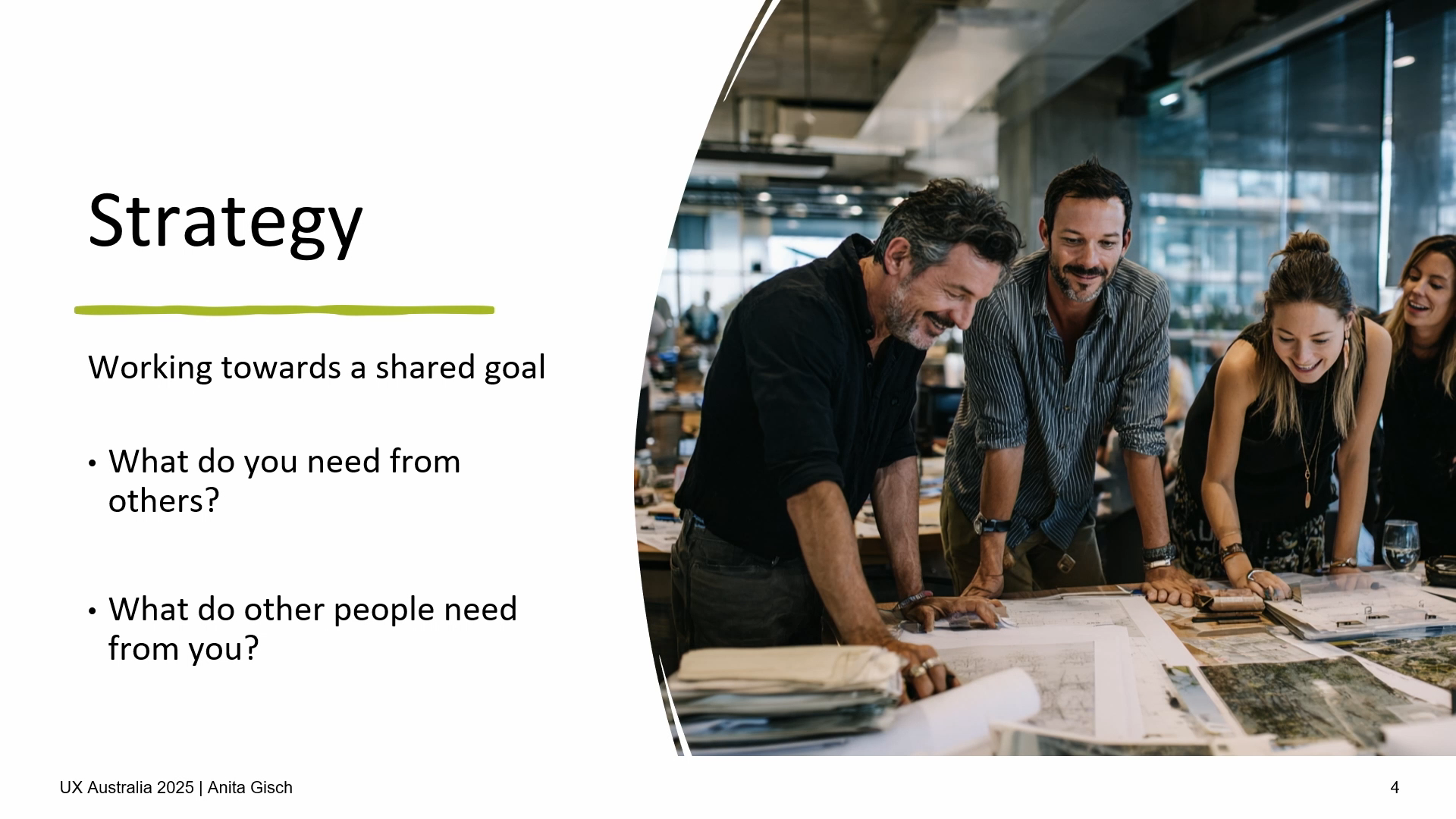
No wonder they weren't filling out their time sheets. They were too busy making work for each other. And with that, we started to shift the focus. I'd already been asking, what do you need to get your work done? But now, we were starting to dig deeper and shift towards what do other people need from your work?
How does this piece fit in the broader organization? That shift grounded people in the strategic context. All of a sudden, they could start to see the significance of how boring things like time sheets can help answer big questions like, do we have enough capacity to pitch for this new work?
That grounding in context was the key to unlocking people's willingness to start engaging with parts of the process they would otherwise take for granted. They started to see all the little pieces that was so around them that was so obvious, it made them invisible.
Steve assumed timesheet compliance was a behavioral problem. He just needed to push harder. Lisa assumed the workflow was intentional. The format was deliberate and fixed. Staff assumed the time sheets they're entering went into a black hole.
How could a list of dates and notes be useful for anything? Every person assumed the forms and processes that worked for them will be just as useful for the next person. And they also assumed that everything that came to them had been designed in a certain way that was deliberate and fixed.
But no one had stopped to ask, why do we do it this way? Is it intentional? No one was being difficult. No one was resisting change. They were all just doing their best, but focused within rather than between. So while assumptions make it hard to see what's really happening, barriers are the glue that keep things from being changed.
Once you've uncovered your assumptions, it doesn't mean you can magically make change. You also have to find the glue that is keeping things stuck the way they are. For Lisa, the biggest barrier was fear. She was worried that changing the process might reduce her hours or make her less important.
For the project managers, it was inertia. The idea of creating a standard format that was simply too hard and big. Where would they even start? As a group, they were disconnected. They didn't see the relevance of each other's work to their own.
When we're looking for barriers, we can ask, how attached to you are doing how attached are you to doing things this way? Do you care if it changes? If we change this, what else might we break? Opportunities are the spaces between assumptions and barriers where we can start to find things to shift.
Even a small change can create big impacts. For Lisa, simply getting the worksheet instead of a PDF freed up a week of her time every month. That gave her capacity to take on higher value work. Asking the project managers to co design a shared format meant Lisa would get the same information for each project.
Other opportunities started to show up when we started to look. Where else was information getting passed across the boundaries from one team to another? Some questions to find opportunities could be, what is one small change we could make that would make your day easier?
If we change this, what else could we fix? Find the small opportunities for change to create big impact. That will build trust. Trust is the real power when it comes to making change. So let's bring it all together.
The point isn't that you should go out and look for a rogue rogue spreadsheet to change the world. Though you might find one. It's that you can find these moments in any organization with the right framing. There are people who are working hard but alone. They're often too busy treading water to swim.
There are systems that have the power to connect and simplify if they're designed within the full context of the organization. Strategy can be a grounding mechanism, bringing people together with common values and goals. And underneath it all, assumptions that are so obvious, they're invisible. Barriers, gluing things in place.
Opportunities, sitting quietly in spaces between, waiting to be noticed. Starting with small meaningful changes within spaces you can influence builds trust. As that trust grows, it becomes a positive power that can be harnessed to create more change.
And grounding that approach in context makes change more meaningful to everyone involved. And that's what makes change stick. I've set up a three by three grid that lays out the approach in a reusable way. It's available with this QR code if you want to try it.
You don't need to use any exact questions or a specific order. Think of it more like a bingo card. The key takeaway is to consider all three domains rather than focusing on just one. Start by noticing what's really happening now.
With people, how is the work experienced? With systems, how do the tools connect or not? With strategy, how are decisions being made? That will draw out assumptions and barriers. Then start looking for the cracks and pathways between to find your opportunities. When you understand the context and confine the gaps between what's happening and what could be, you found a place where change is possible. And when you have that, you don't need power because you have trust. And if you can't get that bingo card working, call me. We'll sort it out.
Thank you, everyone. It's been a real pleasure.
Technologies & Tools
- Microsoft Excel
Standards & Specs
Concepts & Methods
- Anthropology
- Project management
- UX
- Organisational transformation
- Service design
- Co-design
- End-to-end mapping
- Information flow
- Strategic context
- Capacity planning
- Assumption mapping
- Barrier analysis
- Opportunity mapping
- Trust building
- Three-by-three grid
- Bingo card
Organisations & Products
- GISH Consulting