Why Your Coding Agent Forgets Everything
Introduction: Why Agents Forget Things
Igor opens his talk with a humorous audience poll about running multiple agents, then draws a historical parallel between the advertising of electricity in the 1850s and today's AI hype. He explains that current AI agents, despite their promise, are fundamentally 'stateless' and not truly intelligent, which motivated him to leave GitHub Copilot to build his own solution focused on agent memory.
From GitHub Copilot to Building a Scalable Coding CLI
Igor recounts his experience building the first coding CLI, emphasizing the challenge of scaling agents to run 20-30 instances simultaneously without crashing systems. He describes the frustrating pattern where agents 'forget' mid-session, and traces the history of context window growth from 4,000 tokens at Copilot's 2021 launch to a million tokens today, noting that performance gains have plateaued despite this expansion.
Context vs. Memory: A Critical Distinction
Igor argues that the industry has conflated context and memory as the same concept when they are fundamentally different. He admits uncertainty about the exact relationship between the two, framing this as an open research question he is actively exploring.
The Nine Types of Memory: Semantic and Procedural Memory
Drawing from extensive research (75+ papers), Igor introduces nine types of memory relevant to agents, narrowing focus to four for the talk. He discusses semantic memory (like agents.md files defining rules that models often ignore) and procedural memory (like 'skills' as a social experiment to collectively improve training datasets), noting that recent model improvements remain only marginal gains.
Episodic and Reflective Memory in Multi-Agent Systems
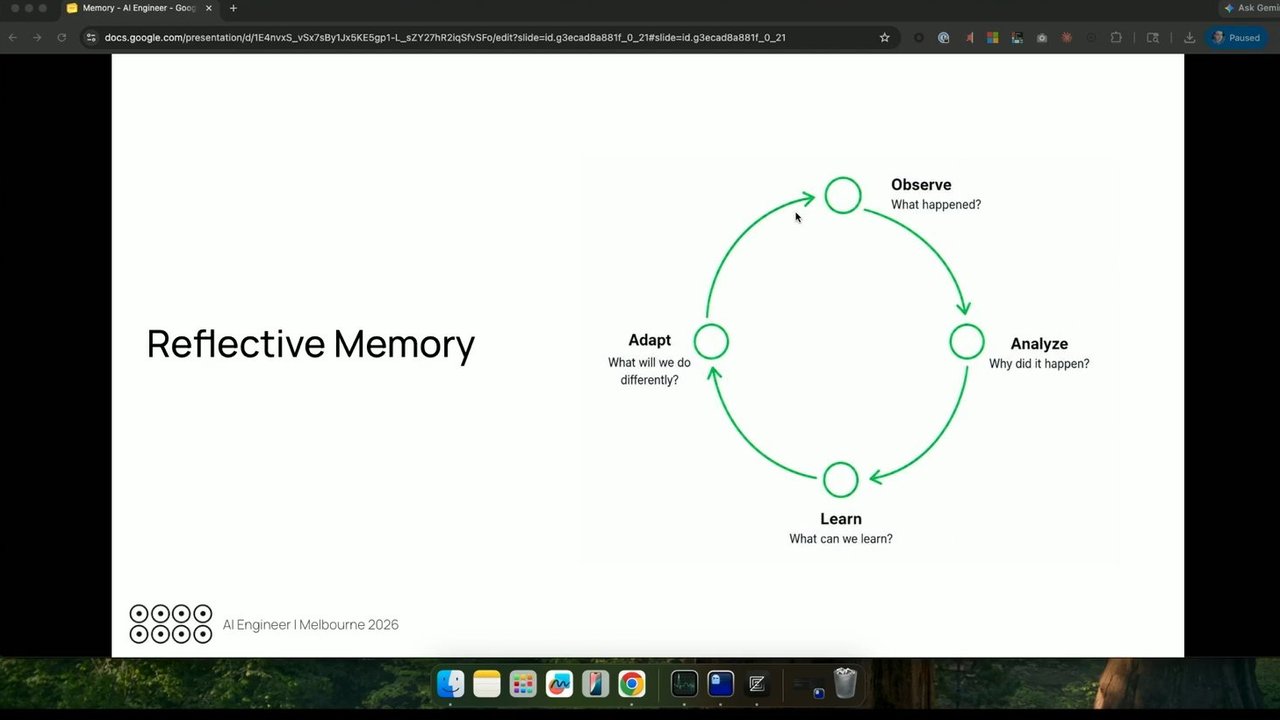
Igor explains episodic memory's unique challenge in coding agents—especially in team settings where multiple agents' differing opinions lead to lack of consensus, drift, and collapse. He then introduces reflective memory as an emerging industry focus for adapting behavior based on session outcomes, and poses a philosophical question about whether intelligence should be distributed rather than concentrated among a few major AI labs.
Building an Open-Source Coding CLI with Built-in Memory
Igor describes his open-sourced coding CLI, comparable to Codex, Claude Code, and Cursor Agent but fully transparent, which incorporates memory and user preferences from the start using simple file-based storage rather than vector databases. He introduces 'Commander,' an experimental collective memory system, and shares adoption metrics showing 300,000 downloads and 150,000 daily users, with the system improving as usage accumulates memory.
Agent Spawn: Mimicking Genetic Inheritance for Long-Horizon Agents
Igor presents his paper on 'Agent Spawn,' which mimics genetic inheritance in nature by having agents pass partial traits and context to new agent instances rather than loading everything into context. He explains this approach was driven by his focus on long-horizon coding agents running over 48 hours, aiming to detect model drift and transfer memory between agents with potentially different skill sets.
Solving Agent Collapse with Hierarchical Reasoning Models
Igor discusses the problem of 'collapse' where agents fail to reach consensus, leading his team to de-prioritize large language models as first-class citizens in favor of a memory-centric model system. He introduces an experiment inspired by Linus Torvalds' philosophy—migrating the Linux kernel to Rust over ten months—and reveals the breakthrough came from a Singapore AI lab's 'hierarchical reasoning model' architecture where memory and model become unified.
Small Dense Models and the Democratization of AI Training
Igor details how the hierarchical reasoning model approach enables training smaller dense models (20 million to 2 billion parameters) using proprietary data, dramatically reducing training cycles from weekly checkpoints to 3-5 hours. He emphasizes the plummeting cost of AI ownership—from $500,000 to as little as $500 to train a model—arguing that cheaper experimentation supports his belief that AI ownership should be democratized rather than centralized.
Remaining Challenges and Closing Reflections on Language and Cognition
Igor candidly discusses unsolved challenges including memory correctness and integrating memory as a training signal alongside model learning, noting he's close to publishing research but not yet ready. He closes with a philosophical reflection on how language shapes thought, comparing how Western, Chinese, and Aboriginal language structures differently orient concepts of time and reasoning direction, tying this back to his team's exploration of linguistic hypotheses in model training before thanking the audience.
Thank you. It's very kind of him. Appreciate it. Hello, everyone. Thank you for watching today. And everyone that is watching on YouTube later, I appreciate it. My name is Igor, as John said. In today's talk, I'm talking about, like, why agents forget things. But before I start, how many of you have at least 100 agents running right now?
None of you? Okay. Cool. And it's fascinating. Like, you're going to see a lot of exciting people here today. But hey, mom. I think I'm going to I'm going to copy what Jeff said. Hey, mom. Hey, wife. Hey, kids at home. So this is an advertisement in Melbourne right here. It says electricity is a massive new thing and I'm very fascinated about history and philosophy.
And I think that's what cumulated, probably accumulated my whole experience in this space. And we had that little character over there. I don't know if you remember about Copilot. We also have that little head span that we have a logo and then we call a name. We had that in the eighteen eighty fifties. It took us probably a hundred and fifty years to get where we are today. And then it's the same thing.
Electricity gives how every household and the power of countless workers without wages, sleeps, or rest. Isn't it what we're doing right now? But the problem, they're not that very smart. So they are building stateless, and that's why I left GitHub to build my own. I said, I think we are approaching the problem in the wrong way. And it has to take a lot of courage because bootstrapping and the edge of AI, it's not not an easy game.
It's very expensive. So we built the first coding CLI. And the coding CLI that we did was very simple. We did to optimize. How can I run at least 20 or 30 instance of this on a daily basis? And I've tested all these, you know, other frontier labs agents out there and they don't scale more than 20.
My computer gets completely useless. It consumes a lot of memory. And I got hooked on that and I was like, I'm gonna build my own. So, you know, you start a session halfway through the session, 10 or 15 message, the agent basically like forgets what you do what's doing. It's like, bloody damn it. That's not what I want.
And we keep adding stuff. We're keeping adding more stuff to it. We've added context window. We increased response. And we're treating this as normal. I'm not. Like, the window for context science, we've launched Copilot, like, probably 2021 in August, we were the first one to create, like, a generative AI product in the hands of people.
Three months later, was ChatGPT. We've increased from 4,000 tokens. We were battling how to get fit in everything in the context to be able to answer 10 suggestions on auto completion to a million. And we sort of like plateau because if you look at the benchmarks that, you know, other presentations did here, we sort of like didn't go beyond that point.
And and then context keep growing. Right? But the problem is we fear things that we've created. And in the way that we create thing is like we are treating the same thing as context and memory. They are very different things. And probably they are the same thing. I don't know. I don't know the answer yet. I'm discovering. I'm curious like everyone else here.
So to understand better, let's talk about like the nine types. I've probably researched these as much as I could. Probably already too many papers, 75 to be honest. And there's quite a lot of them. We're we're still treating them as the working memory, episodic memory, semantic memory. But probably to compact this into eighteen minutes and then continue with presentation, I'll probably focus on four.
So let's talk about semantic major memory. We the industry came up with this concept of like agents. Md. You define the rules of engagement. You define how you access things. You define the framework that you're using. But turns out that at least seven out of 10, they don't follow what you write there because that's a limitation on the on the models. And then we went to procedure memory.
It's like, you know what? How can we increase the quality of our training dataset at scale? Skills is, I think, in my opinion, the most social experimentation ever. And put in the hands of everyone, say, hey, let's create a skill. We can collectively accumulate all your experiences. Memory is a is accumulation of experiences.
And we can train and get our models better. And turns out have you seen the jump between the latest models that we released this week because every it's a new model. The marginal it's they're all marginal gains. Right? So we are trying to scale, I think, in an accidental way. We we've we've banalized the word scaling very much.
And then we talk about episodic memory. There is by far, I think, probably the last two weeks that when coding agents start having the idea or experimentation in memory. But episodic memory, it's something that is very peculiar in coding agents because time is a dimension that memory always ignores. So you're working yourself with a bunch of agents is easy.
But when you work in a group of teams, it's very hard. It's a hard problem to fill because everyone has a different opinion. A different different opinion means no consensus. No consensus means drifting, collapsing. Right? It's really hard, especially when when you're trying to do this. And if you hear that or you've been across this, you're absolutely right. Shut down your session because you are completely lost.
So then comes the reflective memory. That that's the last one that is very important and I think that's the models now turn to realizing and there is a shift in the industry towards the area where you adapt, you know, what we'll be doing differently or probably what happened during the session and then there is like what happened here, probably there are like three or five startups that are trying to solve this problem.
But it's still though, memory will change all of this stuff. And maybe we are that's that's my philosophical question and I'm a great observer of nature. Maybe we are approaching this in the wrong in the wrong way. I believe intelligence should be distributed, not concentrated in four players, not including ourselves. I don't believe that.
And that's why we're building something different. So this is our coding CLI. I need to understand first. Remember, we've open sourced the CLI. It's basically like a coding agent, has the same functionalities as Codex, Cloud Code, Gemini, Cursor Agent, but it's open. It's transparent. It's not p as well. P didn't exist when we started code our coding CLI.
I think they started Mario, started three weeks later, and great concept as well. But we put everything inside. That was basically how I would like to make things. And one single agent, you you sort of like we we've implemented this thing of, like, memory preferences or user preferences from the very beginning. So we started this in basic format.
Like, there's nothing more, I'd say, faster than file reading in your in your SSD. There's nothing more. Like, if someone's trying to sell you an awesome KV database or vector database, you're basically adopting SAP. There's nothing more faster than that. I and I've benchmarked this.
And then we came with this concept at AutoHand that we opened, so it's called Commander. I think two weeks later, Charlie from Conductor Build, you could create a, more now probably, like, 30 or four coding agents, ADIs out there, agentic development environment. And it's like we we've put it like the collective memory. It was an experimentation. It's still an experimentation.
This has been running. Our coding CLI agent has been downloaded probably 300,000 times, and every day is 150,000 people using. And the more you use, the better it gets, because it's accumulated memory. We've put those four memories that I've discussed here. And then I discussed about the shared memory. So how can I make these things like a single source of truth? Right? And and then how can I make agents to collaborate like human do with a consensus?
And it's believe it or not, the same behavior that we've observed in humans or, you know, in organization charts happen to agents as well. They don't get they don't agree with each other. So I wrote this paper. So this is a paper called agent spawn. The idea is to mimic what happens in nature.
When you have a kid, you genetically share some of the traces or your aspects of physical ability or intellectual ability to your kids. So they have fifty fifty from your partner and and so on. So the agents instead instead of like you try to load everything in the context, you load what is task at hand, you reflect upon, and then you spin a new version of that with a different opinion. So then you can sort of like guide them how to you how how to do this.
And why I did this? It's very simple. Because I'm being very obsessed with the idea of like long horizon coding agents running in a very, long time, more than forty eight hours. It turns out there's not a lot of people doing this. And I think probably we are are still discovering a lot of stuff. And it was very simple.
We wanted to detect the drift. Like, if if the model, you know, in a random way tries to mimic the behavior of the context that was given in the beginning and then gives the answer that you're absolutely right, probably was not the right right thing. So and we transfer that memory to a different agent, and then maybe that agent doesn't have the same ability or same skill sets or the same of instructions that we have before.
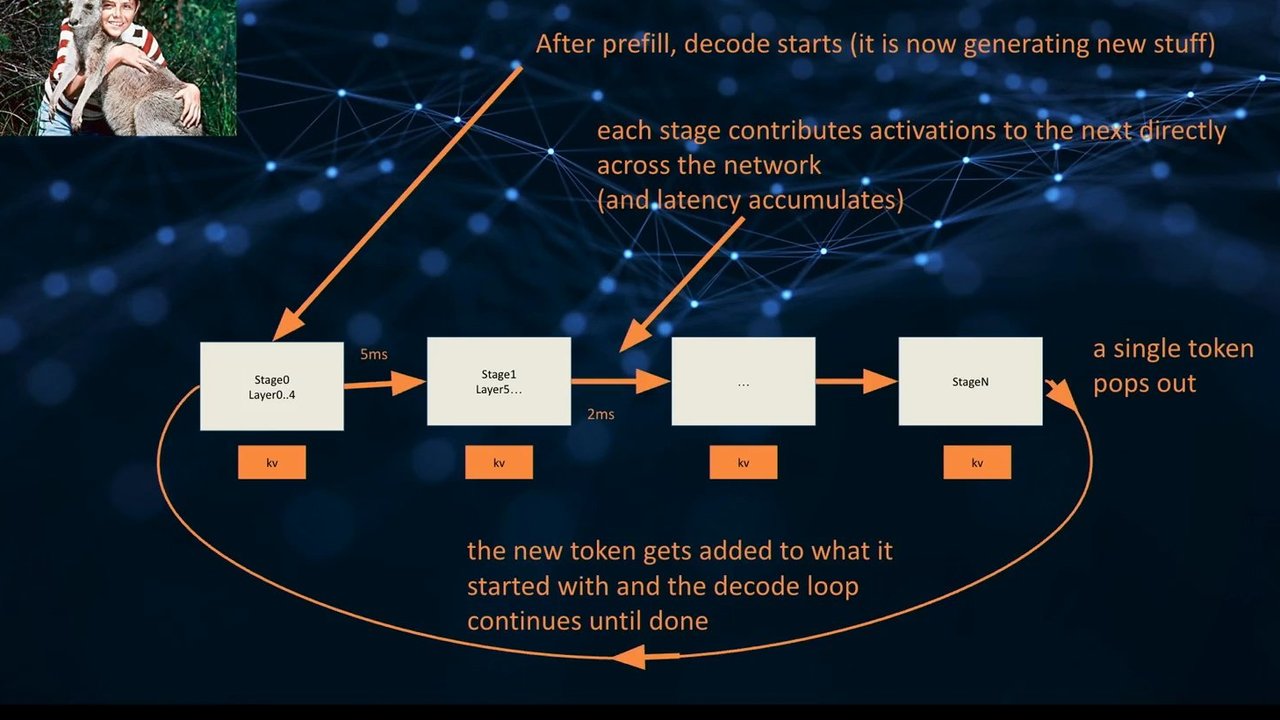
And then we had another problem. We had the problem with collapse. So like I said, they don't come up with an agreement. It's a very simple problem in a nutshell, but when you see them working together, it's quite hard. So how do you do this? So we've we've created like a memory, sort of like a model system. So we abandoned the idea of large language models.
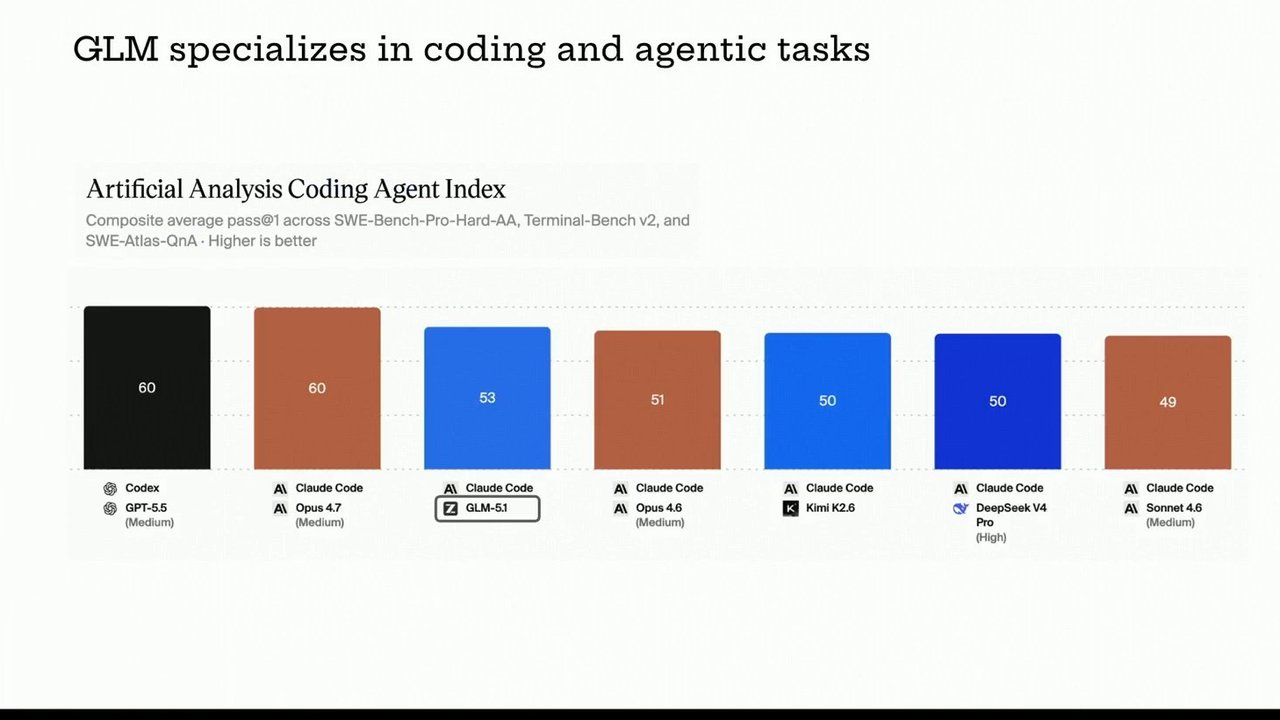
We only use large language model as a as a dependency, not as a first class citizen. I saw the notion there showing the logos of the models. It's kinda cool. Probably, it's like in a in a six months, in a year's time, they're not gonna use that anymore because it is is relevant. We are moving so fast.
So then I said myself, well, what's the best idea to validate this against the evolve? Well, let's use the taste that Linus Travel has. So I want I want I want I want I want built this application. We ran this to for more than ten months. As you can see here, it's still running. We are still trying to migrate the Linux kernel to Rust.
So there's ten months running there. We haven't been successful. I'm sorry, Linux. Not today. But we are getting closer. When we started the experiment, we probably had only 12% migrated successfully. And then the secret sauce behind this is from an AI lab in that's why we abandoned the light light learning model. From an AI lab in Singapore, they came up with this new architecture called hierarchical reasoning model.
So the the memory is the model. So instead of, like, sort of, like, trying to do things in a different way or in compartmentalized way, it's one thing. Right? So you can do with smaller dense models based on your data sets that you already have, which means it's like your customer data or any transactional data that you have your sessions.
You can do 20,000,000 parameters model up to 2,000,000,000 parameters model. Doesn't mean that we can train these much faster. So our cycles for training now, it went from weekly basis checkpoints to probably like three hours or five hours, depending on the day. And we can see a progression of that.
But there is we we we really think that it's like, okay. You solved the problem. No. We are not there yet. We are very early on the on the journey. But there is a lot of, I'd say, there's a lot of evidence there. And in in the absence of evidence, we use the gut feeling, right, as humans. But when you have evidence in the data, you sort of like know that might be the way that you should go. And I treat this with with, you know, skepticism.
I I don't take it granted. Was like, The data is telling me this. Probably, we should approach it in a different way. But because we are using now in an agentic way, experimentation is very cheap. So when I start training my own models, which is probably half $1,000,000 right there, sunk, nowadays, like, it costs you $500 to train. Right? So the cost of ownership, the cost of intelligence is dramatically reducing, and we believe that you should own your AI.
We believe that the whole stack should be in your hands because that's how we create societies. So here are some of the challenges that we couldn't face or we couldn't fix it. Memory correctness. It's a very hard problem. We haven't managed to sort it out yet. We are still researching this area. I can't publish the paper yet, but we are we are close to solve this. The second one, it's the memory as a first class citizen for training signals.
So models learns, memory stores. There are very separate ways. How can we make sure that when we do, for example, multi lower on on recursive language models can be adapted much quicker than than, you know, hierarchical models? I don't know. I'm still I'm still trying to figure out that. And that's where we are.
I think we have time and I really appreciate it. So you can download this presentation. And that's my story. I try to make it as quick as possible, as simplified as I can. But before I finish off, obviously, I still have a few more minutes. I I love the idea of, like, how do we interpret the world?
And as I was walking through here, did you guys hear the aboriginals talking to each other in in in the aboriginal language? They the way the language shapes or shapes the your thoughts is like the language has the capability to shape your thoughts. So for Western speakers or English speakers like us, we we consider time or time to talk, you know, time to, you know, to present the reasoning from left to right.
For Chinese speakers, from top to bottom. Right? But for the aborigines, from West to to east. So there's a lot of linguistic aspect on how you can train this model. And we are trying all these hypotheses, by the way, as I'm speaking. So that's where we are. We are in hand, and I truly appreciate your time. Thank you.
People
- Charlie
- Linus Torvalds
Technologies & Tools
- ChatGPT
- Claude Code
- Codex
- Commander
- Cursor Agent
- Gemini
- GitHub Copilot
- Linux kernel
- Rust
Standards & Specs
- AGENTS.md
Concepts & Methods
- Agentic development environment
- Episodic memory
- Hierarchical Reasoning Model
- Procedural memory
- Reflective memory
- Semantic memory
- Working memory
Organisations & Products
- Conductor Build
- GitHub
Works
- Agent Spawn