The Death of the User: UX in a Fully Personalised World
Design’s Agency in an Uncertain Future
Tori Sanderson frames the talk as a journey through the agency, changing role, and responsibility of design. Drawing on her consulting work at Avian, she asks how designers can move up the value chain as markets, customer expectations, and technological capabilities shift.
From Soap Bubbles to Ephemeral Interfaces
Sanderson traces ephemeral UI from a 2010 soap-bubble research interface to demonstrations from Google Gemini and Sean Grove’s Conjure UI. These systems generate bespoke interactive interfaces in response to a person’s immediate intent rather than presenting a predesigned navigation structure.
Designing When Every Experience Is Unique
Ephemeral interfaces can be on demand, intent-driven, and so individualized that nobody sees the same UI twice. Sanderson challenges designers to imagine a world without common users or personas, then asks where design retains value as AI makes production faster and cheaper.
Seventy Years of Human–Computer Interaction
Sanderson locates design at the point where people engage with technology-enabled data and services. She races from batch processing and command-line interfaces through graphical interfaces, the World Wide Web, gestures, voice, accessibility, and spatial computing to show that interaction has always evolved.
Moving Beyond Frictionless Interfaces
Design’s enduring purpose, Sanderson argues, is not to make attractive or frictionless interfaces but to help people solve meaningful problems and improve lives and communities. She introduces AI ethicist Toby Walsh’s proposal to adapt the established principles of medical ethics to AI and product decisions.
Beneficence and Non-Maleficence in Practice
Sanderson presents beneficence and non-maleficence as concrete product criteria: create positive outcomes while preventing indirect harm. A COVID-era multilingual information service illustrates the trade-off, as her team rejected unreliable automatic translation and operated a large human translation and publishing service instead.
Autonomy, Justice, and What We Should Make
Sanderson applies autonomy to AI disclosure, informed choice, psychological manipulation, and the dangers of human-like chatbots. She closes with justice, fairness, audits, and governance, urging designers to decide what should be created when personalized products and interfaces become cheap and abundant.
Thank you. It's so great to be here. What a great couple of days we've had. I know that we're in the kind of pre lunch spot, so I'm really keen to get everyone to some food really promptly. So I'm gonna move relatively quickly, but this is a bit of a journey that we're going on for the next twenty minutes.
So I'd love you to come with me. There's some highs and some lows. We're getting a little futurist. We're getting a bit, like, the the kind of telling the future vibes, like, what's actually coming for our industry. Where does that play us? But then also, like, thinking about how we can really be located as designers in the future and how we can really, I guess, move up the value chain and be really well positioned and position our industry well with what's coming.
So that's where that's where I wanna go. As John mentioned, I run Avian. We're a small consulting firm working at the intersection of strategy, tech, and design. These are some of the clients I've been working with for the last little while. And I just share them because they're obviously very different organisations doing very different things, but without fail, every single one is grappling with some really significant market shifts, some really big changes for their customers and for the technology capability that they have to play with.
And a lot of the thinking that I've been doing with them has made its way into this talk. A lot of it's still forming. Love to chat to you. I think I'm gonna maybe raise some things that not everyone agrees with, or maybe people see a different path through. So I'm really interested to see how everyone responds.
So where are we going? I've got a classic three arc structure, a three act structure. So we're gonna first talk about the agency of design. I'll mention that in a second. And then I want to talk about the role of design, because I do think it is changing, and yet it is not changing at all. I'll tell you what I mean more about that in a second. And then we're going to talk a little bit about the responsibility of design.
I'm going leave you with a framework that I would love to see being used and being thought about more as we think about our products. So let's talk about the agency of design. This photo is from 2010, which is ancient history, which is why it's blurry. It's from the International Conference on Tangible, Embodied and Embedded Interaction. It's a very pre COVID vibe, I feel.
And at this conference, three design researchers presented what they called the soap bubble interface. This was like an interactive experience on the conference floor. And users could come up to what was essentially a liquid surface, and they could put their finger on a soap bubble. They would emerge periodically, and they could move the soap bubble around, and in doing so, change the soundscape and the lighting of the area that they were in.
And then they'd move their finger off and pop, the bubble would disappear. And these researchers were using this to explore the idea of ephemerality or ephemeral UI. It was this concept that UI and human to computer interaction could emerge as it's required for a user and then disappear again when it was no longer needed.
And they kind of posited that this was this really interesting way of solving kind of ubiquitous computing and overload cognitive overload, which we've heard a lot about last couple of days. And and, you know, what's really interesting is that was then a, like, a poetic metaphor. Right? 2010. But it's fast becoming reality. This is a demo from Google Gemini.
It's about a year old. So, again, history when it comes to AI. And in it, users engaging with chat, as we all do, generative AI, and exploring some options for a kid's birthday party. But rather than respond in chat, Gemini surfaces some some custom bespoke UI. Let's we'll just fast forward a little bit. So it's generating some essentially, a UI that it's determining this is the best possible way for the user to engage with this information in the moment to do their job.
I want to explore how to make these cupcakes. It sort of creates these images and content and templates on the fly. Oh, it's really interesting. Cupcake toppers. Alright. Let's explore what I can do for my kid's party. Such an extra party. I love it. This is not how my family does kids birthday parties. And so I can look at, like, okay.
I'm gonna some images. This is real like, this is really cool. Right? This is no longer just like like text prompt response prompt response. We're actually getting to kind of explore in an interactive sense. So that's Google Gemini. Let's look at a slightly more lo fi example. This is a guy called Sean Grove. This is his Conjure UI demo.
He's exploring, god knows why, the nutritional value of fruits. And the the the program generates a a interactive set of data that he can then explore and filter it, etcetera, etcetera. I wanna be really clear. This isn't like a table that he's uploaded that it's then making interactive. This is generating this data and information as well as the UI on the fly.
So this is all kind of still a little bit futurist. Right? Like, these are these are still in the demo phases. I don't know about you, but most of the AI tools I'm using are not generating custom bespoke UI on the fly for me. But it starts to paint a picture of kind of the capabilities that do currently exist and that are coming.
So a femoral UI is really interesting, right, because it's on demand. So this is not design work that someone has done that then sits in a navigation tree ready for you to explore, and that's a common experience for everyone. It's generated in response to the the job that you're doing in the moment. It's intent driven. So users aren't saying, hey, I would like a website that lets me explore this and that lets me book some flights or whatever.
It's responding to from context, essentially, this is what you're trying to do, and here's how we can best support the job that you're doing in this moment. And it's highly individualized. So you may never see that particular UI again. And interestingly, no one else may ever see it again. Sweet. Like, what is this world that we're coming to?
Right? So can you imagine a world in which you're designing for no common users? There are no personas anymore. We no longer need to design a frictionless experience that serves the needs of the most possible number of people, because a Gen2Ki can sort of just do that as it's required in the moment. So Nielsen Norman Group called this moving from designing for the many to designing for the individual.
But I want to be a little bit provocative and maybe say it actually goes a bit further than that, because what the possibilities are here is actually that we're removing the human from the design process altogether. So where does that leave us? Am I feeling a little bit like this guy at this point? It's okay. Three act structure.
We're at the low point. We're going up. It's alright. I have a plan. It's okay. Stay with me. So what is the role of design in this future? And I think, look, I'm being a little bit provocative here. Like, as I said, most of this capability is still in demo phase. We're not quite there yet, but I think we can see the possibilities coming. And even if we don't get to a point where UI is fully ephemeral and agentically driven, we're already seeing this process that design and delivery as well is becoming cheaper.
Right? It's becoming cheaper and faster. So we have to go, alright, where is the value that design can hold? And where are the gaps that we can really come in and start to, yeah, start to kind of hold the value for for products and services. And so that's what I'm going spend the next little while talking about. And I want to remind us that, actually, this is our job. A few people have touched on this in the last couple of days, which I've really loved.
So this happy little guy is, like, human, and really our job is where this arrow is, how humans interact with technology. But I'm using this data icon because I think, again, worth reminding us that it's not we're not like technology because technology is awesome, although it is. It's the data and the services that technology enables. Right? So our job is where this arrow is, this, like, interaction point between human and technology.
And when we think about things at that scale, we start thinking, actually, this has been in flux, like, in in a constant state of flux for the last seventy odd years of computing. And I'm gonna do slightly some something slightly unhinged, and I wanna spend, like, a minute kind of capturing seventy years of computing history. So so let's see how I go.
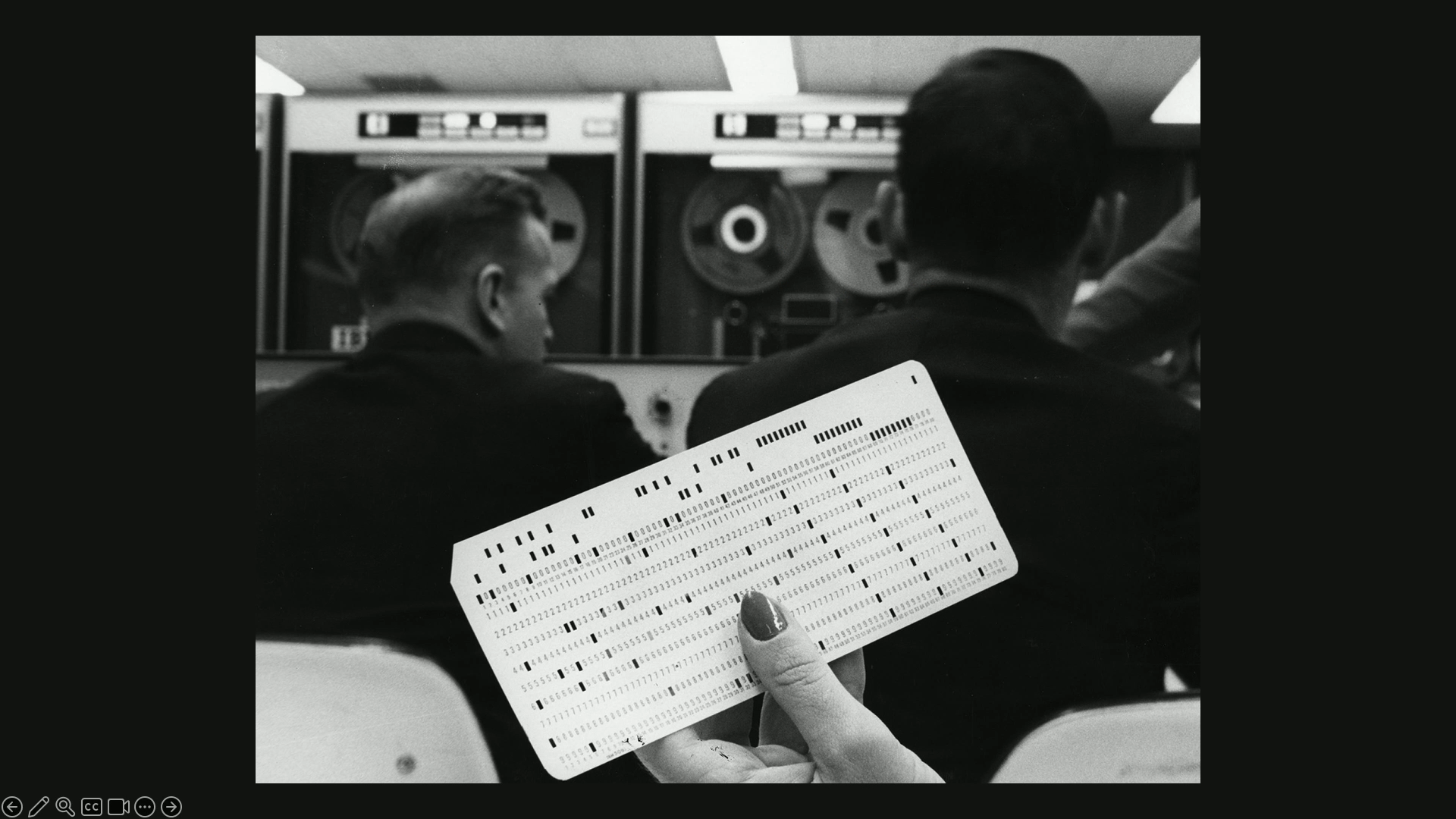
And if I've missed anything really crucial, which I definitely have, please come and tell me afterwards, I'll tell you why I why I definitely intentionally left it out. Okay. So if we kind of go way back to early computing, we had batch processing. Submit You punch cards. You wait hours, maybe overnight, for a response. We then move to command line interfaces.
And I think this is when, really, we start thinking about the experience of human and computer interaction. This will feel really familiar. You submit a request, you get a response. You submit a request, you get a response. It feels a lot like ChatGPT. Right? Like, we're back to command line interfaces with our chatbots. That's fine. That's fine.
What was the saying this morning from John? There's rhythm in history. If it's not we don't repeat history, but there's a rhyme to it. So then we have a really significant shift coming, though. Right? And I think when we start seeing these shifts, what we can see in our current reality is that every time a really big shift happens in how humans and computers interact, we start being able to better solve problems for people.
We we break a ton of stuff as well. We'll talk about that. But our actual problem solving gets even better. So after command line interfaces, we have, hey, graphical user interface. And I can age everyone in this room based on your face when you saw this. This is either like, oh, that's horrendous, or, oh, nostalgia.
Yes. I remember the days. So this I think this image is, like, in 1984. And this was a really significant shift. Right? Like, this is absolutely, like, seismic in that, for the first time, we we started to look at human computer interaction, and particularly, like, UX and and digital design as a visual field. And then that thinking really has dominated sort of the next forty years. And this was really exciting because we could see, like, in the moment system changes in real time when we used computers, which was incredible. And so for for the next little while, visual interface and visual design was really dominant.
Right? And then in the '90s and 2000s, we had the World Wide Web, so just an explosion of information and data. This is an early Wikipedia homepage. And then what that forced was, of course, this. And this was an absolutely huge change in how humans and computers could interact. And so we still have this visual mode of design, but then we start seeing, of course, the rise of gesture design and voice and and and also increasingly, like, accessibility accessibility starts coming to the fore a little bit more.
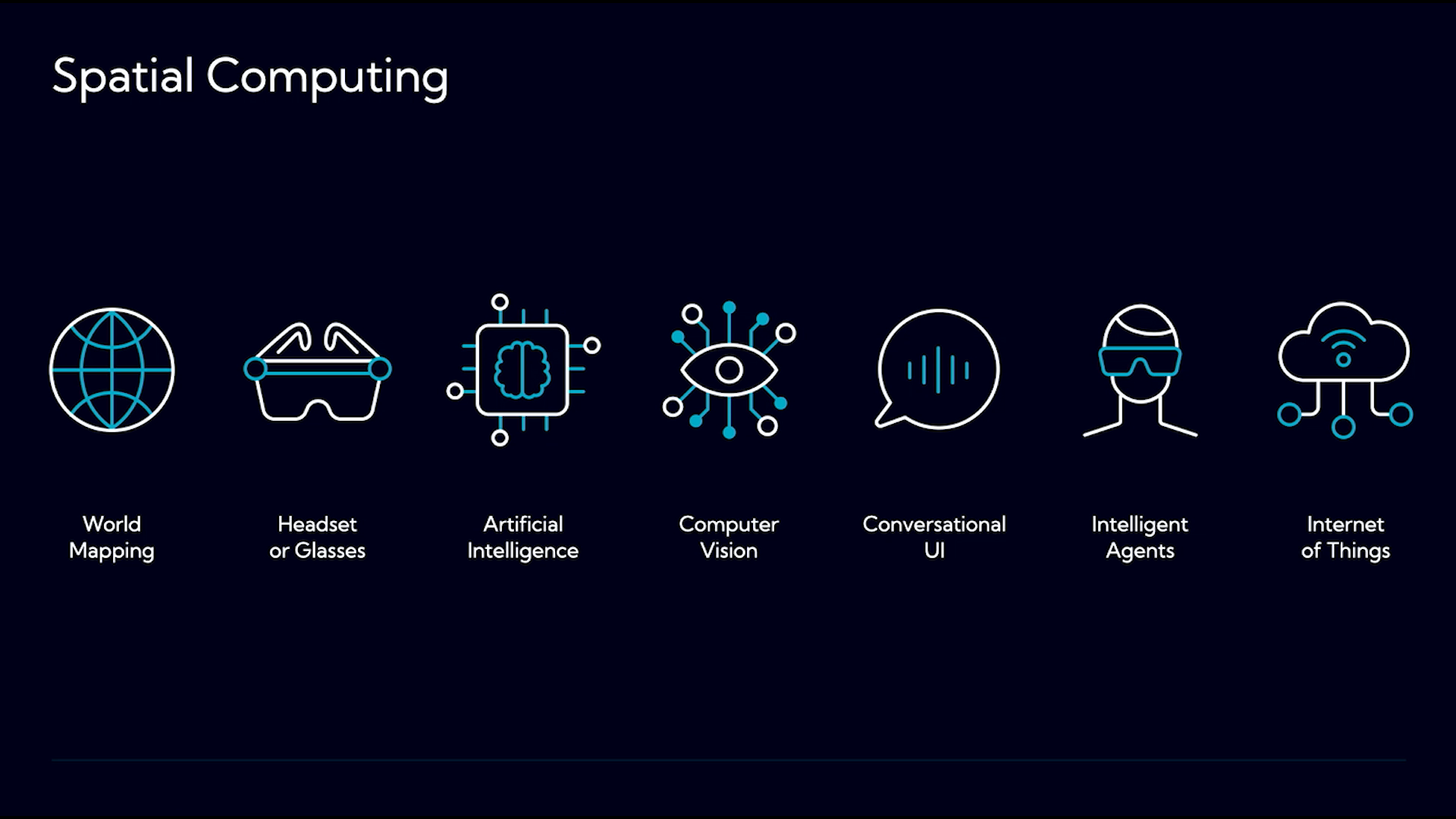
And, of course, we heard from Oliver yesterday a little bit about spatial computing. So the shifts are still coming. And the reason I think it's important I don't know if I did that in a minute. Wasn't looking at the clock. The lens of these, like, really like, the 30,000 foot view of these shifts is really important because what it does is it actually reminds us of what our job actually is.
So And when we look at these seventy years, I think we can see that, actually, how humans and computers interact has been in constant change. And while we can look at the changes that are coming with AI and the design capabilities of some of these tools, it's really easy to be fearful. But I think there's a real significant opportunity.
Because it reminds us, of course, that our job was never pretty visual interfaces or even frictionless interfaces. It was always how we get we help people get on with their day or probably, more significantly, solve real problems. This quote's from Edward Tuft. He's an early thinker on informational design and a data visualisation pioneer.
And he wrote a killer essay in 2003, which I highly recommend, called PowerPoint is evil. So it really gives you a sense of, like, his vibe. He's a really interesting guy. Okay. So with all of that in mind and that being the lens that we look at things through, I really want to put it to you today that actually I know I said this is our job before. True.
But actually, I want to suggest that this is our job. Our job is not actually just how humans interact with technology. We need to locate our products and services in the context of a broader perspective. We need to be thinking about how we can improve people's lives, communities. I love Ryan's talk on relationships and belonging and connection.
It reminds us why we're doing any of this. I think the point that Seb made this morning about friction is a really interesting thing we can create to create memorable experiences. And I think that what that did is kind of remind us actually that, you know, no one no one no one's life purpose should be like a a more frictionless checkout flow.
Like, that's not what we actually wanna be doing with our products and services. So this is all great, Tory. Like, sounds fine. Like but how do we actually do this? So this, I think, is the bit that we can increasingly leave to AI. Not just yet. It's like but it's coming. Right? There's there's plenty of problems with how it's doing it now.
We need some really significant governance and audits in place. Understood that. But this is the bit that is really important that remains the job of humanity. And so what I want do is talk a little bit about that responsibility that we have, particularly as designers, and how we can be thinking and providing value at that level beyond, you know, buttons and and user flows.
And I wanna share a framework that I find really helpful in kind of this sort of relatively abstract product thinking. And it's not actually mine. It comes from a guy called doctor Toby Walsh. He is an international expert on AI and ethics, working out of Unisw. He's written this book. He's written a number of others. They're very good. And he posits that as we think about AI and product thinking, and how do we actually make decisions that are good for humanity, because we can't leave that bit to the AI, how do we actually do this?
What frameworks can we use? And he suggests that, actually, we already have one from a different field that we've spent hundreds of years thinking about, and it's a field that has a really rigorous framework for ethics in cases of life and death, you know, really significant kind of ethics and morality questions, and in cases like AI and product thinking where there's a really high degree of variability, so, like, you know, it's a very case by case situation, stuff can change without us necessarily knowing.
Does anyone have an idea what that field might be? Medicine. Thank you. Yeah. So, actually, we spent hundreds of years thinking about ethics in medicine, and particularly supporting individual practitioners on the ground to make really robust and sound ethical decisions. So there's four principles of medical ethics that I'll talk you through.
And what I want to suggest is actually something that we can genuinely practically do, which is insert these principles and this framework into our day to day product thinking. What I mean by that is I actually wanna see some of these words in your product strategy decks. I wanna see them in your requirements documents. I wanna see you use these as your evaluation metrics.
You think you're not allowed to do that, but I'll give you a hint. Everyone loves to evaluate more stuff. So you can just add things. You absolutely can. So the first one is beneficence. This means, of course, do good. So products must have positive net outcome for individuals, communities, the environment. I will share share a story that I like to use to demonstrate some of these.
A number of years ago, right in the middle of the COVID crisis, my team and I were testing and working on kind of an opportunity for a multilingual information platform to help disseminate really urgent information across Australia. And we were trying to do this across 64 languages, which, if you've ever done any multilingual work, is just a really insane number of languages to cover.
Some of these are really quite significantly small minorities. But it was really crucial that we got this information out to all of culturally and linguistically diverse Australia. So we had positive intent there. Right? We were looking at in order to support rapid information release, we were looking at machine learning and automatic translation solutions.
But, of course, you probably know where this is going. You need to balance beneficence, do good, with non maleficence. Sounds similar. It means do no harm. It's actually quite different. And all of our chats about inclusive design really play into this. So non maleficence is about avoiding secondary order impacts, knock on effects, unintended consequences. And so with our multilingual platform, it did not take long before in our testing process, we discovered that, of course, the machine learning and the automatic translation was not going to be near accurate enough for many of the languages down this you know, this list of 64 languages.
And so the solution that we ended up rolling with because we still had this goal of how do we get information out to all all of Australia in a way that's that's fast and accurate. We actually ended up with a really lo fi solution. We ran a team of translators and web publishers twenty four hours a day, seven days a week for months.
This was a team of about 80 people that were on call. So not like when you kind of balance I think we've had some discussions around value and efficiency. Not a really efficient model, but the stakes were too high to do otherwise. This is literally a framework that we pass through this in order to make these decisions.
So the third pillar of medical ethics is autonomy. This is obviously a really interesting one with AI. In the AI space, this means that people must absolutely know that they're engaging with AI if ethical practice is to be respected. You're probably all aware there's been some really tragic cases of people developing genuine emotional connection with AI chatbots in the last little while, often with really disastrous consequences.
I think the interesting conversation to be had about that is, most of the case, this is not a problem of disclosure. So in most cases, it was very clear that the chatbot was actually AI. And so what we learn is, when that's the case, and yet the interaction is designed to feel as as like human to human interaction anyway, that is demonstrably dangerous.
And so we've got to raise the bar a little bit. Right? Disclosure it's like the you know, we all went from consent to informed consent. Right? If if human autonomy is to be respected, people need to have real choice with how they're engaging. And that means we are avoiding things that might manipulate human psychology. You know, we see this in a lot of anti patterns where it's like hard to unsubscribe from things or, you know, where we're all getting the dopamine rush of likes and clicks for the sake of platform engagement and all that sort of thing.
So this is a really tricky one that really needs to be deeply integrated in our product thinking, planning, and design, which is why I say these things need to be explicit in strategy docs, in requirements docs. The last one is justice. I'm not going to spend a lot of time on this because we've heard a lot about it really beautifully from so many speakers the last couple of days, but this is about fairness and equity.
But the thing I will say, which, you know, on the kind of AI and the personalization and the ephemeral UI front, is we do you can see a world where this gets really problematic. And I think it already is when we're all having these highly individualised experiences with agentic AI. Already we're seeing this where everyone's chat everyone's got a completely unique individual ChatGPTA experience, right, or a court experience or Gemini experience, whatever you're using. And so we really need some really rigorous audit and governance protocols in place.
And I know like, I speak to many designers who would like, don't wanna become AI governance people because that's a really unsexy job. But I'll put it to you that designing checkout flows is also a really unsexy job. So I think we can just move to where the problems and the value are. So there we go. What I'd love to see if you sort of take away from this one thing from this talk is that we're moving rapidly to a future where products are cheap, products are really easy to create and build, at least at least simple or bad ones are.
And so we are going to see an absolute proliferation of people's online experiences being very different to each other. And so in a world where anything can and will be created, I hope you'll be asking, what should we make? Thank you so much. Feel free to reach out.
People
- Sean Grove
- Edward Tufte
- Toby Walsh
Technologies & Tools
- Generative AI
- Conjure UI
- Command-line interface
- Graphical user interface
- World Wide Web
- Voice interface
- Spatial computing
- Machine learning
- Automatic translation
Concepts & Methods
- Ephemeral UI
- Batch processing
- Gesture design
- Medical ethics
- Beneficence
- Non-maleficence
- Inclusive design
- Autonomy
- Informed consent
- Dark patterns
- Justice
- AI governance
Organisations & Products
- Avian
- Google Gemini
- Nielsen Norman Group
- ChatGPT
- Wikipedia
- UNSW
Works
- Soap Bubble Interface
- PowerPoint Is Evil