Designing for people who’ve been let down before
Learning from Systems That Let People Down
Billie-Mae Kennedy introduces the difficult subject matter and frames the talk as a candid reflection on mistakes from her design career. Drawing on her work in government services, disability and gender-based violence, she explains how harmful service experiences persist into every later interaction a person has with a system.
Mistrust Is a Rational Response
Kennedy argues that people encounter services within systems shaped by historical exclusion, not in isolation. She defines being “let down” as the gap between lived experience and society’s promises, then shows how intersecting identities can compound that gap.
Mindset Before Method
Kennedy introduces three lenses—mindset, methods and mutuality—and begins by questioning whether a research team should undertake sensitive work at all. Her five-senses framework asks teams to secure appropriate expertise, understand intersectionality and power, ensure accessibility, and prepare for trauma.
Deciding Whether Research Should Happen
Kennedy recommends personal, qualitative engagement when complex experiences cannot safely be reduced to impersonal surveys. She also challenges researchers to consider the cost of participation and use existing testimony when new research would not materially benefit the community.
Recruit Through Trust, Not Convenience
Kennedy calls for flexibility throughout planning and recruitment, including a willingness to discard carefully prepared plans when experts reveal a better approach. Using mycelium as a metaphor for community networks, she explains how trusted leaders and advocacy organisations can create safer paths to people whom standard recruitment channels miss.
Make the Entire Experience Accessible and Safe
Kennedy treats accessibility as an end-to-end experience rather than a technical checkbox. She describes adapting interview formats, reducing anxiety, limiting unnecessary data collection, being transparent about use, and respecting data sovereignty so participants retain meaningful control.
Mutuality, Trust and the Cost of Participation
Kennedy explains that trust develops slowly while every research interaction imposes a real cost, especially when participants relive trauma. Because people contribute in hopes of shaping outcomes, she argues that researchers must move beyond listening and act on what they learn.
Repeat, Repair and Share the Pen
Through the first pancake principle, Kennedy presents imperfect first encounters as foundations for better subsequent ones and emphasizes returning after mistakes. She then advocates embedding co-design and ideation into research sessions so participants can influence the work and see that influence unfold.
End Well and Keep Showing Up
Kennedy urges practitioners to compensate contributors, acknowledge them when appropriate, share outputs and maintain the relationships they have built. She closes by correcting the talk’s premise: ethical practice means designing with people, prioritising safety and inclusion, and giving more than the work takes.
Hi, everyone. It's great to be here. I think as John said, a lot of what I'm saying today is kind of echoing and building on many of the good conversations that we've had over the past two days around trauma and power and inclusion. And I'm just stoked actually to be up here and to offer my perspective. So before I get into it, some caveats.
I'm gonna be talking about some tough topics today because I've spent a lot of my career working around some tough topics. And most recently, I've been looking at gender based violence for women and children with disability. And that's a tough topic to to to think about. It could be triggering. So I please urge you to take care of yourself.
And if that's not something that you might wanna be listening to, I totally understand. I also need to give a trigger warning that I do have a US politics meme coming, so just be aware of that. I'm what they call an experiential learner, which means that mostly I learn by making a lot of mistakes. I am I'm full of them.
And today's talk is really reflecting on some of my mistakes that I've been making throughout my career and the tips that I've learned and the strategies that I have now to overcome that, and I use in my everyday practice. And, you know, you might have heard some of these things before, but I think it's really worthwhile to take stock and and be aware of that as you go on your journey through design and research. The last thing is is that, look, this is not a history lesson. I've ignored so much context in this.
I'm going straight to what I've learned and where I've messed up. But if you'd like to have a conversation afterwards about how the past has informed the present, let's do it. Let's chat after this. So a bit about me. I'm Billy May. I also go by May, so just FYI. I live in Wabundra Country in Ewan Nation in Southern New South Wales in a little country town.
And I'm also a service designer and a researcher. I lead the design practice at Pragma Partners, which is a government focused design consulting agency in Canberra. And throughout my career, I have worked mostly in and and around federal government. So looking at services that support people like older people, people with disability, carers, and people experiencing violence.
And all of that has given me a front row seat to not only the ways that we let people down when we deliver services, but how they carry those experiences into the next service that you they interact with, and that stays with them. So what do I mean when I say people who've been let down before? This is The US politics meme.
Sorry, guys. But I do unironically think about this Kamala Harris quote, like, almost every week. She says, you think it just fell out of a coconut tree? You exist in the context and all in which you you live and what came before you. And she nailed that. Yes. We do. We live inside systems that have historically let people down, that have built in exclusion into our laws, into our policies, and into our attitudes.
And even though we feel as though society has moved on and there's progress, there are still remnants of those historical injustices encoded into our systems today. And they can be pervasive, and they can be invisible, but for the people who are experiencing that, it is very much felt. And for those people, having mistrust of a system is a very rational response to have.
So when I say people who've been let down before, what I mean is that when your lived experience does not match the promise of society. So what that could look like is you're a woman who's denied bodily autonomy of your reproductive system because you have a disability. This happens all the time. Or you might not have equitable access to education because of your postcode. Or you might not, as a victim of violence, be taken seriously by the justice system because you don't present, as a neurodivergent person, as a stereotype model victim.
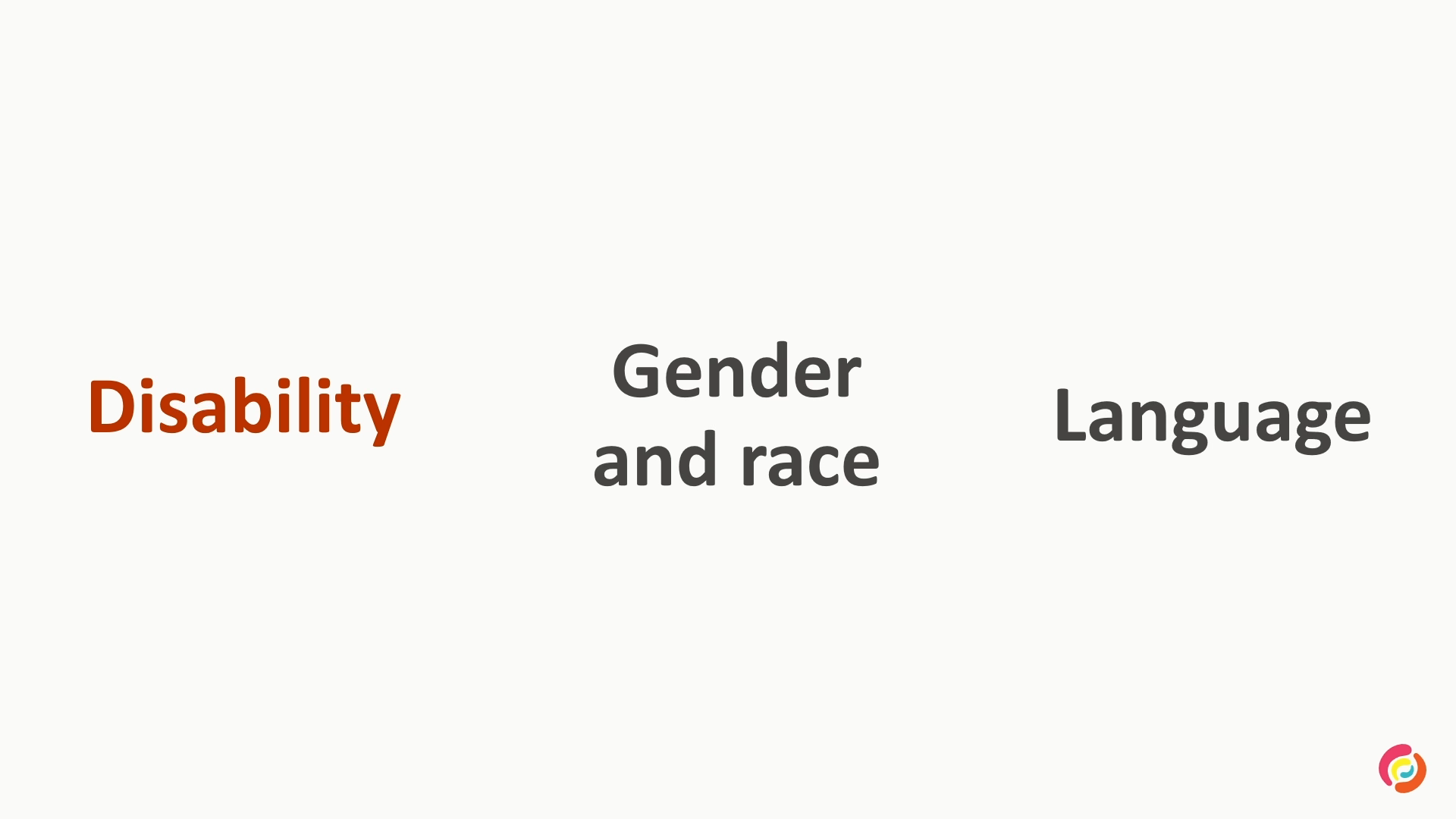
So when I say people who've been let down before, I've got this list. It's a very incomplete list of identities and situations that people might find themselves in. And what I'm what I find is that the more of these that you identify with, the more likely you are to be one of those people whose lived experience has not matched the promise of society. And so what that means, we're we're talking about people who have overlapping and intersecting identities that inform their unique experience.
And as a designer, while I care about these identities and situations, what I'm focused on is how do I design for anybody who's been let down before. So how do we do that? So I'm offering three lenses today on this. I'm looking at mindset, which is how you approach the work, and and whether you should do it at all, in fact.
I'm gonna be looking at methods, which is about if you do decide to do it, how do you do that, how do you find the right people, And how do you do it in a way that is inclusive and safe for those people? And finally, I'll be looking at mutuality, which is how to give back, how to make sure that our practice is not extractive and that we're giving more than we receive.
So getting straight into mindset, this is where I'm constantly failing. Right? Because I am a very I'm motivated by injustice, and when I start a project, the first thing that I wanna do is I wanna run out and talk to everyone because that fixes things, doesn't it? I wanna schedule the sessions, book them in right away, and that's wonderful. But wanting to do the right thing is not enough. You need to be savvy to what's going on around you.
An example was when I started working on gender based violence and disability. I wanted to go out there and talk to First Nations women directly because of that intersectionality, because of how colonialism has also shaped their experience of ableism. But the thing is is that for a First Nations mother, going and talking to somebody who's identified with the government about your support needs is an incredibly risky thing to do, because it is documented that as soon as she discloses that information to someone in government, that the chances of her child being taken away from her just double. They triple. So I have to be aware of that context, that history that she's bringing into the room with her, and I have to be mindful of the power dynamics that I'm introducing as somebody doing that research.
So how do we go about doing that? So I look at when I'm assembling my team of avengers or just mainly myself. I look at this from the lens of sort of the five senses. So does my team have access to all of these things to to do a good job? So the first thing I think of is hearing.
So am I listening to the right people? We cannot be experts in everything, and we need to bring in those people if especially if we're dealing with people with complex and intersecting identities. Are we seeing this intersectional lens that I keep talking about? Are we looking at people as people and not as checkboxes? For smell, I was gonna call this BS detector, but this is about having awareness of your context that you're within and looking at what or being able to sense what is unseen in a room and being responsive and reading that room.
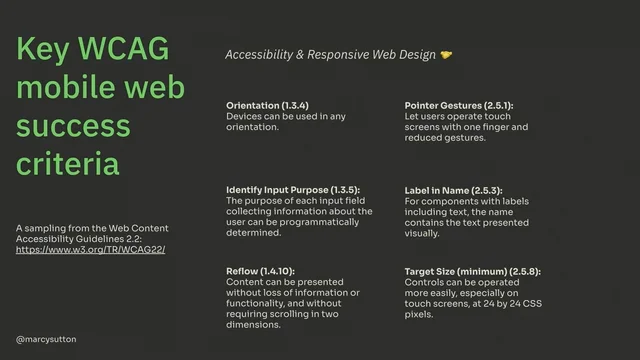
And for taste, it's about accessibility. Is what we're doing actually genuinely accessible from start to finish? And finally, for sense for for touch, I have trauma informed. Has your team been to some trauma informed training? Do they have access to all those wonderful guidelines that are already out there? Do you have active protocols for what to do when you trigger someone? Because it will happen.
And do you have things in place to to wrap around people for when they have secondary trauma? I also need to look at out my methodology, which is am I prioritizing qualitative over quantitative? So instead of sending 50 SurveyMonkey links, just go and eat 50 Lamingtons instead. This is just I I I think prime when you're working with people with some complex things in their life, doing things that feel impersonal, as Ali was saying, can be traumatizing in itself.
So you focus on connection. You focus on authenticity, and that does require you to to to do more qualitative methods. But that has a cost. Right? That has a very real cost as we've heard yesterday. So we should also be asking if we should do this in the first place. So just because we can do something doesn't mean we should. And the test that I ask myself is, is this something that is actually going to genuinely result in some some help to the cohort that I'm looking at?
Right? So it's not about whether I could get something out of this research. I could learn something. That's a me centered thing to ask. I'm thinking about, do I have the resources to do this properly? Do I have the team that's got the five senses? And am I able to just maybe look at other resources instead? Like, for example, when I'm talking about disability, go and look at the thousands of pages of testimony from people with their lived experience in the Disability Royal Commission.
You get so much from what's already out there, just use that instead. But assuming that you want to go ahead and design with people who've been let down before, there are some methods that I'd like you to keep in mind. So as you can see by this meme here, you just gotta have you just gotta roll with it.
Right? You just gotta have flexibility when you're dealing with any kind of complex audiences or people with complex needs. What I have discovered is that you can't if you can't just look in the usual places to find them because you will find the usual people. Right? So I can't look for, you know, say, your standard recruitment panels or Facebook ads or things like that.
The people who have been let down before are often deliberately quite hard to find. The other thing is is that when it comes to people who've been let down before, accessibility and safety are so critical. And you need to take that seriously, not as a checkbox, but as your whole methodology, your whole mindset.
And that is central to how you need to deal with people. And finally, as I've said with the train and the bus, one of my favorite ones, you just have to be prepared to throw things out and start again and react. So I so I've recently did a beautiful 40 page research plan that literally I put in the bin the next week when I finally started getting around to talking to the experts.
So how do we go about doing this? So to find people, the first thing that I like to do is I identify the leadership within the community that I'm trying to trying to reach. So I've got up here this mushroom network, mycelium network in the forest. And what you see is that in a forest, you might have a tree here, a shrub there, a mushroom there.
But under the surface, underneath, you they're all interconnected through these mycelium networks. And I think that's a beautiful metaphor for how communities behave, especially for people who have been let down before. They're often deeply connected but kind of in an unseen way. So what I try and do is I identify those leaders within the community, and I build I prioritize building relationships with them first.
Because when you do that, you get access to people that you never would have found through your standard recruitment panel. Right? When I've been working in disability, for example, building relationships with trusted and excellent advocacy organizations means that you can talk to truly people in very vulnerable situations and in a safe way that's been shepherded in. The next thing is around accessibility and safety.
So for people who've been let down before, that picture on the screen there, you've got somebody spent time and money building in this garage into into the house. And it's not a garage, is it? Because there's steps leading up to it. You can't park a car in it. And that's often how accessibility can feel for people who've been let down before because we do tend to put a lot of effort into some things. We might go ahead and make something screen reader accessible, or we might go ahead and offer a different file format.
But are we thinking about the whole end to end user experience as needing to be accessible? So I think about accessibility and safety as about flexibility. Am I truly listening to the how people want to engage with me, and am I giving them options to do so in the way that is safe for them? So when I was dealing with disability, I wanted to talk with women with intellectual disability.
And I can't go ahead and have a sixty minute interview. That that just wouldn't be right for them. That wouldn't be how they wanna present themselves or how to have the information, so I needed to adapt and have three thirty minute sessions over several weeks to cover the same topics as my sixty minute interview. And I think that's a really critical point is that we have to prioritize thinking about our impact on others.
And that means, for me, accessibility and safety is about reducing anxiety. As a neurodivergent person, hello, I really love it when I get the questions in advance. So I try and put that in my practice and just do that without somebody needing to ask for it. That's reducing anxiety. I'm also thinking about other things like around data sovereignty and transparency. So for people who have been let down before, as I've said before, the data about them is often weaponized against them. First Nations mother disclosing her disability, that can be used against her to separate her her child from her.
So you need to be very careful and very explicit when you're dealing with people. How are you going to use that data? And are you collect do you need to collect everything? Do you need to write it all down? Is it important? And and be flexible with that. And the other thing that's emerging right now is data sovereignty.
So this particularly comes up in First Nations context. But have we given them control of the data? Do we need to be controlling the of of the data as researchers? I don't believe we do. So there are lots of things to think about with accessibility, but for me, it's about flexibility to to create a genuinely even playing field. And the last thing is about mutuality.
So I got this Sailor Moon meme up here. And look, this is actually kind of a best case scenario. My job here is done, but you didn't do anything. The thing is is that, as Ali mentioned, a lot of the time, this distrust and these experiences are compounding. Right? And so building trust takes time.
You need to have reasonable expectations of yourself and of your participants in how much you're actually going to win them over, if that makes sense. Just be flexible. Be agnostic about that. And the other thing, and I think we all know this as as designers and as researchers, but every interaction that people have with you has a cost.
Right? And we know that for every research. It has a cost, and we compensate for that cost. But for people who are telling their stories, often reliving really traumatic experiences, you that cost is really huge. It's it cannot be overstated, and it can be physically and emotionally exhausting to that person. So you need to recognize that.
But the thing is is that people talk to us anyway, right, despite this huge cost. And it's because they care about the outcome. It's because they actually wanna shape the outcome with you, and that's why they're going through this to talk to you. And so I always say listening is not enough. It's just not enough with this.
You have to be able to do something with what they're telling you. So how do we do that? Well, the first thing is I think everything is better on repeat. Right? So we have the first pancake principle. Have you guys heard of that? But, essentially, you know, when you're making pancakes, the first one's always kinda shit. Right? Like, it's burnt or it's soggy or misshapen in some way. And the thing is is that you need to have that first pancake to have the second one.
And that's how I think about interactions with people. You have to have that first conversation, and it might be hard. You might accidentally do something wrong. You might say something wrong. It might not go that well, but you have to have that to have the second conversation, which will hopefully be better and build upon that foundation that you've set.
And actually showing up after you've made a mistake is a huge way to build trust and credibility because it shows that you care about this, and you're not gonna dip out just because it didn't go well. The next thing that I like to do is think about sharing the pen. Speaking of museums, there's a really excellent mister Squiggle exhibition in Canberra at the moment. So if you're coming coming up our way, come and see it. But mister Squiggle, you know, he took the kids' scribbles, and he turned it into gold on live television upside down.
And that's how I like to think about this. Right? Obviously, research and codesign can be different things, but when it comes to designing for people who've been let down before, I like to think of it as you there's never such a thing as pure research. You have to always include, or at least I believe, you should include elements of codesign in every single interaction that you have with your people.
So what that can look like is that you might have your session, and then at the sort of ten to fifteen minute mark ten to fifteen minutes to go, you might take some time to do some little ideation techniques or workshopping or bounce some previous ideas that you've got in your head with that user. Now some people don't like doing that because we have a sometimes a very rigid research synthesis process, but I find that doing it this way builds trust and brings them fully into the process.
And if you're doing it the first pancake way, where you're having more than one session, what you can do is really demonstrate in real time their impact on your thinking and your work. So I just think that's a really powerful way to think about it. I know I don't do research anymore. I'm doing codesign even if I pretend that it's research.
And finally, you need to end well. And look, it's been a personal career goal of mine to Rickroll an entire audience, so I've done that. But you do need to have a little bit of Rick energy. I'm a ginger. He's a ginger. You can never give up on people. You can never let them down. You can never run around and desert them.
And what I mean about this is that you need to look at how you are going to give back. As Ali said, what's the point in doing all this work, in building all these relationships with people, and then just dipping out? You know, like, I'm done. I've done my report. I've gotten paid. I'm going. Because that erodes trust.
That is a bad experience for them. You have to, as I said, recognize the huge human cost of interacting with us and telling a story and make sure that they are appropriately compensated and acknowledged. I often ask if people are okay with being publicly acknowledged as contributors to my thinking, And a surprising number of people do say yes. And I like to ensure that I'm sharing those outputs even if they're only internal.
So if I've done a research report, I do try and share all of those things with the participants. And if you're not comfortable with doing that, I just want you to ask yourself why. Why would you not be comfortable sharing that with them? And finally, you need to if you've developed these beautiful relationships with people and you've had all these networks, why would you let them down? Be friends with them.
Have coffees with them as you continue to grow. Because once you start doing this kind of work, you'll never wanna stop. At least that's what I say. It's a cult. So my final point is look. I got it wrong with the title, guys. I can admit when I'm wrong. It's never designing for people who have been let down before.
It is always been and always will be designing with them, doing it, showing up in the right way with the right intention, and doing it for the right reasons. It means working with care so that you're, you're prioritizing safety and inclusion, and you're finding the right people to speak to. And finally, it really does mean giving more than you take and ensuring that it's a truly mutual and beneficial experience.
So thank you so much for for your time, everyone. Love to chat.
People
- Kamala Harris
- Rick Astley
Technologies & Tools
- screen readers
Concepts & Methods
- gender-based violence
- experiential learning
- intersectionality
- mutuality
- colonialism
- ableism
- five-senses framework
- trauma-informed practice
- mycelium networks
- data sovereignty
- first pancake principle
- co-design
- ideation
- Rickrolling
Organisations & Products
- Pragma Partners
- SurveyMonkey
- Disability Royal Commission
Works
- Sailor Moon
- Mister Squiggle