19Cabs: 1115 drivers, 500 customers, 90 days from idea — and why we still had to stop and rethink AI
Introduction: Building 19 Caps with an AI Team
Speaker C opens by describing how a personal frustration with ride-hailing apps like Uber and Ola led to building a competing service called 19 Caps using AI as a full team rather than just a feature. He explains treating AI agents as developers, testers, automation engineers, DevOps engineers, and business analysts, forming a one-person team with AI as cofounder.
19 Caps: Live in Kanpur with Real Traction
Speaker C reveals that 19 Caps is a live ride-hailing service in Kanpur with over a thousand completed rides, active drivers, and customers, all built starting in 2026. He highlights that features were shipped end-to-end quickly, driven by both personal vision and direct feedback from drivers and customers.
Innovative Features: Dynamic Fares and Flexible Booking
Speaker C details unique features built into 19 Caps, including customer and driver flexibility to increase or decrease fares, multi-vehicle-type selection for faster matching, parcel and truck booking, ride scheduling, and AI-driven fair-fast matching that ranks drivers for optimal allocation. He emphasizes that these features were built in days or weeks, not sprints.
From Idea to Strategy: Overcoming the Fear of Starting
Speaker C reflects on why most people quit at the idea stage, sharing his own hesitation until he found mentors—particularly non-coders from Uber—who helped him answer operational questions he couldn't solve through code alone. This segment underscores the importance of identifying real problems before jumping to technical solutions.
Solution Design: Reducing Tokens Through Better Architecture
Speaker C explains that investing time in solution design and architecture dramatically reduces token usage and prevents regression issues when working with AI. He shares an anecdote about building his entire presentation deck in one AI command within five minutes by reusing prior project context.
Scaling with Data: Driver Onboarding and Growth
Speaker C describes the app's dual interface for customers and drivers, then moves into the data and scaling stage, showing a map visualization of driver density across Kanpur. He notes that the entire build took twelve weeks with a one-person team, saving significant time and money compared to traditional development.
Future Roadmap: Trust, Intelligence, and AI-Driven Features
Speaker C outlines upcoming plans to use AI for trust and safety features like fake ride detection, better driver/customer ranking, demand forecasting, smart batching, dynamic pricing, and multilingual support. He frames this as evidence that the real shift is not AI features themselves but how AI is utilized to enable small teams to build big ideas.
Closing Challenge: Marketing Video Costs and Audience Ask
Speaker C wraps up by sharing his LinkedIn QR code and outlining the main costs of running 19 Caps—AI tokens, Google Cloud (offset by credits), and marketing video generation, which remains his biggest expense. He asks the audience for tool recommendations to mass-produce marketing videos efficiently.
Q&A: Balancing Enterprise Consulting with Startup Building
In this Q&A segment, the moderator asks Speaker C how he balances his day job at Publicis Sapient—working with large enterprise clients like CPA and Bupa—with building an AI-native startup. Speaker C explains how enterprise work taught him solution design at scale, while building 19 Caps let him explore business and operations beyond pure engineering.
Q&A: Competing with Uber and Overcoming Impossible Moments
The moderator asks about the daunting prospect of competing with giants like Uber and Didi, and Speaker C describes recurring moments where each stage—ideation, building, and scaling—felt impossible until solved. He shares that quickly implementing user feedback, like a fare-adjustment feature adopted by 70% of customers, is key to competing with larger companies.
Q&A: Learning Operations Through Mentorship and Low-Cost Growth
Speaker C discusses the operational surprises of running a ride-hailing business, crediting mentors for quickly solving problems around driver recruitment and customer acquisition. He explains how connecting with driver agencies and leveraging Instagram-based offline and online advertising allowed him to grow the customer and driver base with minimal spending.
Okay. Perfect. I know it's end of the day, and, it is really hard to focus throughout the day, but I will try to keep it exciting. So since morning, we have been hearing now this is the time to stop talking about ideas rather start executing it.
This is exactly what I thought at the start of this year. So let's start with this line. So every time we book on Uber or Ola ride, there are hundreds, not hundreds, but thousands of engineers behind it. And I also had a thought because I had a few concerns with these sites, and I thought, okay.
Let's just solve them. And it when I started thinking about it, I started talking with AI. And it is just 19 caps, which is with just me and my cofounder AI. So with this one person team, we built this. I'll show you my journey. And at the end, I'm going to ask a question.
Okay. So most companies use AI as a feature. I used AI as a team. I beat my agents, as developers, as testers, as automation engineers, as DevOps engineers, as business BAs.
And that's how I start made my team, and then I started building IT in CAPS. I used AI not just to think this idea, but also to design the solution and then build the solution, and now AI is running the business. So meet 19 CAPS.
This is a currently live service in the city, Kanpur, where we have successfully completed more than thousand rides. We have more than thousand active riders, drivers at a time, and we have more than thousand customers. So all this has started from 2026 only. So in the 2026, this idea came into my mind.
I discussed with AI, and the the this is where we are currently. So we shipped the features end to end, and the there there were some really cool features that I ever wanted to build. Some of the features were something that I wanted to build, while there are other features that I build based on the feedbacks that I received from drivers, the feedback that I received from customers.
One of the important feature was fare. So as a customer, we always feel like I need to book a Uber, but the fare is high. What if I get an opportunity to decrease the fare? Or I am stuck at some place, and, I feel like even if I have to pay something extra, but I get a ride.
So if I as a customer, as a someone who wants to use Uber, has a flexibility of increasing or decreasing the fare. But if you think from the driver's point of view, driver might think that, okay. This fare is too low for me to pick this ride. So as in when so we not not just give the customers an ability to increase and decrease the fare, but also we give our drivers to hit a button saying that this fare is too low. Although at the same time, we are allowing other drivers to pick the ride, but, there is a option for you to increase the fare if you are in hurry and if you want to get this ride picked up fast fast.
We added a feature called as you can select more than one vehicle type. So if you are in hurry, you want any vehicle type to get accepted and want it fast, you can select more than one vehicle type, and whatever type of the vehicle accepts the ride will get the ride. You can book for others. Say, I think this is something we can do in Uber as well. We can deliver parcels and not just from the cars and bikes and other taxis, but also you can book, altogether entire truck from the app. We have those drivers also in onboarded in the app. You can schedule or reserve your rights.
Fair fast matching. So we worked we utilized AI in fair fast matching. So if you, as a customer, you are requesting a ride, so we are not allocating right to every driver in that reason. Rather, we are first allocating to the best drivers based on the ranking and then to the least so that the you always get the best driver driver referrals.
And all this is built in days and weeks, not in sprints. So any of the features which are mentioned here, that does not took more than few days, max to max a week. This is the how the app look like in the right hand side. This is available in the App Store. Although this is working in just one city, but, yeah, we can still download it from Australia Play Store and App Store.
So the first stage was idea and strategy, and I think this is where most people quit. Even I whenever I had any idea, this is where I had quit. And I think this is the biggest learning here. So whenever we have some ideas in our brain, we think about positive use cases and also negative scenarios.
In the negative scenarios, if we get answers of those negative scenarios from anyone, either from our seniors, leaders, colleague, from our environments, we have a solution, and then we start building this stuff. Most of the time, we don't get answers of all the questions, and then that's where we are stuck. In my case, I used to feel like building something like this is really easy. Coding is such a easy option these days, and building a app like this is not a big deal.
The big deal is the operation side of the thing. I had many, many questions which were not related to technology but related to operation side. And that's when I found a few mentors. Mentors and personally, I like talking to people who do not quote. Why? Because they that that's when I get real to know about real problems. Because as somebody was saying that in if you are in SendFront, we SendFront, you feel like you can solve everything with code, but I think it should be other way around.
We need to identify the problem, and then coding can be one of the way to solve it. So I met a few leaders from Uber, and I started discussing, okay. I think, like, building something like this is easy, but how about these many questions related to the operations? And as in when I got those answers, I thought, okay.
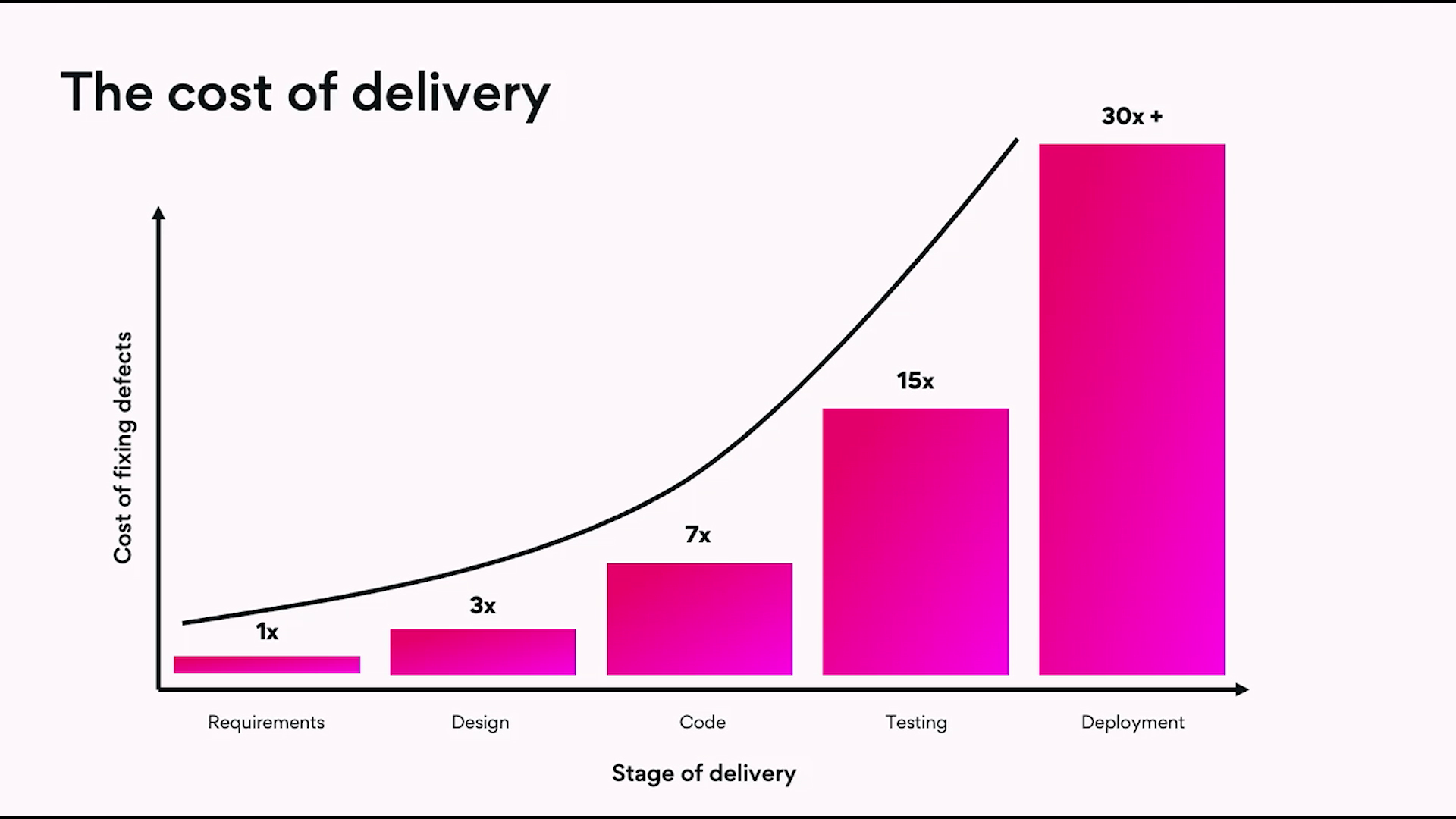
Let's just build it. And then that's when it started. So if you feel like there is something you wanted to build, you want to build, you do not have all the answers, try to find the right mentors. Then say once we have the idea, second thing was building the solution design. Because in most of the talks, we are talking about how we can save cost by reducing number of tokens used.
We can significantly reduce number of tokens just by doing one thing right, which is architecture, solution designing. So spend most of your time nowadays in doing the solution designing so that when you give the prompt to your AI, it is built in just one command. And you do not have regression issues.
You do not have unwanted code. You don't need to delete the code which is added by the AI. And after when you'll be good in the solution design, you'll feel like things will be so easy. It was late last night when I had to build a PPT. I had I was looking for technology options like Gamma app and many other apps. I wanted to use AI to quickly build a PPT for me. In the same folder where I had everything related to 19 caps, I asked AI, these are my thoughts.
I want to build something like this, find some tool or something so that I can build it. And believe me, this entire presentation was built in one command in just five minutes. I just needed to put some real numbers there. And once idea is sorted, solution design is sorted, this is what we built. In the left hand side, we have customer app.
In the right hand side, we have the app used by drivers. So we have the ideas finalized, solution design is clear, app is built, and now we started onboarding drivers. So once the app is live, the next stage was data and, how to view that data and how to utilize that data to scale the business. And that's when we started, taking help of AI.
And this is how, the drivers look like in one city. So everything, which is not green are the roads, and we have drivers, like, in every street. Colors, different colors are different type of vehicles. So what so if this whole exercise in 2026 in last five months, what is something I got?
That it took just twelve weeks for me to build and not few years with one person team, and it saved a lot of money and a lot of time. And that's the real value add from AI. So now we are planning to use AI for trust and intelligence to solve problems like fake rights problem, to solve problem like drivers and customers better ranking, demand forecasting, smart batching, dynamic pricing, multilingual AI support, and few more features that are mentioned here.
So this is kind of our backlog that we are planning to build in next one month. So the real shift isn't about AI features. It is about utilizing AI. Now we do not need a big team to build any idea. Whatever is in your mind you feel like that can make business or you feel like that can add value in the life of the people, it's the time to take that idea and move that to the production.
So this is what that one person team can build. So this is my QR code on LinkedIn. Now the question that I wanted to ask. So these are the good things about 19 caps. One of the problem that I'm still struggling with, I'm trying to find the solution. That problem is so it is about expenses, the expense needed to run this business.
One is obviously tokens. So $20 token is enough for me, which is not a big deal. Second expense to run those entire setup was Google Cloud cost. I got good credit from Google Cloud, so I don't need to pay that anymore for my startup. And the third cost is video generation for marketing purpose.
So as of now, the biggest cost or the only cost to run this entire 19 cap setup is generating marketing videos. And if anyone has any idea about any tool that is AI, not AI, or any tool that can really help me quickly generate mass produce ideas into marketing videos.
That is something I'm looking for. So if you know anything, let me know. Cool. Thank you. Save a lot of time.
Brilliant. That was a very speedy, Baram. So we might ask you a couple of questions Yep. And then get Inga up for the next section. So I wanna think about you're you're still at Publicis Sapient as as well as doing this as your kind of two businesses that you're working through. How are you finding the difference between the sort of work that you would be working on with your clients at Publicis Sapient, which I'm imagining are large, fairly big, heavy, traditional kind of businesses. And then you walk out of there, and then you turn into your business.
And immediately, it's kinda AI native from day one. It's kinda, you know, high speed, agile, you know, got a serious operations component to it as well. And how are you finding the difference between those two things? Because I imagine you're kinda working at both ends of the spectrum here.
Yes. So working with Publicis Sapient, they gave me an opportunity to work with the clients who are like number one in their industries. So my current client, CPA, they are number one in the accounting domain. Clients like Bupa, so they are all like number one in their industries. So these clients help me understand how we can build solution that can work for large amount of people.
If they this is where I learn solution designing. But with the AI from last mid last year, I used to feel like I want to build something because this is something not making me exciting any anything because it is so easy to build these things nowadays. So I wanted to build something. I'm look I I was discussing ideas.
And this is when I met one of the guys from Uber. And I had a few questions related to Uber that, okay, how how do we solve the business side of the things, operation side of the thing, marketing side of the thing? And that's when I feel like, okay. At least this is something new, and I'll get an opportunity to learn. I don't want to limit myself just by front end engineer or full stack engineer or just by technologist because end of the day, everything is all about business.
You are just moving from one part of the business to learning other part of the business. So I wanted to explore this, and this is really exciting. This is keeping me happy that at least I'm learning something outside the technology and expanding my horizon from the I'm not putting myself in a certain cave of front end or full stack developer or a solution designer.
That's excellent. And was there ever a moment where you kind of went, jeez, I'm taking on Uber and Didi and everybody else in this space. Like, you know, this is a fairly contested space, you know, as far as it goes. And I'm curious about your sort of journeys from getting from, you know, rough idea to kinda like going, hey, this might be something that I can play around with and learn with to actually, I'm gonna go and build this thing and deploy it and, yeah, get a whole bunch of people using it and paying money and doing all that sort of stuff.
I always even when I had this idea in the mind, I used to feel like this is really hard to build. And when I got solutions in terms of the op operation side of the thing, I reached out to a few recruiters that I'm looking for a few engineers to build this product. And when I heard about the cost and I felt like, okay, let's just try building by myself.
And in first couple of weeks, I felt like, okay, I don't need to give this to anybody. I can build it by myself. And that's when it saved a lot of time. So every time in at every stage, that felt like impossible. When I was at that stage of the idea, it felt impossible. But that got sorted.
Then the solution designing and building this entire product felt like impossible, but somehow that worked. And then now we are at a stage of marketing, scaling, and and it is feeling like impossible. But when we are getting feedbacks from drivers, customers, and other people, and we are quickly implementing them.
So for example, this feature of letting customers change the price is was built last week. And when I am looking at the datasheet, almost 70% of the customers are not now using that feature. So build something that is usable for customers and drivers. If you are adding value in the life of your end user, you can compete with anybody whether it is Uber or such any big company.
Yeah. That's awesome. And what you know, again, thinking about your kind of day job as it were, you know, often you're pretty distant to operational effects, particularly for the organizations that you work with that would be you know, they have whole operation divisions, largely to look after that sort of stuff. And what are you finding off the back of kinda you now doing this? You've got, you know, drivers in the field picking up customers in the field doing work.
Are there any kind of, you know, surprises that you got from kinda, you know, having to move to a much more operationally focused role?
I think for any kind of problem, the best solution is if you get a mentor in that industry. And they can solve any big problem in such a small time. So the when I had started the I was planning for this business, I had these questions in the mind. What if I won't get any customer? What if I don't get any drivers?
What if I nobody book ride with from my app? I had all these questions. But when I discussed with that Uber senior guy, he said, okay. If you have to get the drivers, I know the the the there are some agencies who help find the drivers. I went to them. I talked to them. I understood their process.
I was while I was thinking about giving them some contract, pay them some money to get the drivers on board, I invited few of them, and when I talked to few of them, I felt like this is something I can do. That's how I got the drivers. And when I had to get the customers, I felt like, okay.
Let's just do some very basic level of advertisement. I believed in offline advertisement as well as in online advertisement where Insta is helping us get a lot of customers as well as drivers. So nowadays, we are not just spending anything other than building some Insta related content, and we are getting both customers and drivers.
Technologies & Tools
- Gamma
Concepts & Methods
- Demand Forecasting
- Dynamic Pricing
- Fair Fast Matching
- Multilingual AI Support
- Smart Batching
- Solution Design
Organisations & Products
- 19 CAPS
- App Store
- Bupa
- CPA
- Didi
- Google Cloud
- Google Play Store
- Kanpur
- Ola
- Publicis Sapient
- Uber