Beat Burnout, Find Flourishing: The AI Edition
Introduction: Burnout Through the Lens of Sustainable High Performance
Speaker D opens by framing the talk around burnout, flourishing, and sustainable high performance in the context of AI use. They poll the audience on burnout experience and note the alarming rate of overachievers in the room, setting up the theme that burnout has been normalized as a rite of passage in corporate and tech culture.
The Culture of Overwork: Sleep Deprivation as a Badge of Honor
Speaker D critiques toxic productivity norms like '996' schedules and 'AI pills,' arguing that glorifying exhaustion is a sign of a misconfigured system rather than a mark of dedication or cleverness.
Cameron McEvoy: From Burnout to World Record
Speaker D tells the story of Australian swimmer Cameron McEvoy, who quit swimming due to burnout after underperforming in three Olympics, then redesigned his training model from high-volume, low-intensity to low-volume, high-intensity work. This radical shift led him to break records and win Olympic and world championship gold, serving as an archetype for redesigning broken systems rather than accepting them.
Redefining Burnout: Stress Without Sufficient Recovery
Speaker D examines the World Health Organization's definition of burnout as workplace-caused chronic stress, critiquing it for placing blame either on the workplace or the individual. They propose an alternative definition: burnout as chronic stress not balanced by effective recovery, setting up the stress-recovery framework for the rest of the talk.
Flourishing and the Stress-Recovery Capacity Model
Speaker D introduces flourishing as the combination of feeling good and functioning effectively, positioning it as the true opposite of burnout rather than the mere absence of stress. They present a capacity 'tank' model where stress draws down capacity and recovery replenishes it, advocating for reframing 'work-life balance' as 'stress-recovery balance' since both stress and recovery occur in all areas of life.
Good Stress vs. Bad Stress: Navigating the Challenge Zone
Speaker D explains the Yerkes-Dodson-style model of stress zones, describing the ideal 'challenge zone' where flow, learning, and peak effectiveness occur. They warn against staying too long in overwhelm (bad stress leading to diminished capacity) or too long in calm (leading to rust out), emphasizing the need to consciously manage time spent in each zone.
Good Recovery vs. Bad Recovery Practices
Speaker D distinguishes ineffective recovery (doom scrolling, excessive drinking, guilt-driven 'shoulds' like forced gym visits) from genuine recovery practices that activate the parasympathetic state, including gentle movement, play, connection with nature and people, reflection, and quality rest like sleep or Yoga Nidra. They stress that effective recovery is personal and requires experimentation to build into a sustainable routine.
The Stress-Recovery Canvas: Mapping Performance and Injury Risk
Speaker D presents a unified canvas combining good/bad stress and recovery into quadrants representing tailwinds toward flourishing versus headwinds toward burnout, using emotion words as interoceptive sensors. They connect this model to performance outcomes, explaining how short-term high performance tolerates occasional overwhelm, but long-term high performance and avoiding chronic injury or burnout requires deliberate recovery, invoking the sports concept of super compensation applied to knowledge work.
The AI Vampire Effect: How AI Drains Default Users
Speaker D references Steve Yegge's 'AI Vampire' article to describe how agentic AI coding tools are designed for maximum engagement, delivering dopamine and adrenaline like a slot machine while draining users' energy. They explain how AI's constant validation exploits impostor syndrome and makes it easy to let AI lead sessions into unsustainable, sprawling work patterns.
Inverting the System: Making AI Accelerate Flourishing
Speaker D argues that AI acts as an accelerator of whatever trajectory a person or team is already on, meaning it can speed up burnout or, if recovery is deliberately designed into the system, accelerate flourishing instead. They emphasize that performance and well-being are not zero-sum and that sustainable use of AI requires treating recovery with the same seriousness as output.
Individual and Leader Responsibility for Well-Being
Speaker D outlines that individuals are responsible for understanding their own stress/recovery system and advocating for their needs, while leaders are responsible for shaping team conditions—making workload and trade-offs visible and rest safe—rather than absorbing team stress themselves. They advise picking one small, controllable change rather than attempting a large overhaul, and stress the importance of naming what's outside one's control.
Teaching Your System to AI: Practical Session Strategies
Speaker D shares concrete tactics for using AI tools in 'clever mode,' including telling the AI your emotional state and goals upfront, pre-committing to session limits and stop conditions, allowing mid-session check-ins, and closing sessions with a structured review to hand off context and reduce entropy. They mention building a Claude skill around this approach that they hope to open source.
Closing: Flourishing as a Systems Problem
Speaker D closes by reiterating that flourishing is a systems problem well-suited to an audience skilled in systems thinking, returning to Cameron McEvoy's example of proactively redesigning one's own system rather than waiting for institutional change. They urge the audience to take responsibility for their own well-being and support their teams in doing the same.
Q&A: Neurodivergence, Interoception, and AI-Assisted Self-Awareness
The moderator praises the talk's reference to the Yerkes-Dodson law and asks Speaker D for advice for neurodivergent individuals who struggle with interoception and often miss early stress signals until burnout hits. Speaker D responds by suggesting building external tools and workflows, such as Pomodoro timers or configuring AI assistants like Claude to proactively prompt breaks, to compensate for difficulties in bodily self-awareness.
Hello everyone. What an amazing set of talks. One of the great advantages of going right at the end of a conference is that you basically, everyone's done your work for you and you kinda have to just, you know, bring it together. So here we go. I'm gonna talk to you about very similar things to what we've heard but I'm gonna do it from the lens of burnout and flourishing and sustainable high performance and well-being.
I will talk about AI and how using AI in default mode can exhaust you. Again, we've heard about this a bunch. But I'd also like to talk about strategies for flipping that and getting it to actually help you flourish. So show of hands.
How many of us here have experienced burnout? Yeah. Okay. Overachievers. Alright. We're seriously overrepresented. It's about thirty eight percent in general in the population. But look, this is this is a really important thing for us to pause and acknowledge.
Right? Burnout has often has has been seen as a necessary rite of passage. Something that you just have to experience in order to make it through corporate life. You know, we've got This is this is pretty much how we we we we run. Right? Sleep deprivation is a badge of honor.
You know, you're tired. Let me tell you how tired I am or how stressed I am is is a conversation I've actually heard around the traps today. So, nine ninety six and AI pills and you know, doing all the things. These are not very clever.
These are a sign of a misconfigured system and I'd like to really delve into that a bit. But first, I'd like to tell you about an Australian swimmer. I'd like to tell you about Cameron Nachavoy. So Cam bust onto the scene in 2011. He won the 50 meter and the 100 meter events in the juniors. And then he went on to be part of the Australian swim team. He competed in 2012, 2016 and 2020 and he didn't win anything in those three Olympics.
In fact, by 2020, he came in twenty ninth in his main event. In 2021, he quit swimming. He decided that, you know, he would need to take a break. I think the word burnout came up around then for him. And then, he spent two years studying how other sports approached performance.
He came back with a radically different model. Most coaches refused to work with him. And he eventually found one who would. So in the old model that he was using, that the the Australian swim team was was using, He was training for about, he was swimming about 30 kilometers a week.
If you're a runner, that's the equivalent of about a 120 ks's a week. Just to put things perspective. Right? He was training with a model that essentially was volume first and intensity never. And he switched that around himself. He decided that what he wanted to do instead was actually to swim two or three kilometers a week at high intensity.
And his work to rest ratio went one to 16. And he did a whole bunch of other things as well. He wasn't you know, sitting on the couch for those 16. But he registered more sub twenty two second swims in one year than in his previous 13. He won the world championship gold in 2023.
He won Olympic gold in at Paris in 2024. And in March this year, he broke the world record in his events at the age of 30 after he'd been told after he'd been written off. So the the reason for talking about Cam is that Cam's my, if you like, archetype for the the kind of person who says, system's changing.
System's not quite working for me. I'm gonna pause. I'm gonna really think about this. I'm gonna understand it. I'm gonna redesign it for myself. And then I'm gonna give that a good solid go. So things are changing rapidly. We've heard that a lot over the last two days. The systems we've had in place are popping at the seams.
Like CAM, we got to redesign our system. So let's start by understanding where burnout comes from. So the World Health Organization defines burnout as a syndrome that results from chronic workplace stress that has not been successfully managed.
So a syndrome is different from a disease. We don't, you don't, it's not a diagnosable illness. It's recognized by symptoms. Those symptoms are exhaustion, mental distance and reduced efficacy. I've got a few problems with this definition. One is that it somehow seems to make it the problem of the workplace. And the other is that this is somehow a personal thing. It hasn't been successfully managed.
Did you burn out? Your fault. Maybe you should try something different. So here's an alternative for a definition. It's a syndrome resulting from chronic stress that has not been balanced by effective recovery. So I'm gonna spend a little bit of time talking about what stress is and what recovery is and what it means to balance stress with recovery and where burnout comes from.
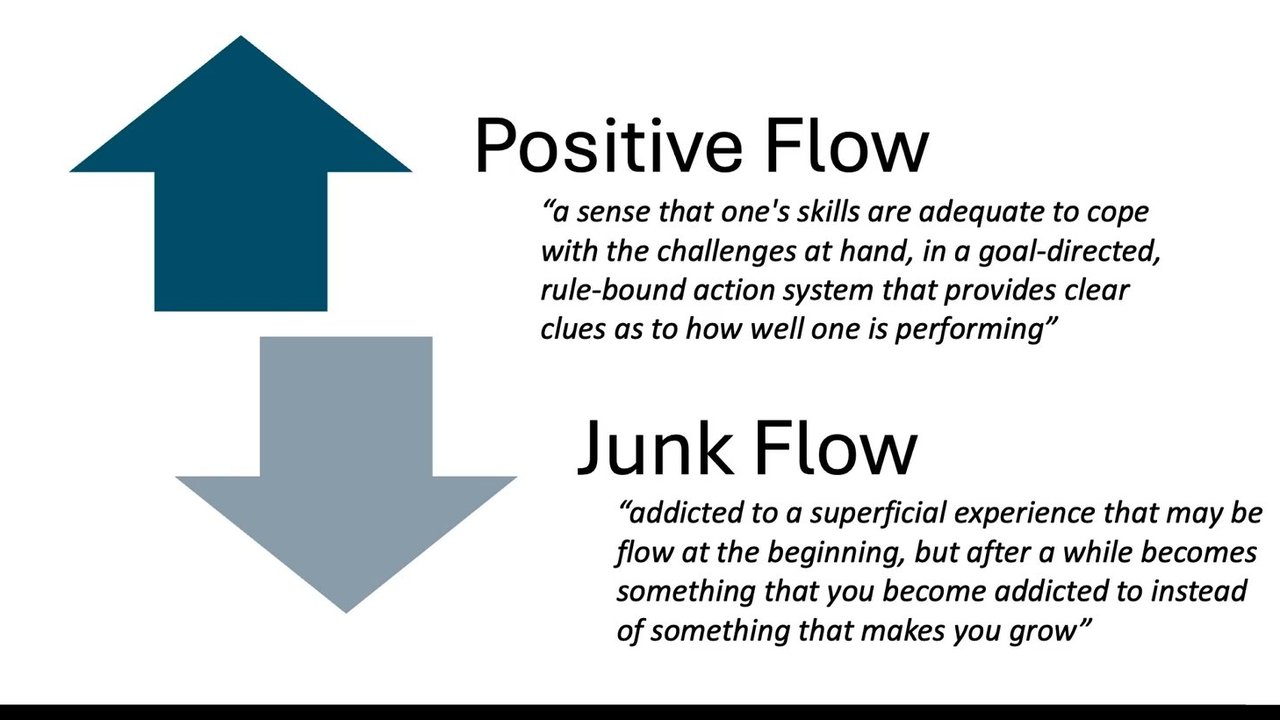
But first, let's talk about the word flourishing. So this is also somehow a technical word and I just found out earlier from from Annie who spoke earlier on today that there are many levels of flourishing out in the in the research. But we'll keep it simple for us. The opposite of burnout is not the absence of stress.
It's called flourishing. So flourishing is the experience of life going well. It is a combination of feeling good and functioning effectively. It's the and here that I'd like you guys to hold on to. It's not an either or. You don't, right? So we'll we'll talk about this again. Burnout though is essentially a pattern where your balance is skewed in the direction of stress.
So So this is roughly how life goes. We experience slowed. It pulls, it draws down on our capacity. We then recover and that tops up our capacity. And if you don't recover enough and you keep loading yourself up, thus your balance is skewed towards stress, you will eventually run out of capacity. And what that looks like is the inability to get out of bed. Things stop functioning for you.
You can't work. You can't live for a chunk of time. Like actually about coming back from the end of that that curve is an epic. And I seriously do not wish that on anyone. Yeah? But that's technically what burnout is. And then just when I wanna put, tease that apart from the colloquial burnout. I've had a big week.
I'm feeling burnt out. Not no shade on that. By all means, let's talk about that too. But this is what I'm talking about is that it's kind of in this context. So I would encourage us to shift our frame from talking about work life balance to words talking about a stress recovery balance. Because stress happens at work and at life.
In fact, some of us come to work to You know, if you're carer or if you Anyway, I I probably don't need to go into that too much. But it's not work. It's not Stress doesn't just happen at work and recovery doesn't just happen at life. It's actually more important to think about this as a system where your stock is your capacity and stress draws down on that stock and recovery tops it back up.
And there are some interesting feedback loops here that we need to be aware of. So hence the use of the word tank. So let's talk about stress. Let's try and understand what we mean by this and in particular what we might mean by good and bad stress. So the picture I've got here is on the x axis here I've got varying levels of stress.
I've kind of binned them into three categories. Yeah? On the y axis I've, which is unlabeled, I'm sorry. It's something that, so it's essentially your capacity, your, the probability of getting into flow. Your effectiveness if you like. So where you want to be is in this challenge zone.
So the number of well-being articles out there that tell you to avoid stress entirely, please don't avoid stress. It will render you a jellyfish and you will not be having a good time at all. We Stress is a good thing. We actually feel like wanting so we would like to be in flow. We would like to experience the challenge state of stress.
Where we get to, this is the zone in which we learn best. We are outwardly focused. We collaborate well. We solve problems that are difficult. We are actually our capacity for doing work is at its maximum in this zone. And so if you stay in this zone for a an extended period of time and you don't make your way to calm, what will happen is that you will head towards overwhelm.
And in overwhelm, your system is shifting to fight, flight or free or freeze. But your executive function is overtaxed and this is where you experience that horrible feeling of, oh, if I just push through, maybe I'll get this done. But what you probably don't tune into, in fact, I know I don't tune into it at at this at this point, is that my capacity for actually solving the hard problem that I've been working on for the last five hours has diminished to the point where I can barely do anything.
I'm actually far better placed to stop, take a break and come back to it. But everything about that particular moment in time is pushing me in the direction of staying with the problem. Right? So I'm sure this is familiar. Right? How many of us here have experienced the I I should've just staying up until three in the morning and slamming my head against that problem was a mistake because I woke up the next morning and then fifteen minutes it was done.
Yeah, that's that's what I'm talking about. So if you spend too much time on the other side though, if you spend too much time in the calm zone, which so you do need to spend time there obviously. We've been talking about that. But if you spend too much time there, you end up in rust out. This is also not what you want to do.
In fact, I'm sure this room will particularly resonate with the claim that you want to optimize your position so that you are in that challenge zone. Right? So that's what I'm calling good stress and bad stress is the overwhelm piece. So let's also talk about good recovery and bad recovery.
So bad recovery is probably So a bit of a downer here because I know we're looking forward to that to that beer afterwards. But that's that's not what I'm what I'm headed for here. What what I'm trying to say is there are things that are distractions. There are things that are There are habits that we form that distract us from the here and now.
And that's fine. These are social things that we do and that's that's all good. It's just that we kind of wanna make sure that we understand that that is not effective recovery. Right? So if you pump out a huge day at work and then you go have a huge day or a huge night at the pub and then you do that again and that's your week, you're playing with fire.
Anyway, doom scrolling again. I probably don't need to spend a whole lot of time with this audience talking about how that's not effective recovery. And the lonely weights down there are a classic example of the should. You know, I should go to the gym and I should possibly lift weights. These are not gonna help.
So what does? So good recovery is something that gets you into a parasympathetic state, right? So it's movement, gentle movement, especially activity that connects breath to movement. It's play, having fun, getting into flow, doing something creative.
Connection with people, with nature, green space, moving water, people and places that make you feel safe and unselfconscious. Reflection, making sense of things, closing open loops. This is where you get a chance to step back and put your executive function back in charge.
Generally reassert control on the situation. Rest, sleep is the is the queen of of recovery. But there are other options. You know, so practices like Yoga Nidra, non sleep depressed. And I kinda wanna make the point that you kinda have to do some work here to figure out what good recovery means for you. What works for me will not be the same as what works for you. And you you have to spend some time figuring out which of these components you particularly connect with and then get creative with that. Bake that into a routine so that you aren't having to kind of sit there figuring out which one am I doing again today? Right?
So that's the pith of good recovery. So here's how we bring this together in a single canvas. On the on the right hand side here, on one side here, we represent the good versions of stress and recovery. And the tailwinds or downhill terrain that promotes flourishing and defends against burnout. The other side represents the bad versions of stress and recovery and the headwinds or uphill terrain that pulls you towards burnout and away from flourishing.
And doing an exercise with yourself and your team where you use this as the basis for a retro or a ritual is actually quite a quite a a a an effective way of beginning to understand your own system and the system for your team.
In the middle are emotion words. Things that help you train your interoception to detect which quadrant you are in. That's your control plane, your sensors and the hooks into that control plane. So let's review the system in the context context of performance, injury and psychosocial safety.
So for short term high performance, you want to be in the challenge zone of good stress. You might tip over into overwhelm and bad stress occasionally as you hit your boundaries but that's part of the the deal of doing something intense. For long term high performance though, you have to be factoring in good quality recovery.
That's where you get to enjoy the benefits of high performance and well-being. It's so not zero sum. If you end up in the top left corner of extreme overwhelm or bad stress, you are at a high risk of suffering acute injury. And if you are spending most of your time bouncing between anxiety or low level bad stress and bad recovery, that's a trajectory towards chronic injury and burnout.
And I suspect that that's actually a zone that a lot of us creatives spend a bunch of time in. So headwinds or uphill terrain is where toxic productivity culture has its center of gravity. Tailwinds or downhill terrain is where healthy high performance culture lives. Yeah. So when you get the stress recovery balance right, the trend line flips.
Each cycle builds on the last. Capacity increases. Well-being increases. And that's the super compensation principle if you know anything about sport applied to knowledge work. So that's how you flip burnout to flourishing. So let's switch across to talking about AI.
I know that Steve Yeghi's been talked about a bunch this conference. I'm gonna bring him up again. This is an image from his article, The AI Vampire. And just to summarize the article, actually just before I carry on, how many of us here have read it? Yeah. Okay. So I highly recommend that you read it.
It is it is essential especially if you are a leader of any description. So to summarize, AI increases your productivity. Bring on the 10 x. AgenTic software building is genuinely addictive. You are sitting in front of a slot machine. The better you get at it, the more you want to use it. It is simultaneously satisfying, frustrating and exhilarating.
It doles out dopamine and adrenaline shots like they're on a fire sale. And being in the same room as AI is draining people. And he calls this the AI vampire effect. And he In that article, he literally talks about how he's got about two or three continuous hours after which he needs a nap. Okay. So what's going on?
Again, this is something that's been talked about a lot at the conference. So to summarize, the product is designed around maximum engagement and maximum session length and maximum tokens. And it is powered by maximum emotional investment from you, the human in the loop. So working with a coding agent can seem like working with someone smart and switched on even a bit intimidating.
They're not judging you. You can explore your impostor syndrome with them a bit. So when the AI praises your judgment and agrees with you, we're basically being told who's smartest? Who is the pinnacle of consciousness? You are. Yes, you. And we're like, hell yeah. And then we find it really hard.
Sorry. We find it really easy to let it lead us and we find it really hard to flip that. Right? So this is AI in default mode. Yeah? Suddenly, it's let's do all the things. It's 3AM, the thing I wanted to I started out wanting to do. I still haven't finished it but that's okay. I'm now working on 12 other things and I I think that's a good thing. So here's what Cam McEvoy proved and what I want you to hold on to.
The default system over weights load, undervalues recovery and sustainable performance comes from inverting that. Performance and well-being are not zero sum. You don't have to choose between shipping fast or being productive with AI and staying healthy.
In fact, the evidence is the opposite. Sustainable performance requires recovery to be built into the system. AI is the great accelerator. We just had that mentioned. We have numbers for it from from our our From the previous talk. But here's the thing about accelerators.
They accelerate whatever trajectory you're on. If you have a propensity towards burnout, if your team has a propensity towards burnout, guess what? It's gonna take you there faster. Okay, so again, we've heard about that a bunch these past two days. But if you consciously design the system, if you treat recovery with the same amount of importance, with the same seriousness as you do output, AI can accelerate flourishing instead.
It's the same tool. It's the opposite outcome. The difference is whether you're being deliberate with the way you're using it or you're letting it guide you in how to use it. So for individuals So here here's the here's the unpleasant truth.
Right? You are responsible for your well-being. No one else is. Right? So what that means is you have the opportunity to understand your own system. What causes you, what puts you into that good challenge stress zone? What constitutes bad stress? What brings you What are your headwinds and tailwinds?
You can ask for what you need then to move something deliberately from a headwind to a tailwind. And once you understand that system, you can teach the machines your system. Right? I'll say a little bit more about that. But you can make the terrain your own system.
For leaders, you are not responsible for the well-being of the individuals in your team. You are responsible for the conditions that your team operates in. Yeah? So it's on you to grok the system that you are shaping. To make workload, pace and trade offs visible.
To make rest and push back safe. And thus shift the terrain that the team operates in so that conditions favor healthy high performance. You're essentially supporting your team and taking responsibility for their own well-being. And the most important thing for for for leaders in my opinion is stop absorbing what isn't yours.
Stop being the hero. Don't be the Bruce Banner guy. Pick one thing you can change. Small is actually good. It's it's probably counterintuitive to the overachievers. Right? We wanna make a big long list and do all of them. But the clever thing is to pick the one thing that's actually in your zone of control and move that across from a from being a headwind to a tailwind.
Important that we spend some time thinking about what it is that is in our control and what isn't. Some things just aren't yours to fix. And that's a hard thing to really get your head around. But it's important I think to be able to name that.
And I really I mean, it's super important to be working at a place where it's safe enough to name it, surface it and not carry it silently. And I think our friends from Culture Amp really knocked it out of the park with the way they described how they've done that.
So here's AI in clever mode. This is this is what I suggest you do. This is how I suggest you teach your system to the machines. I've built a a Claude skill around this that I'm I'm hoping to open source in the next little bit. But this is essentially start by telling your your your AI tool how how you're feeling, what you're trying to achieve.
So not tasks, your state too. I'm tired. I have ninety minutes. I'd really like to ship x. So putting that into the context early changes everything about how the session works. Set up Do Come up with a pre commitment to limits. Duration, scope, stop conditions.
We're not going beyond this today. If we hit ninety minutes without a decision, we stop. Set this when you're fresh, not when you're pushing for that through that tired moment. That you both have permission to interrupt and observe mid session. You're not Stop using it as a vending machine or a slot machine. Use it as a collaborator.
And you're using it as a session partner who is allowed to say we've been on this for an hour. Is this still what you want to do? And close the session with a short sharp review. A hand off to your future self and to your to to a to a next instance. What got done? What's parked? How you feel compared to when you started?
This is where open loops get closed. Entropy is reduced. You can stand down. And you can also hand work off to another person on your team. So flourishing is a systems problem. We are good at systems problems. McEvoy didn't wait for Swimming Australia to fix the program.
He studied the system. He ran an experiment on himself and he proved it wrong at 30 with a world record. So yes, everything is changing around us and yes, we have to do something similar for ourselves. You don't have to wait for to fix the system you operate in. Take responsibility for your well-being.
Support your team in taking responsibility for theirs and flourish. Sustainable high performance and well-being compound, start there. Thank you.
Thank you very much. This is I think the first time in about five years I've seen the Yerkes Dodson law referred to in a talk. And I'm pretty sure five years ago it was my talk. So it's not something that that graph with the normal distribution is called the Yerkes Dodson law. If you ever want to do some research on the psychology behind stress, it's an amazing paper.
Do it. Do it. One question before we finish up. When I was looking into this stuff, one of the problems I had as a neurodiverse person is that we often struggle, especially those on the autistic spectrum, with introspection. So actually understanding our own bodies and missing those signals that our bodies are telling us.
Have you got any advice for the people like me who suddenly find their burnout at 3AM rather than missing all the small signals leading up to it?
So thank you for mentioning this. It is I do I definitely want to acknowledge that not everyone's interception works the same way. And I do not want to be glib about saying, it's okay. All you need to do is tune into your interception rock and roll. Do I have advice for you? Yes. The the advice is essentially again, pay attention to like if you have if you have an intellectual understanding of the problem, what tricks can you bring to bear to, what can you build into your workflow?
So use a Pomodoro timer. I can talk about how it is that I use a similar thing in Claude. But I essentially get it to go, hey, you know that thing you told me about? Your own system where you said you don't tune into these things? Maybe I can help you with that. This is a natural scene at which you might want to take a break. Go look at the sky and come back.
Nothing will change. We can keep going from there. It will not be intuitive for you but you might actually get a hand from the tool you're using.
People
- Bruce Banner
- Cameron McEvoy
- Steve Yegge
Technologies & Tools
- Claude
Concepts & Methods
- AI vampire effect
- Burnout
- Flourishing
- Flow state
- Interoception
- Pomodoro timer
- Stress recovery balance
- Super compensation principle
- Toxic productivity culture
- Yerkes-Dodson law
- Yoga Nidra
Organisations & Products
- Culture Amp
- World Health Organization
Works
- The AI Vampire