Engineering without reading code
Warming Up the Crowd
Speaker D opens with an interactive icebreaker, asking the audience to shout out their favorite science domains before revealing that the real subject of the talk is computer science. This playful warm-up sets the tone for an audience-participation style presentation.
Introducing Style Education's Teaching Platform
The speaker introduces Style Education, a science education company that builds a platform and curriculum for teachers, including lesson plans, presentations, simulations, worksheets, and labs. He explains the concept of 'interactives'—small websites that let students explore scientific ideas—as a key teaching tool.
The High Cost of Building Interactive Simulations
Speaker D demonstrates a projectile motion interactive built over ten years of development and explains the expensive traditional process: a science writer, illustrator, and engineer must iterate repeatedly to balance scientific accuracy, pedagogy, and technical feasibility.
Peppered Moth Interactive: A Natural Selection Demo
The speaker runs a live audience demonstration using a pre-2025 interactive simulating natural selection in peppered moths during London smog, having attendees spot black versus white moths on screen. This illustrates the quality of interactives built before AI-assisted coding was introduced.
Trade-offs Before Vibe Coding
Speaker D explains that in 2024, despite strong appetite from the science writing team, engineering resources were limited because platform features took priority over building more interactives, so writers resorted to static graphics or animations instead.
Vibe Coding Breakthrough: The Musical String Interactive
The speaker demonstrates a 2025 'vibe coded' interactive—a pluckable string instrument playing the Imperial March—built entirely by a non-engineer science writer using AI coding tools. This breakthrough removed the bottleneck of writers needing to iterate through engineers to realize their ideas.
Scaling from 2 to 50 Interactives
Speaker D highlights the dramatic impact of vibe coding: interactive production jumped from just two in 2024 to fifty in 2025, demonstrating how removing the writer-engineer iteration barrier unlocked massive productivity gains.
The New Bottleneck: Review and Deployment
The speaker explains how solving one bottleneck revealed another: writers could build interactives but couldn't deploy them due to design system compliance, accessibility testing, and internationalization needs, forcing engineers back into a tedious 'productionizing' role that slowed the team down.
Distinguishing Engineering from Coding
Speaker D introduces a key conceptual distinction between 'coding' (which AI models like Claude now do better than most humans) and 'engineering' (judgment, trade-offs, and quality assurance), arguing that Claude has surpassed him at coding but not yet at engineering.
Audience Exercise: Engineering or Coding?
The speaker runs an interactive audience poll, calling out programming concepts like error handling, inheritance, reactivity, trade-offs, security, and readability to have attendees classify each as 'coding' or 'engineering.' This exercise reinforces his framework for what AI handles well versus what still requires human engineering judgment.
Rebuilding Engineering Practices Without Manual Coding
Speaker D discusses the traditional conflation of coding and engineering, then details concrete systems Style Education built to preserve engineering quality without manual coding: a coding agent for writers, an ingestion pipeline, iframe sandboxing for security, and automated 'critic' review bots.
Demoing the Interactive Builder Tool
The speaker showcases their custom-built Interactive Builder agent, which integrates automated accessibility testing, adjustable zoom and sizing, co-written specifications, and automatic design system compliance—illustrating how easy it was to build a tailored AI agent for their workflow.
Results: Scaling Toward Hundreds of Interactives
Speaker D shares updated metrics showing the new system's impact: after 50 interactives in 2025, they've already matched that number in 2026 and expect to reach 100, with per-interactive engineering time shrinking from days to minutes.
Partial vs Full Automation and Vigilance Decrement
The speaker introduces 'vigilance decrement,' a phenomenon where engineers monitoring AI-generated code become less attentive than active coders, risking missed errors, security issues, or flawed assumptions. He argues the solution isn't less AI, but more—pushing toward full automation rather than partial human oversight.
Tesla vs Waymo: The Case for Full Automation
Using the analogy of Tesla's partial self-driving versus Waymo's full automation, Speaker D argues that keeping humans as an unprepared 'backup' in critical moments is dangerous, and that true safety and quality require removing humans entirely from routine engineering loops while they focus on building and maintaining the automated system.
Closing Thoughts and Future Direction
Speaker D wraps up by noting that Style Education has built a system ready to transition to full automation for interactives and plans to extend this approach to all of engineering, pointing attendees to a related talk by Daniel before thanking the audience.
Q&A: Trust and Safety in AI-Driven Engineering
An audience member questions the level of trust placed in AI for engineering tasks. Speaker D responds that interactives operate in a relatively safe, sandboxed web environment (JavaScript, HTML, CSS in an iframe), making the risk low, while broader engineering automation remains a more complex challenge covered in another talk.
Q&A: Are Engineers Fully Out of the Loop?
A questioner asks whether engineers are completely removed from the interactive-building process or still intervene when things break. Speaker D explains they currently maintain a manual 'click next' review step to build confidence before fully automating merges, acknowledging this manual process itself suffers from vigilance decrement.
Q&A: Design Quality in AI-Generated Interactives
An attendee notes that earlier interactives were more artistically directed while newer AI-built ones look sparser, asking if this is an unresolved challenge. Speaker D confirms it's a real trade-off, since science writers can now build interactives directly, pushing illustration to a secondary layer they're still working to improve.
Q&A: Evolving Hiring Practices for Engineers
A questioner asks whether hiring practices have changed given AI's coding capabilities. Speaker D reveals that their decade-old coding test was recently 'one-shotted' by Opus 4.5, prompting them to make it harder and add video explanations to verify candidates' genuine understanding rather than AI-assisted answers.
Q&A: Temporal Bugs and Scientific Accuracy Risks
In the final question, an attendee asks how they'd catch a hypothetical AI-introduced bug that only manifests after a certain date. Speaker D admits such subtle temporal bugs would be hard to catch via code review, but argues AI-written code isn't necessarily buggier than human-written code, closing the session on that reflective note.
Hello. So I'd like to treat my audience like a car. And I'm going to have interactives in this presentation. So I need to warm you up. And so can everyone please yell out your favorite domain of science? Yell it out. Physics. Yeah, keep going. You've got to do this. Otherwise, you won't interact later.
Geospatial, biology. Fantastic. Thank you. You're all wrong. It's computer science. So to help you understand this talk, I'll need to set up some context. I work at a science education company, thus the science, called Style Education. We build a platform for teaching and learning, along with a core science curriculum product.
The way to think about that is that teachers use style to teach science every day in the classroom. So we provide everything you need to teach science plans, presentations, simulations, worksheets, videos, labs, revision material, and everything else you might need to teach. Some lessons are live classroom experiences with laptops open, some are on paper with laptops closed, And of course, labs are run without laptops, especially wet labs.
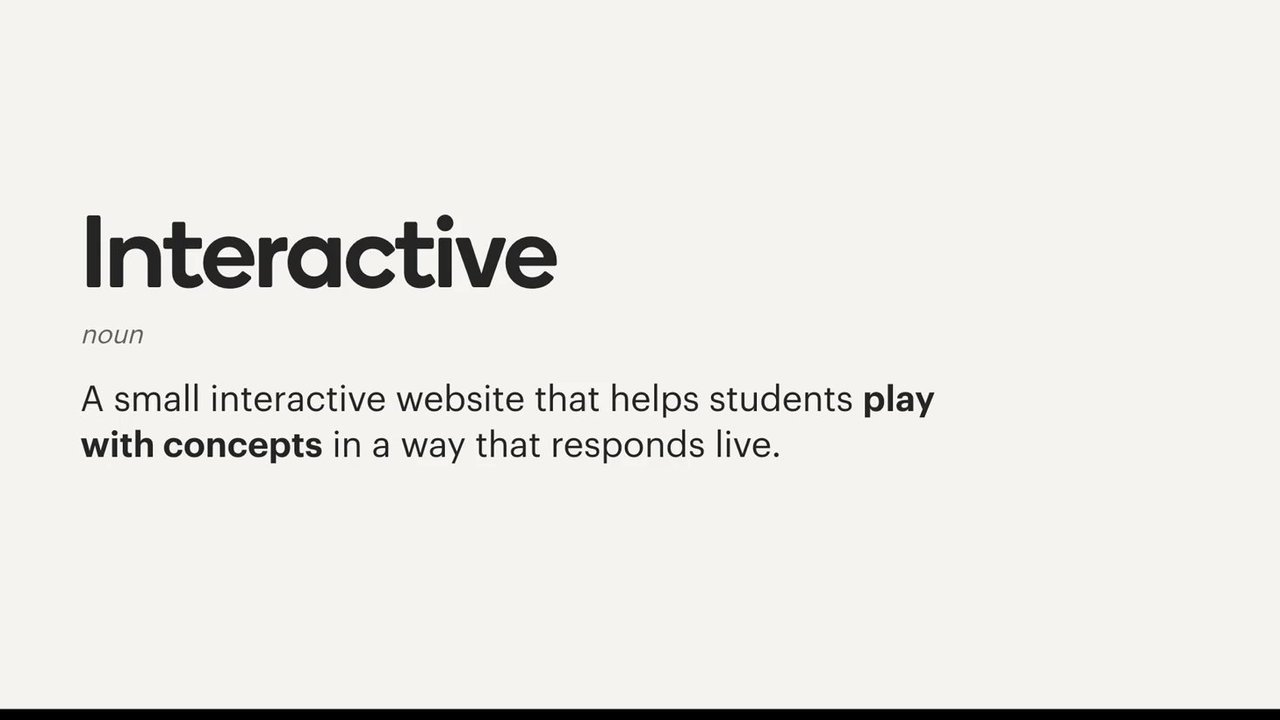
We have this thing called an interactive. And sometimes, when we're designing a lesson, we think that the best way to explain a concept is to use these interactives. They're small websites that help students play around with an idea. Here's an example of an interactive.
Now this interactive is live interactive. And you can see it's demonstrating projectile motion. So we've been building interactive sim simulations like this for more than ten years. And we've made some great ones. However, they are expensive to build.
We need a science writer to help with the science content to make sure it's scientifically accurate. We need an illustrator and at least one engineer. There's iteration backwards and forwards as they try different ideas to figure out what is possible. Often, science writers don't really know how they want to make this thing work. And then the engineers build something, and it's really fun, except the science isn't quite right, or the pedagogy isn't quite right.
And so they need to iterate a lot. Here's an interactive that we made pre 2025. It demonstrates natural selection with the peppered moth. So if you're familiar with this idea, I'd love everyone to I'm gonna do this myself.
So you can see that these black ones are very visible, so it's easy for me to spot them. Now you see, I found five black ones, one of the white ones. Now this time, I want you to yell out which corners of the screen you can see moths in. Okay. Where are they? Top. Top? Okay. There's one there.
Okay. Bottom right. Oh, yeah. I see that one. Does anyone see any black ones? No. So this effect happened this natural selection effect happened with smog in London, where the black moths no longer got eaten, and so they survived. And the white ones disappeared.
So this an interactive we built pre-twenty twenty five. In 2024, we built two of these, right? We had appetite for more on the science writing side. But on the engineering side, we had to trade it off against platform features. Features usually win, since they benefit every lesson, not just one. So instead, our writing team would make graphics or an animation.
But then, in 2025, we tried out vibe coding. Now this is an interactive that was vibe coded back in 2025. And this is before the models got really good, like before this year. And there is audio, which I think may be coming through external headphones. No. Okay.
Well, I don't have perfect pitch, so I can't sing you d four. But can adjust this. You can pluck at the string. And you can change the material of the string, as well as string tension. It's currently playing the Imperial March, if anyone remembers that. Now, this was totally vibe coded.
This was a science writer, not an engineer. And that's pretty cool. I downloaded some audio. Okay. That was from a anyway. So what we've done is we'd remove the bottleneck of iterating through another person, where previously writers had to iterate through an engineer to understand what they could do. Now they could try it out directly.
They could come up with a concept and then iterate focusing on fun, scientific accuracy, and pedagogy. We'd removed the barrier of iterating through another person. So in 2024, we built two. In 2025, we built 50. So this is a huge increase, like a massive, massive increase.
And we did that, and it was great. But then we started to find some more bottlenecks. And something we've noticed over the last year when building with AI is that bottlenecks move. AI allows you to move so fast in one place that somewhere else becomes a bottleneck. Once our science writers were unlocked and could create any interactive they could dream of, we suddenly had a bottleneck in review and deployment.
Even though the writers could build something that worked, they couldn't deploy their work. They couldn't stick to design systems, do accessibility testing, extract internationalization strings, and generally review for engineering quality. So we had to do the last mile in engineering. Of course, finishing off someone else's half finished work never feels good.
We didn't like this. I'm sure you all don't like this when you see someone slop PR. Even when you give it a fancy name like productionizing, it isn't fun. Plus, it was slowing us down. So we decided that we needed to get engineering out of the loop. If writers could deploy their work straight to production, then we could remove a step in the process, speed everyone up, and hopefully ship more great work.
Of course, we can't just remove engineering as a concept. There was actual work being done there, and we wanted to keep the same level of quality. So instead, we needed to do engineering work, so that we didn't have to do other engineering work. I've started to make a distinction when I talk about AI.
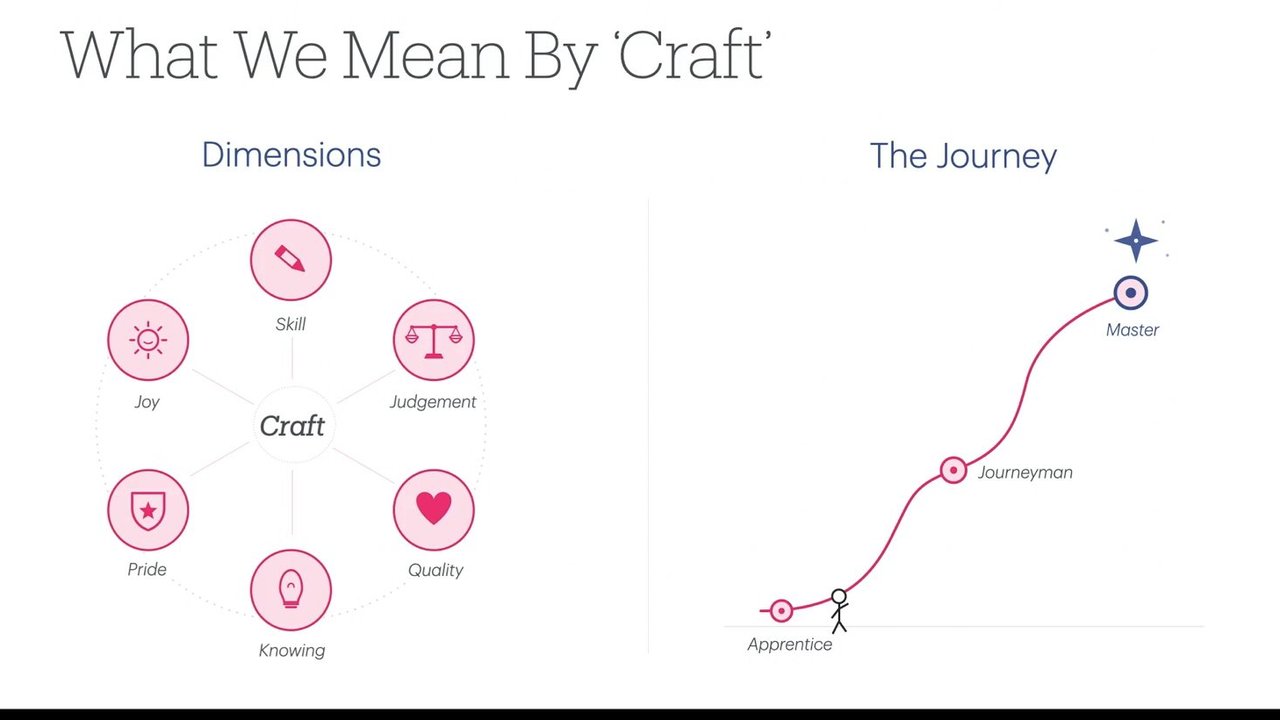
The distinction is between engineering and coding. I'm really good at coding. I've been doing it for more than twenty years. I don't mean to brag. I'm comfortable I'm older than I look. I'm comfortable in all common programming languages. I'm fast. I comprehend coding quickly. I've made a successful career out of being really good at this.
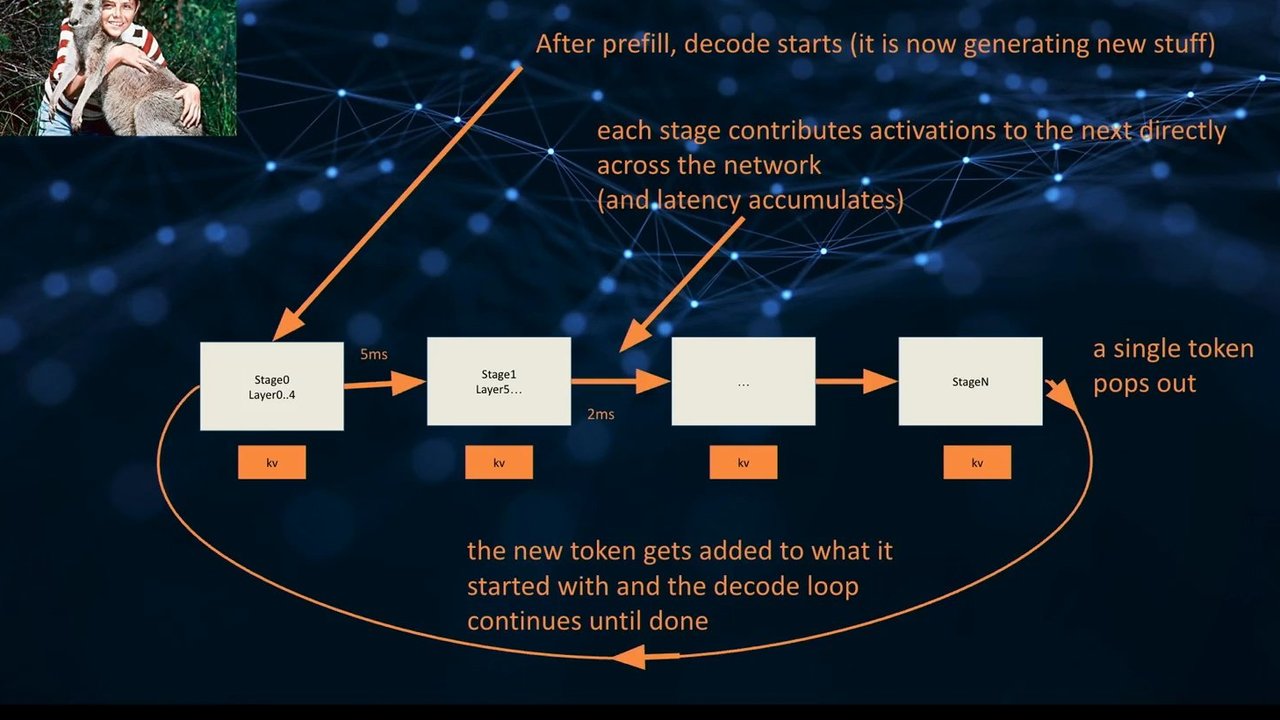
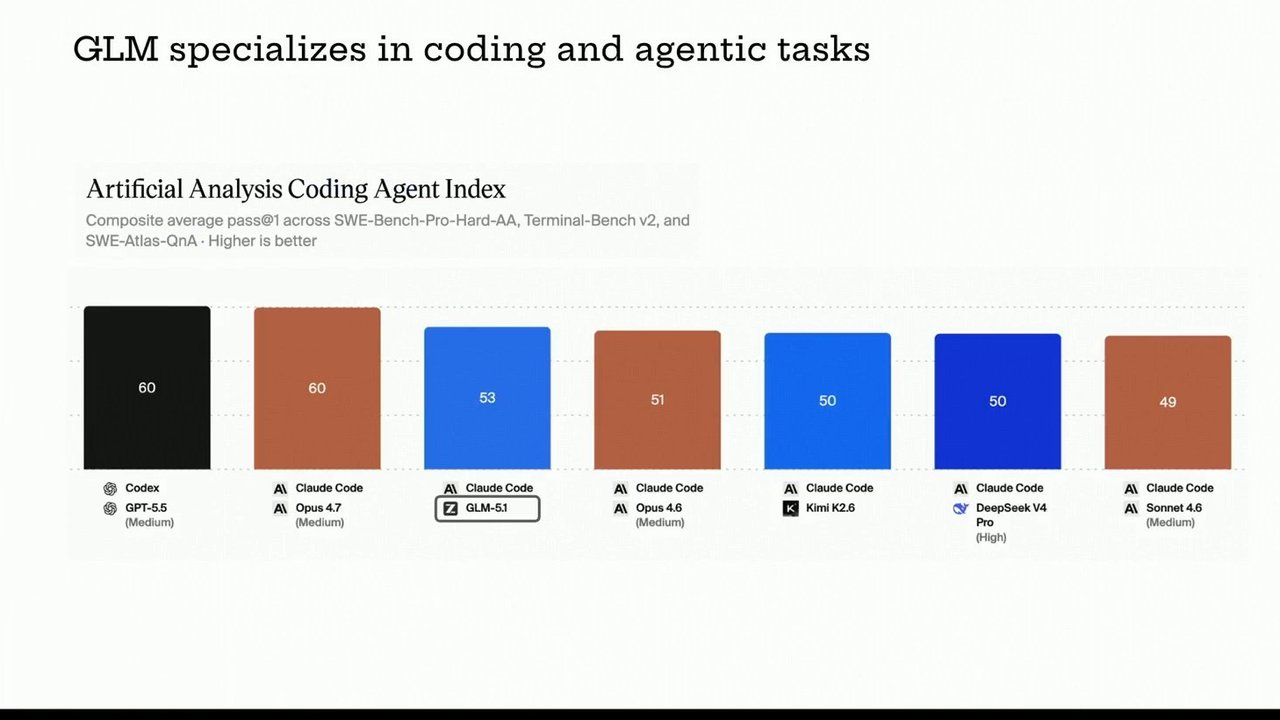
Claude's better. Claude is way better than me at coding. Not only does it have deeper knowledge of every programming language than me, it's also faster, knows more libraries, spots faster than me, and can comprehend large code bases in seconds without onboarding. It's better at it. But it's not better at engineering than me, yet.
So this is our audience activity. I want you to yell out, is this concept engineering or coding? Engineering. Engineering. All right, all right. Error handling.
Coding.
Coding? Okay. I reckon that one's contentious. Inheritance. Coding. Coding? Yeah, yeah, yeah, yeah. Making it work.
Coding. I
would say that's engineering. There was a mix there. I would say engineering. All right. Reactivity. Coding. Coding. It feels like coding. It feels like coding. Trade offs. Engineering. Engineering. Yeah. Okay. Security. Yeah. Async? Maybe also engineering?
Yeah. This one this one is tricky. Most people say coding, so I'm gonna put it there. Don't repeat yourself. Absolutely coding. Model view controller. Does anyone remember this? Accessibility. Engineering. Yeah. That's that's what I reckon. Promises? Coding. Yeah. Yeah.
Yeah. Yeah. Yeah. Yeah. Readability? Coding. I I reckon it's coding. But you know, it depends on the quality of the model. A bad model is going to need readability. A really great model, a future model, won't need it. It can deal with the slop. All right. So I think for my entire career, coding and engineering have been conflated. You do the engineering by doing the coding.
You think through the problem by writing out the implementation. Sure, you did planning beforehand, but so many issues would only come up once you started implementing it. Loading the model of the code into your head would allow you to deeply understand the gaps. You'd spot the potential security issues, the user experience issues.
You'd understand whether an async process would be consistent because you'd managed to imagine the different orders that things could happen, as you were writing the code. But if we're not doing the coding, how do we do the engineering? So here's some of the things we've done so far. We built a coding agent for our writers that helped them with manual testing, accessibility, and design.
We introduced a pipeline that ingests interactives. If you're interested in this, Ali did a talk yesterday that was great. We rewrote the ingested interactives to meet our specifications. This helps with i18n and allows us to improve them over time. We sandboxed the interactives by headers and iframe. This one seems obvious. We're in a particularly like safe environment with these interactives, so that it couldn't compromise user credentials.
And we developed critics, we call them critics, like review bots that automatically review and critique the code once it's been ingested. This is the first prototype of our Interactive Builder. We built it into it all the tools our team needed. It turns out that building a custom agent is actually really easy.
Thanks, Jeff, for teaching us that. And this has all the tools that we need, including some automated accessibility tests to reduce the amount that we have to do manual testing of. We can change size, zoom level. There's a specification that you can co write with the AI. And then it also does some other things like design systems automatically.
There's so much more that we wanna do, but the early results are good. In 2025, we shipped 50 interactives total. In 2026, we've shift shipped in 50 interactives so far, and we expect to do a 100. Our engineering work on individual interactives has shrunk from days to minute to hours to minutes.
Instead of making sure each interactive is high quality, we work on building a system that makes sure all the interactives are high quality. But it doesn't stop there. We're bringing this approach to the rest of engineering, and we have to, because software engineers are becoming vibe coders. I know I am. I wanna talk about partial versus full automation.
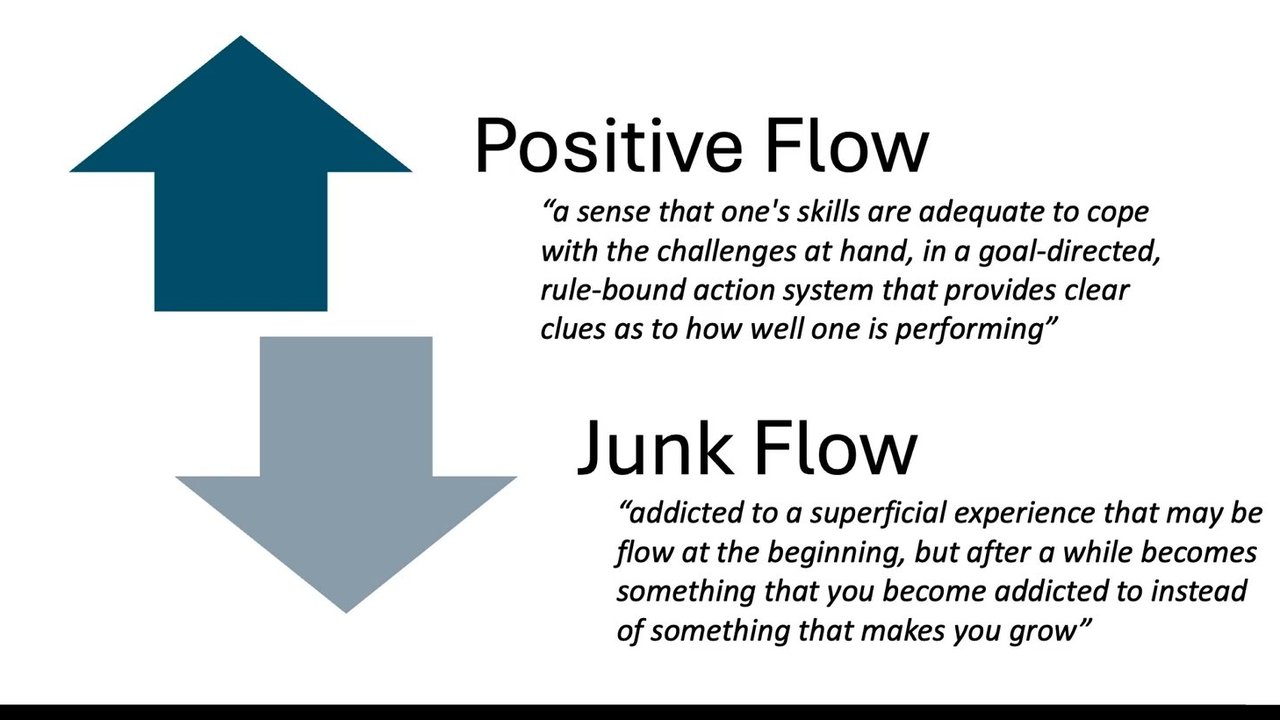
There's this idea called vigilance decrement. Engineers using Claude code no longer engage directly in coding, moving from active participation to monitoring. Research shows that humans monitoring a system experience more vigilance decrement than active participants. That means engineers will start missing things.
The details matter. Does it make an incorrect assumption about the way an external system operates? Does it propagate errors in the right way? Is it using a pattern copied from some outdated code? Does the combination of new behavior and an existing system create a security threat? You're not going to catch that in a PR. You might think I'm advocating for less automation, but I'm not.
We've opened Pandora's box. There's no closing it. The solution is more AI. Compare Tesla self driving to Waymo. Teslas are partially automated. When push comes to shove, you are the backup for the automated system. In most cases, your workload is simple, easy, just sit there and hold the steering wheel. But in extremely rare and critical moments, your workload increases sharply, and you are unprepared for the task.
In a waymo, the engineering work has been done already to take the human entirely out of the system. The human is not the backup, and so the automation must be able to operate safely. We need full Waymo style automation. When we move to full automation, the engineers are no longer a critical step in the process.
They can instead move to building and iterating on the system to maintain high quality without them in the loop. And now for the rest of the hour. This is what we did for our interactives. We've built the system in a way where we can switch over to full automation. The next step is to do it for all of engineering. If you're interested in that, you should go and attend Daniel's talk, Fully Automated Luxury Gay Space Engineering, for more about that concept. That's me. Thank you very much.
You can connect with me on LinkedIn there. Cheers.
Thanks, Ben. We've got time for a few questions. Does anyone have any questions for Ben? No hands? Thank you. Oh, we've got one here. Do you want the mic? Can you allow me to grab the mic?
That's a huge amount of trust to put in AI.
How? Engineering. At the moment, with interactives, it's a relatively safe environment for it to operate in. Right? The drawing the rest of the owl, that's the scary part. The interactives, I'm not too stressed about. They're web applications in an iframe.
They're just JavaScript, HTML, CSS. The iframe already has sandboxing controls for your browser. So I feel pretty safe there. The rest of engineering, go to talk.
Any others? Oh, we got one over here.
Thank you. Great talk.
Thank you.
So our engineers completely out of the loop with interactives, or are other instances where they wouldn't at least get called in if they they break in some instances?
So I would like them to be fully out of the loop. We currently have a manual process that we tick over by clicking next. And we'd like to get that we'd like to feel comfortable in that process, and then it would just be full auto merge.
Yeah. Kind of just bureaucracy at this point? Like, they adding value by clicking next? Or
They're to some degree, yes. I would say they're also experiencing vigilance decrement. The like, the way to think about this is a really great way to get to full automation is to have a manual process that you manually walk through until you feel comfortable with that manual process, and then you automate each of those steps. And so that's what we've been doing.
Thank you.
Cheers. Any any other takers? Oh, yep.
I'm curious how design is changing, as an input to these interactives. Like, some of the earlier examples you showed were very art directed, and some of the later examples you showed looked pretty spartan by comparison. Is that a challenge you have yet to overcome? Or
Yeah. It's definitely part of it. An issue is that the science writers can just build. Right? And so they do. And so then illustration becomes, like, an illustration layer on top, but we're working on that. It it it's a trade off, obviously. Yeah.
I I noticed you said that you were hiring as well. I was wondering, if your hiring practices have changed or if you look Mhmm. For different things from engineers than you used to. Like, you know, I'm I'm I've gone through a a few code tests in my time. Would you still say things like that are important?
Yeah. So if we we've been using the same hiring practical task for almost ten years. And Opus four point five started one shotting it with two test failures about the start of this year. We've expanded it. At the moment, our strategy is to make it harder. The challenge is that now we don't really know if the person has thought about it at all, and we can't tell that until we're talking to them in person.
And so we're trying to figure that out. Current fix is to get them to record a video to describe what they've built.
Great. Any any other questions? There's one up at the back. Okay. Alright. Maybe we'll just next talk's at twenty past. So just do you wanna kick into it now? Just Yeah. Think we got time for one more.
Sorry for finishing so early.
With the scientific writing and scientific kind of quality control, how do they how does a scientist know if there might be some kind of temporal bug in the code where things might change over time?
Yeah. So it might be possible to write an interactive that is correct for them, but for some reason, the AI coded after the date 11/10/2027 start operating totally incorrectly. It would not be possible to understand that from a black point point black box point of view. That's where code review comes in, in in our case, code review.
The it's a problem. Right? I don't know that we would necessarily catch that as engineers, like particularly subtle things like that. If it behaves externally in a way that is consistent with the science, then we're pretty happy with that. There's been plenty of bugs that we've put into software that humans wrote. And I'm not seeing necessarily more bugs in the code written by AI.
Cheers.
Am I off the hook?
Yeah, think you're done. I'll teach you to finish early, mate.
Thank you, everyone. Cheers.
Come
People
- Ali
- Daniel
- Jeff
Technologies & Tools
- Claude
- CSS
- HTML
- iframe sandboxing
- JavaScript
- Opus 4.5
Concepts & Methods
- Don't Repeat Yourself
- Internationalization
- Model View Controller
- Vibe coding
- Vigilance decrement
Organisations & Products
- Interactive Builder
- Style Education
- Tesla
- Waymo
Works
- Fully Automated Luxury Gay Space Engineering