Designing Beyond Visibility: Neurodivergent Perspectives and the Hidden Layers of UX
When the System Disrupts the Script
Matija (Tia) Squire opens candidly from a dysregulated state, showing how unexpected change, masking and poor interoception can culminate in trauma and burnout. She connects the day’s presentations and First Nations traditions of community, respect and connection to her argument for more humane systems.
Finding the Barriers We Cannot See
Squire explains why conferences and other environments create substantial but invisible barriers through noise, lighting and unpredictable schedules. She establishes that design is never neutral, then grounds the talk in her late diagnosis, regional upbringing and family experience of neurodivergence.
Neurodiversity Without a Hierarchy
Neurodivergent people are a significant part of every customer base, workplace and community—not edge cases. Squire distinguishes neurodiverse, neurotypical and neurodivergent, arguing that cognitive differences are natural variations whose strengths or challenges depend heavily on context.
From Medical Correction to Systemic Design
Squire contrasts the medical model’s focus on correcting individuals with a biopsychosocial view of biological difference, psychological experience and social conditions. This reframing directs designers to examine stereotypes, environments and systemic barriers instead of locating every problem within the neurodivergent person.
Neuroinclusion as Active Practice
Squire defines neuroinclusion through accessibility, belonging and empowerment, with language playing a central role in whether people feel respected. Her iceberg metaphor exposes hidden access needs such as cognitive load, decision fatigue, sensory overwhelm, unclear language, rigid pathways and timing pressure.
Designing Communication Into Silence
An airport delay demonstrates how silence and ambiguity can send a neurodivergent traveller into exhausting contingency planning. Squire proposes proactive status messages—even when nothing has changed—as a simple way to add predictability, acknowledge uncertainty and reduce anxiety.
Masking Through Hostile Experiences
Squire describes masking as performing expected behaviour while concealing distress, using airport security, public spaces and sensory-heavy shops as examples. She argues that designers miss both the pain hidden during an interaction and the customers who quietly leave, then shows why personas must account for changing human states.
From Accommodation to Inclusive Defaults
Inclusive UX removes friction through clarity, flexible pacing, visible structure, multiple modes of engagement and an expectation of variation. Squire urges teams to design with neurodivergent people, create safety for lived experience to enter the room and make accessibility a guiding principle rather than a retrospective checklist.
Australia Post and the Cost of Missing Context
The Australia Post redesign illustrates how attractive interfaces can conceal important information, introduce extra steps and increase cognitive load. Drawing on her grandfather’s experience with decades of postal systems, Squire explains why bottom-up thinkers need explicit context and why vague status language creates anxiety and support demand.
Build Bridges Between Different Maps
Squire closes with three actions: spot friction, bring lived experience into the room and default to inclusion. Her map-and-bridge analogy asks designers to treat unfamiliar perspectives as places to explore, distinguish discomfort from danger and create systems in which everyone can belong.
I had, like, a whole script planned, But I'm just gonna have to be real real with you guys right now. I'm autistic, and we are not on time. And I have been in a dysregulated nervous system state for six hours. So your girl is, I'm having a day.
And look, that is the reality of being a neurodivergent individual, is that unintentionally, and it is not out of deliberate act. Systems are not built with me in mind. Communication is not built with me in mind. Of course, I am just one autistic ADHD individual, I do not represent everyone, but there are shared traits.
And many of us, when things aren't going to plan, even when we accommodate or plan for things not going to plan, but then they go outside the things that we planned for and accommodated for, I can't just pretend I'm okay. I can't. I've spent twenty eight years of my life prior to my diagnosis pretending I was okay.
And as Tyrone talked about before, this can cause trauma, and trauma has consequences. It also accumulates. So every time I pushed myself down, every time I pretended I was okay, every time I tried to force my nervous system to just behave, I was causing pain to myself that eventually led to extreme burnout. I was either the most high performing person you've ever had in your team.
Like, companies loved me. They're like, my god, Tia is a godsend. And I would mask and I'd mask and I'd mask, and as long as everybody thought that I was great, I was okay. But I wasn't, because internally, what I was doing was constantly putting other people's needs above my own until I would reach burnout, and I would get so sick that I'd be hospitalised from stress.
Funny of that. I also have something called poor interoception, so my body doesn't signal stress to my brain until it physically manifests. So when people are like, oh my god, you were so fine yesterday. What are you being so dramatic for? My body, if I was a Sims character, there's no orange. It's green, it's red. It's you're feeding yourself, the kitchen is on fire, the baby's in the pool. If you ever played The Sims, you understand what I'm talking about. Please understand that's context, there's no baby in the pool here. I'm also showing my age because I loved Sims when was younger. I am a gamer as well, so I will make gaming references. So for those who get it, I often refer to myself as Oom, like out of manner.
I'm like, I'm Oom. I can't do it. I have no manner. I'm out. I'm out of here. But one of the things I really, really wanna recognize as much as I'm I'm dysregulated right now is that doesn't take away from how much I appreciate every single talk I sat through today. Because they're all interconnected. Even though they were across many different contexts, the interrelationships and the intersectionality of these talks, they added each of them added an element to one another. I really have to hand it to Steve and to John for the selection of speakers that they had because I saw myself in many of these presentations even though I didn't have to be just directly called out.
Right? When I was listening to inclusive design principles, how ethnographic approaches, how we can use VR technology to help people in health care, every single talk today contributed to what it is that I really wanna wrap up with. And that's why, you know, as much as being the end keynote, so if we go out of time, I am the one who suffers the most. One of the reasons I'm actually glad that I'm the end keynote is because every single concept we covered today is in here in some shape or form, including the being from a regional town. So I also really wanna acknowledge the traditional custodians of the lands that we we live and work and I'm presenting on today. I think it's the I'm from Sydney, I'm usually in Gadigal countries, like, of the Eora nation with the, but today, think it's the Wurundjeri. Wurundjeri. Wurundjeri.
Sorry. People of the Kulin Nation. Right? And, one of the reasons I wanted to specifically highlight this is that we have had generations and generations of First Nations people who have thrived because of their culture of community, respect and connection. So there's much we can still learn even in a UX tech centric, context from, the the people, the First Nations people.
You don't have to see the barrier for it to exist. And I'm gonna be really objective here. I'm not just talking about UX Australia, but conferences in general for autistic people are really bloody hard. We can't control the noise around us. We can't control the lighting around us. We can't control if the the schedule is going outside of what we could have planned for.
And, you know, in so many cases, for neurodivergent people, a lot of these barriers, they're not physical per se, but they are there. They they do exist. And so why the reason I wanted to talk about, the hidden parts of UX design is that design is never neutral.
It either enables accessibility or contributes to the barriers to accessibility. And it really depends on who is the designer and who's in the room. So there might be some typical barriers you're used to seeing, and there might be some that aren't all that visible. And that's, like, with the talks that we've seen today around, involving people in the design process, challenging your biases.
A lot of it sounds pretty straightforward, but we have to consciously action it. So my call out to you today is, what is a barrier that's not visible, but you know it exists? And when was the last time when you were designing in a project that you actively asked that question to yourself?
What is a barrier that I might not be seeing? What experience is not being counted here? So why this matters to me? So as John introduced me, my name is Tia Squire. My full name's Mattia, but the silent j scares people, so I just go by Tia. And I also don't wanna put people through the suffering of call calling me many different things.
My foreign policy lecturer back in my uni day has called me Majinda, and I was like, yes, sir. I will be Majinda from this day forth. I really liked that lecturer, by the way. And again, it wasn't malicious. It's just, you know, it's cultural, you know, in the fact that different cultural names, and I'm sure there's many people in here that might have diverse names who know what I'm talking about.
And when, I was listening to the talk before about regional communities, I believe it was Karen's talk, and about how we don't really have the same level of access around trauma and education. Your girl is from where Mad Max was filmed. Also, Priscilla Queen of the Desert, and that is basically my two personalities in one.
My husband, who I'm very grateful, is my support person today, has got me doing the breathing exercises for six hours, is in the audience. And don't let this, feminine appearance fool you. I was the equivalent of, Donnie from the the Wild Thornberrys as a child, and he's known me since I was 15, so he witnessed it all. And in Broken Hill, of all places, there wasn't much to do except, like, ride motorbikes and, you know, just cause mayhem, really. Again, makes sense that Mad Max was filmed there.
And now I live in Sydney, and I work with government, industry and education across all these different sectors. Bringing in my lived experience is not always easy because trying to translate and again, this relates back to the ethnographic talks. Do you see what I mean?
It's like have you seen that meme where it's like all the red strings on the whiteboard? Like, that was me during every talk. I'm like, this connects. I kept poking my husband. I'm like, did you see that? He's like, yeah. Yes. Yes. I get you. I was late diagnosed like most women who are autistic. I was 28 when was diagnosed.
I'm 30, two now. I had to think about that. Somewhere in my thirties. And I also have an autistic ADHD son who's a teenager, he's 15. And so we have a fully neurodivergent household. It's a lot of fun. Never a dull moment. But growing up in Broken Hill, people didn't know what neurodivergence was, Let alone, for for women or young girls, like, autism was kind of a boy thing.
So I spent a lot of my life not knowing why I was the weird kid. I mean, actually, I kinda know a little bit why I was the weird kid. But most of the time, I knew that I was different, but I didn't have any language or context around it. And so being able to stand on the stage today to be able to share this experience with you, in the context of UX design means a lot to me.
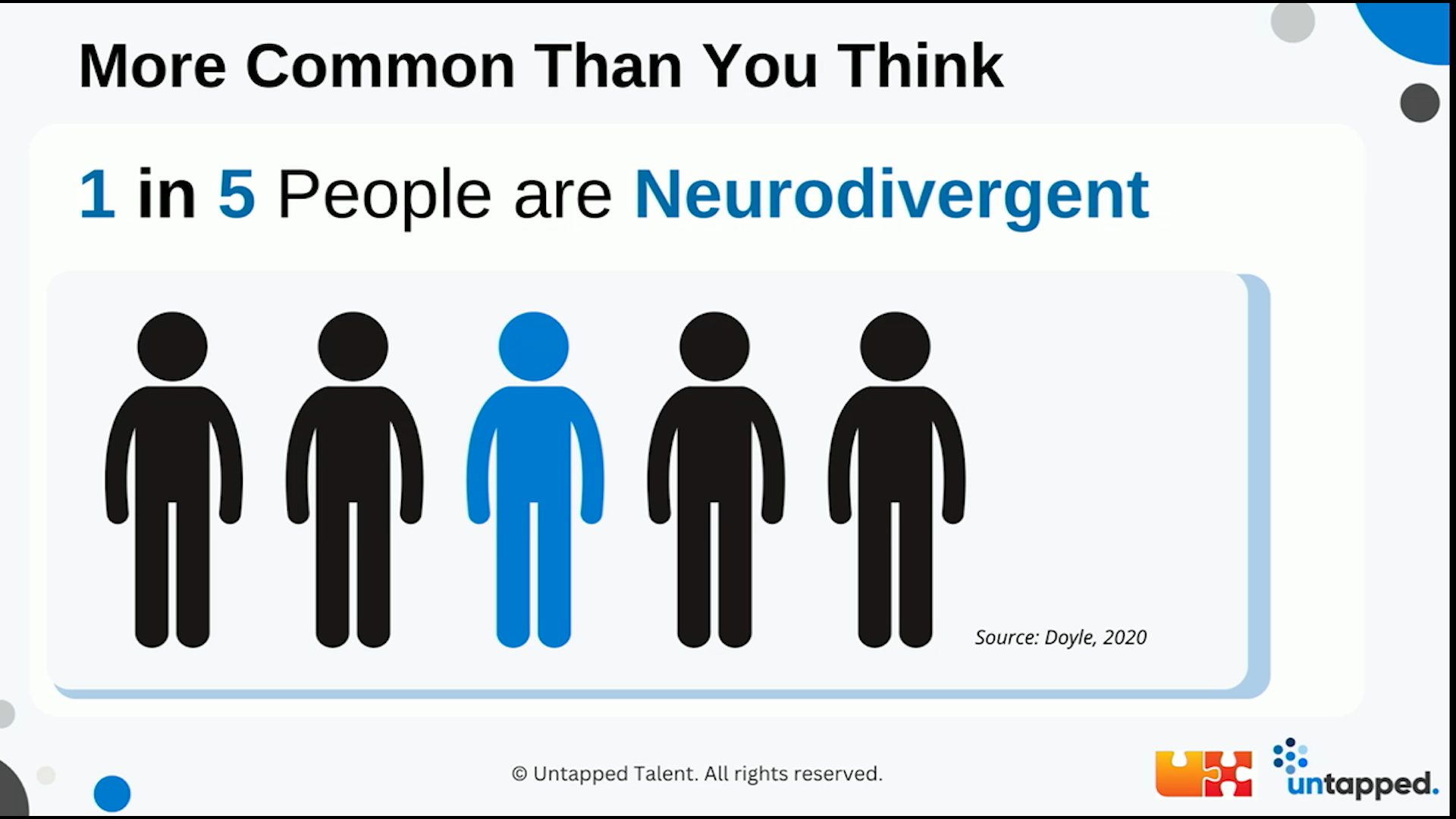
Because if young me in Broken Hill had understood any of the stuff I'm about to talk to or many of the themes that were covered today, she would have had significantly less, therapy bills. And it's more common than you think. This is super conservative, by the way. But this is the global statistic that you'll see cited in most research, is it's one in five people are neurodivergent.
But if we include mental health conditions, it's more likely one in three. But what we're really saying in this slide, and what I'm hoping you take from this visual, is that someone you know is neurodivergent, and that we aren't edge cases. We are a big chunk of your population, your customers, your teammates, your family, and maybe even yourself.
You just don't have the language around it. Again, it's an emerging field of research. We're still learning new things all the time. You couldn't diagnose autism and ADHD together until 2013. And I know that the language can get a little bit confusing. And, again, it's an emerging field. Language shapes and evolves our perspectives. Who was it? There was a speaker talking about language before.
I was like, yes. You're absolutely right. Language does shape our perspective, and it shapes culture. Every single person in this room is neurodiverse, because neurodiverse is acknowledging that the different neurotypes are natural very natural variations of the human cognition, which means ADHD and autism are natural.
They're not to be fixed, they're not to be intervened, they're not to be avoided. They're to be accepted and embraced because they're a natural part of being human, is the fact that there are different neurotypes. Every single person in this room is unique, and every single one of you is worth being concluded in society. So you're all neurodiverse.
Congratulations. Neurotypical. Now, again, the language around neurotypical I sometimes say neuronormative instead of neurotypical because typical sounds like I'm calling you all boring for those who don't identify as neurodivergent. But there is no, hierarchy to neurotypes. Everybody has strengths in the right context.
So there are contexts in which my autistic traits really play into those strengths where I can do amazing things. But if I'm in an environment that doesn't play to those strengths, then people are gonna think that all they're gonna see are what they feel are my deficits. I don't identify as having deficits. I do have challenges, but a lot of those challenges are systemic.
So when we talk about neurotypical and neurodivergent, when we're talking about neurotypical, it just means that you align with the dominant social norms. So it's a little bit easier for you to access things, than those who are neurodivergent. But at the same time, again, it has nothing to do with the hierarchy, just over how do we make sure that everyone, whether they're neurodivergent or neurotypical, has accessibility.
So neurodivergence, that's people who deviate from the dominant social norms. People whose traits are seen as not aligned to the expectations of society, and that doesn't mean they're bad. Different is not wrong. Different is not broken.
Different doesn't mean it needs to be fixed. Difference is different. And we know from all of the research and probably your own experiences working in diverse teams cross culturally, maybe around the world, that that difference is something that usually results in really amazing things when we channel it. So whether you identify as neurodivergent or neurodiverse, or sorry, or neurotypical, we all have a part to play.
It's just about making sure everybody is able to play that part. So one of the things I wanna talk about was reframing disability through a design lens because in most cases, people's fundamental understanding of disability or neurodivergence, because we're talking specifically about neurodivergent perspectives, is born from what's called the medical model.
Now, the medical model looks at things like autism, ADHD, OCD, BPD, any sort of divergence from the psychological dominant norms that we, you know, tend to, have experience with versus, how we wanna make people more neurotypical. So, like, a traditional medical model looked at it as, well, you're different and you need to be more similar to us.
Then so a lot of the early research around autism was how do we teach people to be less autistic? But it's a biological condition. Our brains are quite literally wired differently. We have around three times more the synapses in our brain because it doesn't go through the same pruning process as the average brain, so there's a reason we think a lot.
It's a reason that when any time someone asks me a question, my brain does like a spider web. It's not it's not like I'm gonna stick right to exactly what you're saying. It's like, oh, but this this this thought pinged off at this one and then this one, and then I end up going on a little journey over here somewhere.
And I often say to my team, hey, if I end up, like, too far off course, just bring me back. So biologically, my brain is different, and I can't take it out of my head and put in a different one. That's I mean, that's pretty sci fi, but I just went to, like was it Futurama that had little brains in the costumes?
Yeah. We're not quite there yet. Then there's the psychological aspects. So the emotional, cognitive and behavioural experiences. In a traditional medical model approach, it was like, well, you need to manage your states better and you need to have better emotional regulation. But for neurodivergent people, the way that they experience, process and interact with the world isn't something that can just be switched off.
Like, if this was my autism, I can't just I'm done. I won't be autistic anymore. It doesn't work that way. It's inherent. It's within me. And so the psychological impacts of being in a society where there are inherent systemic barriers against my way of showing up, processing and interacting with the world is obviously gonna have psychological impacts to me.
And also the way that I psychologically experience things is going to be different. And then there's the social part of the bio social biopsychosocial model. In that, you know, in the medical model, it was more focused inherently on the person being like, well, you're the one that requires the intervention, so we're gonna keep working on studies that are about correcting you.
Whereas when we look at the social model or the bio social biopsychosocial model approach, We're also looking at the systemic barriers, the environmental barriers, like people's attitudes about autism, ADHD, or neurodivergence. Are they just getting fed what's in the media that sensationalizes it and says that, like, I lack empathy? I cry over inanimate objects. I apologise to them.
K? Probably have, like, some sort of hyperempathy, to be honest. But there are lot of stereotypes and stigmas. And then, you know, whether or not we're aligning people's strengths and accommodating for the different changing states of the human experience, and whether or not we're thinking about how the systems and, yes, sometimes systems are designed to work the way it's intended.
I'm not saying that all systems are broken. But if the systems are not designed by understanding that the way that human behaviour shapes our understanding of the world and what we can accomplish together is diverse, the systems will perpetuate those barriers. So when we think about it from a design lens, not think about, oh, well, these are just edge cases.
You know, it's not everybody's autistic. No. But in Australia, it's likely around one in twenty six. That's a huge chunk. Right? That's a lot of people that are hidden and not really accounted for when we're designing. So what I'd like to to suggest is that the next time you're designing something, think about it from the biopsychosocial model approach.
How does this affect someone who might be neurodivergent? How might this what would the psychological experience be? Or what if they're in a different state? How would they experience this? And then what are the systemic barriers that we could potentially address? Has anyone heard of the term neuro inclusion?
A few? Yeah? So neuro inclusion means designing environments where different ways of thinking, sensing and processing the world are understood, supported and celebrated. So if neurodiversity is kind of like the understanding umbrella term that there are natural variations of human cognition, neuro inclusion is the practice, it's the active practice of designing environments and systems that include people with cognitive differences. You'll notice I don't say deficits or impairments or and I think our last speaker spoke to that in that language is important. I do not identify as disordered.
Yes, my clinical diagnosis is autism spectrum disorder. I just go by autism. Language and culture and neuro affirming language is really, really important in UX design. We've got to remember how people feel when interacting with our products and our services. So neuro inclusion really focuses around three things accessibility, belonging and empowerment. Accessibility is, have I removed these invisible barriers that I might not have thought about? Belonging is, how do I create a safe, validating experience where people feel seen?
And empowerment is recognising strengths that enable people to thrive. So it's not thinking about, well, they're the problem. Right? It's thinking about how can design be inclusive in a way that we're not making it we're not putting it on the individual to have to work around it. So what UX often misses is that we've designed for what's visible, but not always what's experienced.
So, you know, wheelchair ramps are the norm. Nobody blinks an eye at a wheelchair ramp. Thank God. That's a good thing. Right? And this is not in any way to compare disabilities. But often what we see in work environments is that, you know, the the company will make sure that it meets the the Disability Discrimination Act by making sure it has accessibility for physical disabilities.
But if you require a psychological support based on, like, say, your neurodivergence, those are kind of seen as nice to haves, but we know that without them, that it leads to masking, which leads to trauma, which leads to burnout, which leads to higher rates of suicidality, higher rates of self harm, higher rates of lower quality of life.
Autistic individuals are the most underemployed and unemployed population in the world. And that's not because we don't wanna contribute to society. There's been a lot of research done that shows how desperately we wanna change the world. A lot of us are very rational, also very idealistic at the same time. But things like education, you know, products and services, Because we're constantly trying to work past barriers, it means that it's harder for us to move into roles where we're actually using our full capabilities. Underemployed means we're working in roles that don't actually use the full talents that we have.
And so, yes, we still have more work to do on what's visible, let alone what's not. But what I encourage us to do is think about, again, what's the felt experience? What are the hidden things that aren't always obvious to us? And invisible doesn't mean unimpactful. So invisible access needs still shape every action that we have, even if they're not really clear on a billboard in front of you.
And when we overlook them, we design friction into the system by default. So I've got a little iceberg here because I thought that was a good a good imagery for it. We look at visible access needs. We're like, yep. We've got, you know, accessibility for wheelchair ramps, we've got captions, we've got you know? But what about and I've heard this term used in a few other talks, I was like, yes.
Cognitive load. Cognitive load is an important one, decision fatigue, sensory overwhelm, unclear language. Was it Vibs talk that talked about unclear language? It might be Vibs. And rigid pathways and then also timing pressure. Oh my goodness. Anytime I'm on booking a flight, you have five minutes to book your flight, and I'm like, I'm dyscalculic, and I might have my card number wrong, and I might book for the I have booked the wrong date before.
The good thing was I turned up the day before my flight, said the day after. They're like, ma'am, your flight's tomorrow. I'm like, oh, thank God. They're like, that's not the the the response we were expecting. We're expecting you to, like, melt down. I'm like, no. Like, this is not a new experience. Would much rather be early.
Also, it's like when someone cancels a meeting last minute, and they're like, I'm so sorry. I'm like, oh, the tragedy. Really, I'm like, I wanna go get a snack. Don't have to do a meeting. You know? So I was like, when the airport, like, service person told me, oh, you're like, flights tomorrow. Was like, oh, I now suddenly have free time to go do nothing. So, you know, thinking about, like, things like time pressures, making sure that context is there.
Like, if there's just a button with an icon, but the icon's sort of ambiguous, I'm like, what do you want from me? You're gonna have to spell it out. Like and so if we're not designing for these layers of cognitive load, for sensory overwhelm, for unclear language, we're embedding exclusion into the default experience. And, one of the things that might not be obvious, and again, we're talking about hidden layers, is that exclusion isn't always loud. Sometimes, it's the silence that disables.
I fly a lot for work. I hate it. I like the travel part of, like, getting to the destination and doing the work and collaborating, but the whole process of getting to an airport, getting through an airport, getting on the plane, getting off the plane, like, stress. I flew in yesterday, and, I deliberately had, like, a a later a sort of little bit later flight because I was like, oh, yeah. The airport won't be busy.
Joke's on me. There was some sort of event on, and the airport was anyways, I'll talk about it. I'll have flashbacks. But I I travel a lot for work, I was flying to Canberra because I was presenting at Parliament House about communication across neurotypes. And when I was flying back, we we got fogged in, which is because they they're in a basin, so sometimes the fog comes in and some of the planes can't fly because they can't see and their radars don't work in fog.
I didn't get the the special interest in planes. Sorry to disappoint you. I just missed the trains one because my my husband is a terminal supervisor for a huge train freight yard. So but my special interest is actually culture and languages because I realized early on that my way of communicating was kinda different.
So I needed to become an expert in normal communication, obviously. And now I'm really good at communication, but, like, it took years and training. It didn't come naturally. But during this experience, there was no communication. There was no accessible point of contact. There was no service desk. There was no identifiable person that you could talk to.
There were no proactive updates to let me know whether or not I'd made my flight or not because, yes, I could see the weather. I was like, okay. Well, that's not good. But it was all ambiguous to me. I'm like, is my flight still going ahead? Is that canceled? Is that and because remember that spider web thinking, my brain was going through every possible scenario that could possibly happen with every contingency plan on, like, what do I do if this happens or that happens?
And then it just goes on a downward spiral until somebody comes in and says, hey, this is what's happening, and then it comes back out. It's like, oh, okay. We'll stop, like, doomsday planning then. So what I suggested to the the airline was update us even when there's not an update. And that might sound redundant, but if I was just to get a small little notification that said, hey.
We know that there are some delays right now with your plane. Please know that you're like, you know, we are working on it, and we'll get back to you very shortly, but you're like, don't assume anything until we confirm. Like, you need to explicitly kinda say it to the to to the person that, like, we don't know what the hell is going on because it's an airline like, it's an airport.
It in itself, in its essence, can be really unpredictable. But if you're just to say, hey, let us just acknowledge that we don't know what's going on either, so we are in this together, and we will be back to you very shortly. Because the reason I was getting super anxious was because there was no communication. There was just silence.
And in that silence, my brain got real creative, and I got very stressed. And people in airports are not trained to deal with an autistic meltdown. They are not. They don't. And and again, because of the stereotypes and stigmas, if you just met me in person, you wouldn't be like, oh, yeah, autistic, or maybe you might. But I would assume you're not.
I'd assume I don't because but, you know, generally, I get told things like, oh, but you don't look autistic. I'm like, sorry. Should I hold a train? Should I, like, just be in a hoodie on my gaming desktop, like, looking like I never leave the house? That's sort of accurate. But, anyways so, again, think about it.
Where are the moments of silence in your designs, in your products, in your services? And how does that psychologically impact people? And maybe there's something that you can put there to make that silence a little bit less stressful. You remember me saying that I didn't know that I was autistic and ADHD until I was in my late twenties, and I masked through most of my life?
Masking is about showing up as what people want from you or expect from you, and not being able to authentically just show up as you are. If I was masking through this event, I would have got on stage, pretended everything was okay, and would have told you I'm like this close to having a meltdown. Because that wouldn't be very professional of me in a general context.
But the point of this talk is to talk about neurodivergence. So if I didn't allow myself to show up authentically, I kinda defeat the purpose, don't I? But even in experiences, the airport example, there are so many things that stress me out, I'm like, gotta play it cool, otherwise, they're gonna think I'm a terrorist. Because, you know, you're going through security and you're like, if you're like shaking or like, they're gonna think it's suspish.
Right? And they always pick me for the pat me down that I'm like like the sensory sensitivities when I'm already stressed. Oh, I just push a lot of buttons. I'm like like, you know, I'm just I am I am not okay. I'm not comfortable. I'm I'm already stressed before I get there, and you some random stranger's gonna be touching me, and I have to pretend that, like, cool as a cucumber on the outside.
So there are many things when people are interacting with your products or services where they might be experiencing pain or psychological trauma, but because of the way that systems are designed for one type of audience, we just grin and bear it a lot of the time. Right? But again, that has very words are sort of losing me, but it very negatively impacts those people that are often left out of design. Every time I go to an airport, it's a it's a fight or flight response instantaneously.
But if I had better communication, if there was actually a dedicated quiet zone that was quiet have you been in in one of the the business lounges? Why are the chairs so close together? The the light's so bright? Like, I'm here to relax. Can we have some, like, nice little jazz music and a nice little quiet corner? Maybe some plants?
Like but instead, you're, like, super close to other people. It's not that I don't like people. I just like my space. But we think about design in public spaces, of course, 99% of the places I go in public, I'm masking through them. I'm like, I've gotta play it cool and not stand out. Concert venues. I mean, things are getting better, but still lots of work to do. So think about how can we add predictability?
Can we use clear, affirming language? How can we have a calm, consistent visual design? I walked into a physical store the other day, and there's this giant TV above the the what's it called? The cashier. I mean, this thing, you could feel the heat. I could've got a tan from this I'm joking. I don't actually tan. But I could've if I was if I was someone that does tan. I could've. And I was like, instant headache.
I was like, oh my god. Why? I mean, it was just it was just showing in my face, and it gave me, like, an instant headache. And I'm never gonna go to that store again because I'm like, no. That's where the big bright lights are and I and the the I swear some sort of level of radiation.
So people will trial the experience, and if it isn't something they're forced to do, like I'm forced to do airports because of my job, they will unsubscribe. They'll be like, nope. I'm not coming back there. So you are losing people, but the loss might be hidden because you're not looking for it.
And we talked a lot about personas today, so every time someone brought it up, I'm like, there's a link. Another dot, another little thing in the spider web. You know, if you had, like, a basic persona of me, Tia, I'm 32 years old, I work in DI, I would consider myself tech savvy in the gaming sense. But the way that I interact with a product, a service, a physical experience, like public transport, for example, is very deeply impacted by my state. So if I've been in a meeting heavy day and I'm experiencing sensory fatigue, I'm gonna have the headphones on.
I'm gonna have the RBF, if you know what I mean. Like, do not approach. There'll be like miasma sweeping from my body to, like, warn people to not come near me because I am fatigued. I'm sensory overwhelmed. So, you know, if, like, taking public transport as an experience for me when I'm sensory fatigued is very different from when I'm at the start of my day, I've had my cup of tea, and I'm like, yeah.
Alright. I'm good. And then at the end of the day, I'm like you know, after a good sleep, eighty percent of autistics have sleep disorders. There are many different types of sleep disorders, but in a general sense, most autistic people don't sleep very well. So if I have had a day where I haven't had much sleep, the cognitive load is already really high because I'm like, I am just barely trying to stay conscious, let alone trying to figure out what you want me to do in this form.
Right? Whether I'm mid travel, like I said, like airports, they they set off the fight or flight. Like, my body can't tell the difference between airport and, like did anyone watch the show Lost? Like, being on the island at Lost, pretty much. Again, showing my age. And then, you know, me with time and space, when my nervous system is regulated, I'm calm, I'm curious, I've probably got more space in my brain to interact with the products and services or platforms.
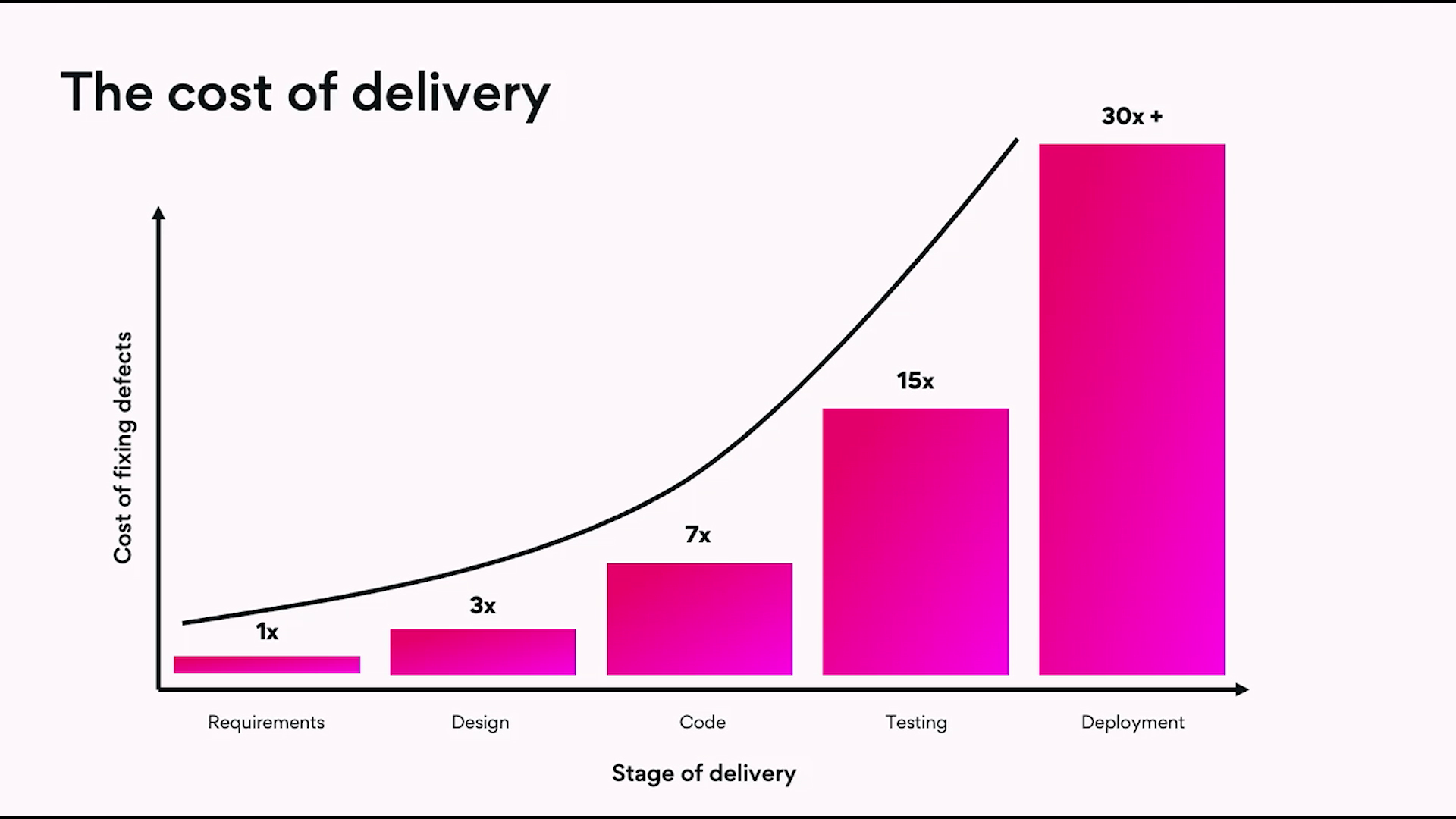
So rather than designing for a static persona, designing for changing states. The human experience is not static. We are different depending on what states we're in, and that's even more true for neurodivergent people. And one of the things I come across a lot in my work is like, oh, well, you know, like, that's that's adding complexity or we don't have the budget for that right now or we don't have you know, it's always about, like, oh, that's an extra.
But inclusive UX isn't an extra. It's essential. Because it's not about adding more complexity. It's about removing the invisible friction that stops people from engaging fully. And like we said, conservative estimate one in five. So these are things like picking clarity over cleverness, flexible pacing, a visible structure, having multiple ways to engage, like the screen reader activity, making sure that those multiple ways of engage are accessible and actually work, And design for difference, so expect variation.
Don't rely on averages or assumptions. And you might have heard the the term, well, like the what's the word for it? Like, the saying nothing about us without us. And that's really important for not just the neurodivergent community, but those of intersectional identities. That too often we design for people, not with them, And we try to empathize to imagine their experiences, to put ourselves in their shoes.
And that's a start. Like, that's not a bad thing. But neuro inclusion asks us design with them. I can't tell you how many times in my early career where I opened up about a challenge, and this is even before my diagnosis. And some random time interval later, they'd be like, by the way, we implemented this for you to make it easier for you.
And I'm like, that doesn't actually help, but I'm really appreciative, so I'm not gonna tell you that it doesn't actually help, but I'm just gonna pretend that it did. Because they just assumed, oh, well, if you have challenges with this, like, if I have one more person, tell me to, like okay. There's two things that come to mind.
The first one is that a to do list will fix my ADHD. I will choose violence. Like, Tekken Mortal Kombat levels of violence. Okay? Alright. If somebody tells me that melatonin will fix my insomnia. It's right. I'm not a violent person, but I want to internally.
That's what happens. Like, in my brain, I'm like, and then in person, thanks. Thank you. Appreciate it. So again, it's really important that we're designing with people. Or if you're neurodivergent yourself, it can be a little bit daunting being like, hey, as the autistic person in the room, that is there is a train coming.
We're lying on the train tracks. We're about to get respectfully. And I do that a lot in rooms. I'm like, I'm there, and people are sharing things about, oh, you know, this would be really great for people. And I'm like, I can think of nothing worse. But I'm like, respectfully, here's an autistic perspective on how I would experience that. Again, I'm just one autistic person.
But the more of us that speak up in those places, the more we'll start to see people start thinking about us because we're more visible to them. So again, the hidden side of it, there are two sides to it. There's the designer side of us looking for it, and neurodivergent people feeling safe enough to be transparent about it.
And so we wanna move from accommodation to default. I mean, many of us have probably come across the concept of universal design, where it's like, how can we design for inclusivity to be part of our norms? So moving from accommodating after complaints to anticipating access needs upfront. Rather than adding a help option later, offering layered support from the start. Design for speed and simplicity to design for pacing and comprehension.
Comprehension's a really important one. Again, I think in one of the other talks, we're talking about, you know, designing for the average reading level of a grade fiver. So comprehension. It might look really good to you because you're, like, a university graduate and, like, you or or or like me, for instance, I use a lot of academic language, and, like, nobody is gonna know what the hell I am talking about unless they're in academia. So I'm guilty of it too.
You know, the ones one size fits all persona, we already covered that. Again, clear for for, designers or clear for users in diverse context. And then, you know, we might see accessibility as a checklist when, it should be a guiding principle. Again, the more people have access to your services, your products, your infrastructure, the better for you, the more effective your design.
And being curious is fun. Like, putting on your little scientist hat and being like, I have a hypothesis. I wanna go figure out whether or not I'm right. And honestly, the times I'm wrong, find really entertaining because I'm so convinced that I'm right that when I'm wrong, it's like it's like it's like a core memory. And then I grow as an individual because of it.
So I wanted to talk about spotting the friction in in a case where, like, what would it look like for neurodivergent people? Like, what in this example would impact a neurodivergent person? I don't know if you guys saw the articles in the news last year in 2024 when Australia Post decided they're like, we're gonna relaunch an entire new, like, UX, and it's gonna be really sexy.
And then all the people that were using it in practice were like, what have you done? Because nothing made sense. They couldn't find everything. Everything was hidden. There were there were just lots of buttons, and then there was a lot of language that wasn't clear. And then the the information that was most important to the user was hidden. You had to go through, like, five steps to find the information that used to just be there after one click.
So they added a whole bunch of extra cognitive load for their users, but it looked sexy. It looked pretty. But practicality wise, the the response that they got was not what they were looking for. And the reason I wanted to talk about Australia Post as well is I also have a personal linkage to Australia Post.
My grandfather was one of the longest serving posties in Australia. He ran the North Post Office in Broken Hill for over fifty years. He had, like, a little wooden plaque, a little medallion. I used to go into the post office with him, and I would I still remember it's f seven for stamps. And I used to borrow his cans of solo out of his fridge out the back, and he had, like, this drawer of, like, rubber bands. I'd just sit there creating rubber band balls, and then he'd be trying to, like, put a rubber band around a bunch of envelopes, and I'd hand him a ball.
Now, my my grandfather was they didn't really diagnose autistic back in his day, but he was he followed the same routine for eighty seven years with zero deviation. When that man left this world, he told me and he told our family, I'm going to bed, and I have no intention to wake up. It was nice knowing you.
He drank beer the entire time. Like, he did he did not like, he followed the routine to a tee. I knew where I could find my grandfather at any time. I was like, he's at the post office until 05:30. He's at the work. He's until six till nine. You know, like, he's it was like clockwork. So you can imagine the poor thing when I'm in there touching all the things and touching all the buttons and moving his stuff around. Now that I'm an adult, I'm like, oh gosh.
I really appreciate my grandfather being so tolerant of me because I probably would have, like, yeeted me out of there so fast. But one of the things that I really remember about my grandfather is he'd get so upset every time there was an update to the POS system. And he went through so many of them. Like, over fifty years, you think about it, he started with typewriters.
Like and now he's using the scanner and the beep. My grandfather only passed away two years ago, so he was here with all the different UX designers from every the entire timeline. But every single time, he'd get really mad. Why have they done this? What is this? What is that? And Broken Hill has an elderly population.
So I would observe my grandfather getting really frustrated, trying to learn how do something, and then he'd try and then pass on that knowledge to his his community. And it was just you could see how painful the process was. So when I saw that Australia Post is UX design, I was like, of course. No shade on them, because they have since made updates. But if we were to talk about what would have been stressful for neurodivergent people, what does that mean?
What do you mean it's almost there? It's like fifteen minutes, twenty minutes, a day, a week? What? I don't understand. What does a Tuesday at 03:30PM mean? Am I supposed to be at home then? Unclear. I had no idea what was no idea what's going on.
Now I don't know if they've updated this since, like, this little example, but this relates back to a lot of things that were covered. I think I think it was Viv's talk in how they're saying, like, if you're using icons or if you're using language make it clear. I don't know what you're asking for me. Context is incredibly important for neurodivergent individuals.
In fact, people used to think that I challenged authority a lot, because I'd be like, why, though? Why are we doing it that way? And they'd be like, just do it. I'm like, I have to understand the rationale behind it. Otherwise, my brain cannot move to the action phase. Okay? We need to do the we need to roll the dice first, and I understand what I can't just activate the action phase without understanding the reason why.
For us, because we're bottom up thinkers, we develop understanding through gaining context. So when you're working with a team of diverse people, there's someone in your team that asks why all the time. They're probably not challenging your authority or not doing it to make things more challenging for you. They're probably a bottom up thinker. And the more context you give them, the more accurate they can be in their contributions.
And so if we're designing for neurodivergent people, we've got to think about what is the missing context here? Because you're gonna get a lot of support tickets from it, where people being like, I don't understand what you want from me. And maybe for most people, they don't see a problem with saying almost there. But for me, that needs specific context.
That just causes me anxiety. So I know that we're way over time, so I'm gonna wrap up on this slide. The future is designed at the edges, but neurodivergent people are not edge cases. I thought that was pretty clever. When we design for those who are often overlooked, we open the door for systems that uplift everyone.
So what you can do as UX designers is you can pause and spot the friction. You can bring lived experience into the room, and you can default to inclusion. And I'll leave you with an analogy that I really love using when I'm talking to organisations, universities, you know, people across industry. When we're born, right, we're we're like a clean slate.
And as we interact with the world around us, we grow up with different beliefs, different systems, different cultures, different languages. And if you imagine that we were drawing a map of the world as we experienced it, it would make sense that every single person's map would be different. Right? Based on your own experiences, you're, like, designing how you navigate the world. You're like, yeah.
I've got this blueprint of my understanding of how the world around me works. But that's based on your own unique experiences. So what that means is that essentially, every single person in this room has a unique map, right, of their experiences. And if we bring it back to how we see that experience in society, it kinda comes back to sort of that cross cultural element of if you travel from a Western country to an Asian country and you've never been there before, you're probably gonna experience a little bit of culture shock.
You might this is different. And some of that, you're gonna be like, oh, that's uncomfortable. I don't know how I feel about that. And some of it is going to be inspiring to you. You're like, wow. That's different. I love it. I'm gonna bring that back with me. One of the things I accidentally brought back when I came back from Japan was I kept, like, bowing at people because it just becomes second nature. Like, what are doing?
I'm like, I lived in Japan. Leave me alone. I'm like, I just picked up on it as a trait, it took me, like, a solid year to get out of it. But yeah. Another fun fact about me is I studied Japanese at university, and I lived there for six months, because one of my special interests is obviously gaming and pop culture.
So I was like, I must go to the the land of Sega. That just tickles my brain that yeah. Anyways, where is it going with this? Oh, yes. There are things that you love, like Sega. And then you come back to your country, and there will be things that have changed about you, but are good. You're more worldly. You look at things a little bit differently.
And there might be things where you're like, I'm really glad that I live in Australia. Oh, we have health care. Yes. You know? And that kinda happens on the person to person level. But what also happens when you're traveling to countries is there might be countries in the media that are made out to be vilified or unsafe or, like, oh, don't go there.
I remember when I went to The Philippines because I was one of the presenters for the first ever Philippines start up week, which was amazing. Loved being in The Philippines. People were oh my god. You gotta be so careful there because, like, it's not safe and da da da da. I'm like, look. I understand. Whatever country you go to, like, you gotta be careful.
Right? But people made it out to be like, this really dangerous place. And I was like, look, I'll take caution, whatever, but I'm still gonna go. And I had the best time. I love The Philippines. Like, the Starbucks lady remembered my coffee and cinnamon roll order after two days. And then I felt like I had to say goodbye to her at the end of the week because she was like, are you leaving? I'm like, yes.
I'll see you next time. But if I'd listened, I wouldn't have gone. Right? And that's kind of what the cross cultural experience of being neuroinclusive looks like on the person to person level. Talking to someone who is different from you can feel uncomfortable, it can feel scary, but it doesn't mean it's dangerous. Of course, I'm not telling you to throw caution to the wind, but often, different can feel dangerous.
But is it really? Is discomfort? Is there actually a threat, or are you just uncomfortable? Discomfort and a threat are not the same thing. So when we look at the fact that we have these different maps, we have a conscious choice to go and explore them, to either build a bridge or a barrier.
And for many people, because we wanna stay where we're comfortable around things that we understand, we'll put up a a barrier to protect ourselves. But we might be keeping ourselves away from being able to cross a bridge. Remember, a the best thing about a bridge is it's a two way street. Not only do you get to experience someone else's world, but they get to experience yours too.
Right? So as designers, you have this conscious decision you can make to okay. This is gonna be a little bit uncomfortable. It's gonna be a little different. But I'm gonna consciously build a bridge to go explore this different user base or this maybe the hidden side that I haven't before. And it's okay if I get a little lost and maybe I don't speak the language at first.
But as I get to understand it and feel more comfortable with it, I'll bring them over to my side too. And I'll show them the world of UX and design and how we can build a future where every single person, regardless of their map and their understanding of the world, knows that they have a place to belong. Thank you.
Technologies & Tools
- VR technology
- screen reader
Standards & Specs
- Disability Discrimination Act
Concepts & Methods
- masking
- interoception
- inclusive design
- ethnographic approaches
- neurodiversity
- neurotypical
- neurodivergence
- medical model
- ADHD
- OCD
- BPD
- biopsychosocial model
- social model
- neuroinclusion
- cognitive load
- decision fatigue
- sensory overwhelm
- static persona
- universal design
- bottom-up thinking
Organisations & Products
- The Sims
- Australia Post
- Sega
Works
- Mad Max
- Priscilla Queen Desert
- Wild Thornberrys
- Lost