There Is No Product
March 5, 2026
Here’s the question every software company needs to answer: is the software you’re building an asset or inventory?
If building an HRMS takes a team of engineers six months and costs half a million dollars, the output is an asset. It’s scarce. It’s hard to replicate. You can amortise it.
If building the same HRMS takes an AI agent a weekend and costs a few hundred dollars in compute, the output is inventory. It’s abundant. It’s trivially replicable. You can’t amortise it – because your customer can just manufacture their own. Why would they rent yours?
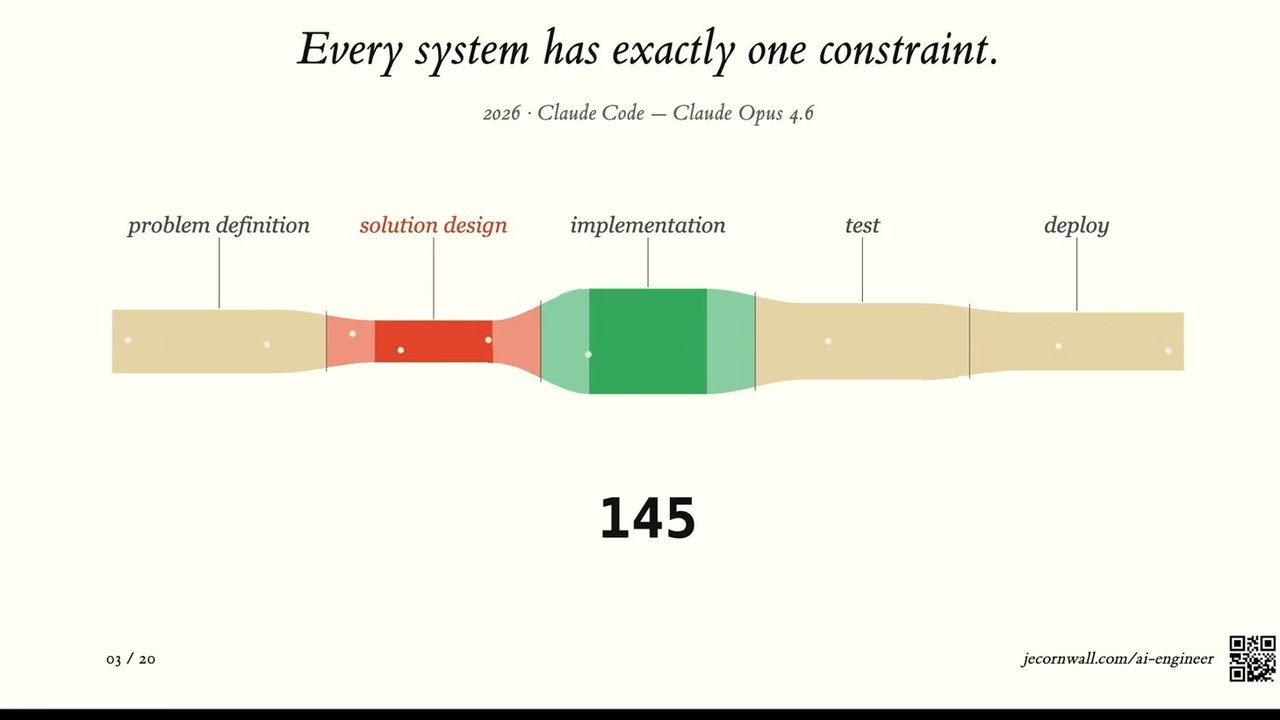
For fifty years, traditional product thinking assumed that building software creates assets. That assumption held because building software was genuinely difficult. It’s now failing – not everywhere, not all at once, but steadily and accelerating – because AI is converting one class of software after another from asset to inventory. If you’re still building below the line, you’re not creating assets. You’re accumulating liabilities.
If some software is still an asset and some has become inventory, the natural question is: which is which? Model capabilities define the answer – what the current generation of AI can trivially replicate versus what it can’t.
I found myself using the tag “economics” in the last few weeks for these articles that I collect more than in the entire several years prior to this. In fact today I possibly added that tag more than I did for the first two years of collecting all these articles.
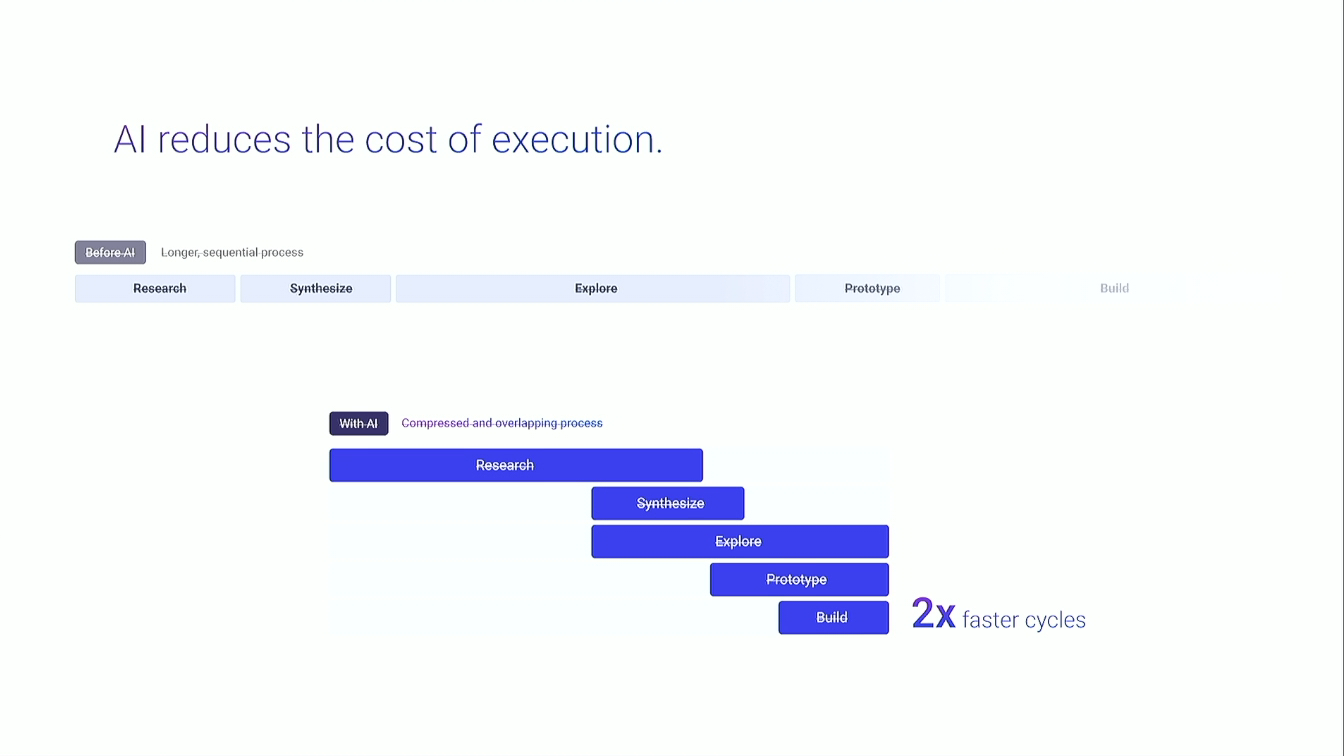
For decades we had a relatively steady state of software engineering. Roughly the same number of people were required to produce any given piece of software, roughly the same amount of time, certainly within a factor of two or three. And so the economics of software remained static for a very long period of time. The introduction of IDEs, or systems like Git may have increased productivity a little, but certainly only by a relatively small percent overall.
It’s clear that agentic coding systems has completely broken the traditional economics of software production. As Geoff Huntley observed recently, the per hour cost of software development now is roughly the same as for someone who works in fast food.
So when the underlying cost structures change, the economics of what we produce changes as well. And this is a very clear-eyed and succinct attempt to understand what has been happening in financial markets actually for at least a couple of years, but only recently has been widely recognized.
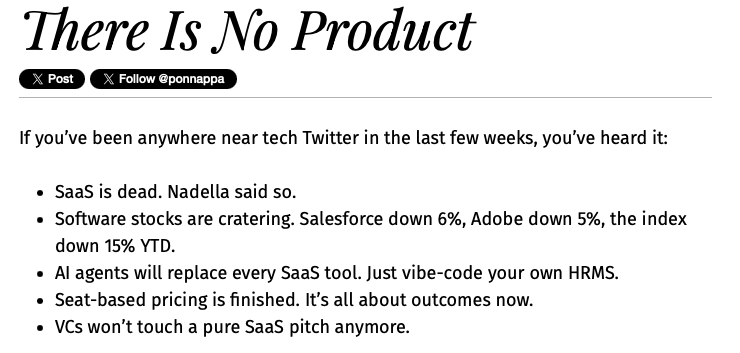
That the valuation of software only companies more or less regardless of where that software is used from legal to creative, Have plummeted. Perhaps it’s a short-term market overreaction, but this isn’t something that’s been happening for a matter of weeks. It has been happening for years.
Are you producing assets or inventory? And does the concept of a software asset even make sense anymore?