The Context Development Lifecycle: Optimizing Context for AI Coding Agents
February 23, 2026
Why the next software development revolution isn’t about code, it’s about context.
We’ve spent decades perfecting how humans write code. We’ve built entire methodologies (waterfall, agile, DevOps, platform engineering) around the assumption that the bottleneck is getting working software from a developer’s head into production. But that assumption just broke.
Coding agents are writing code now. Not just autocompleting lines, but writing features, fixing bugs, scaffolding entire services. The bottleneck has shifted. It’s no longer about how fast we can write and ship code. It’s about how well we can describe what the code should do, why it should do it, and how it should behave in the messy reality of our systems.
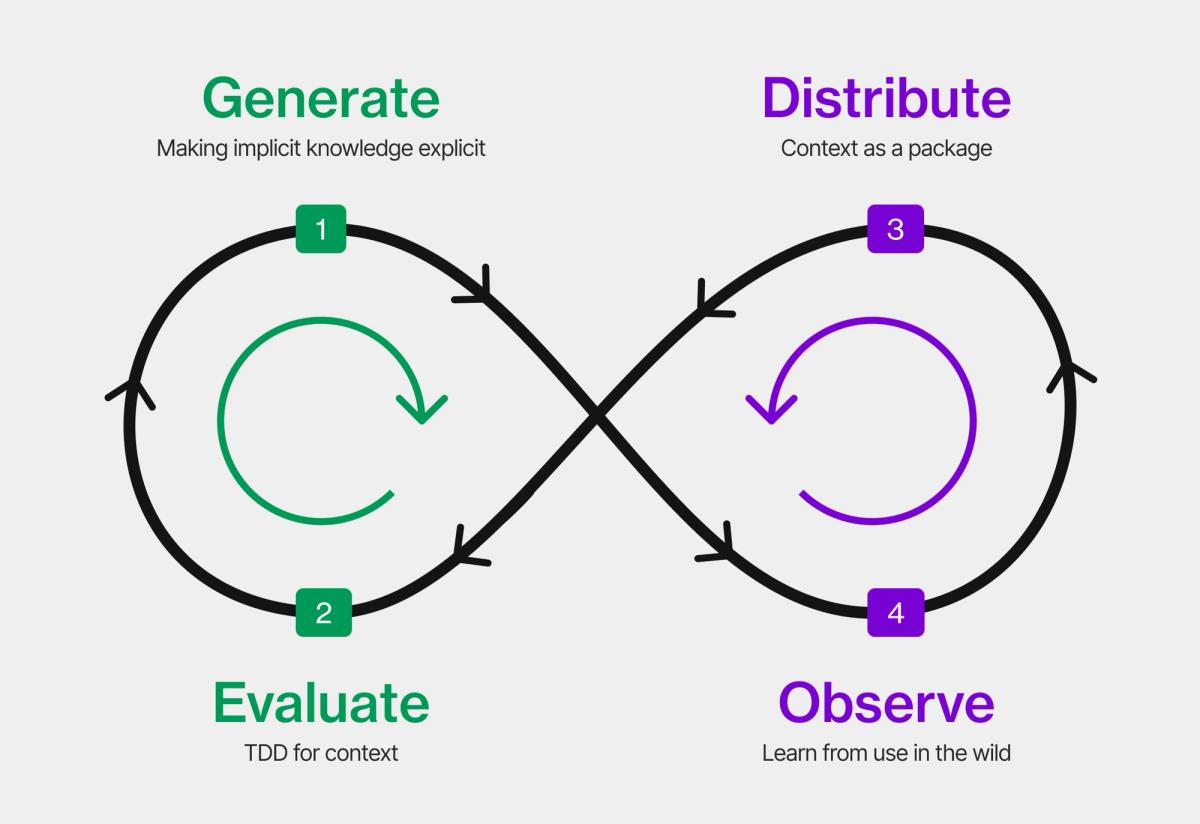
This means developers have inherited a new responsibility: translating implicit organisational knowledge into something structured enough for another entity to act on. Making the implicit explicit, at the right level of detail, for an audience that takes everything literally. And if context is the new bottleneck, then we need a development lifecycle built around it. I think what’s emerging is a Context Development Lifecycle (CDLC), and it will reshape how we think about software development as profoundly as DevOps reshaped how we think about delivery and operations.
The question of whether or not coding agents can now write sophisticated production-ready code is over. The question is not whether it can, but how we now go about developing software as professional software engineers.
Here, Patrick Debois, the father of DevOps and long-time advocate of AI-assisted software development, considers what our role is becoming in this new era.