Is Harness Engineering real?
March 6, 2026
A common debate in my finance days was about the value of the human vs the value of the seat: if a trader made $3m in profits, how much of it was because of her skills, and how much was because of the position/institution/brand she is in, and any generally competent human could have made the same results?
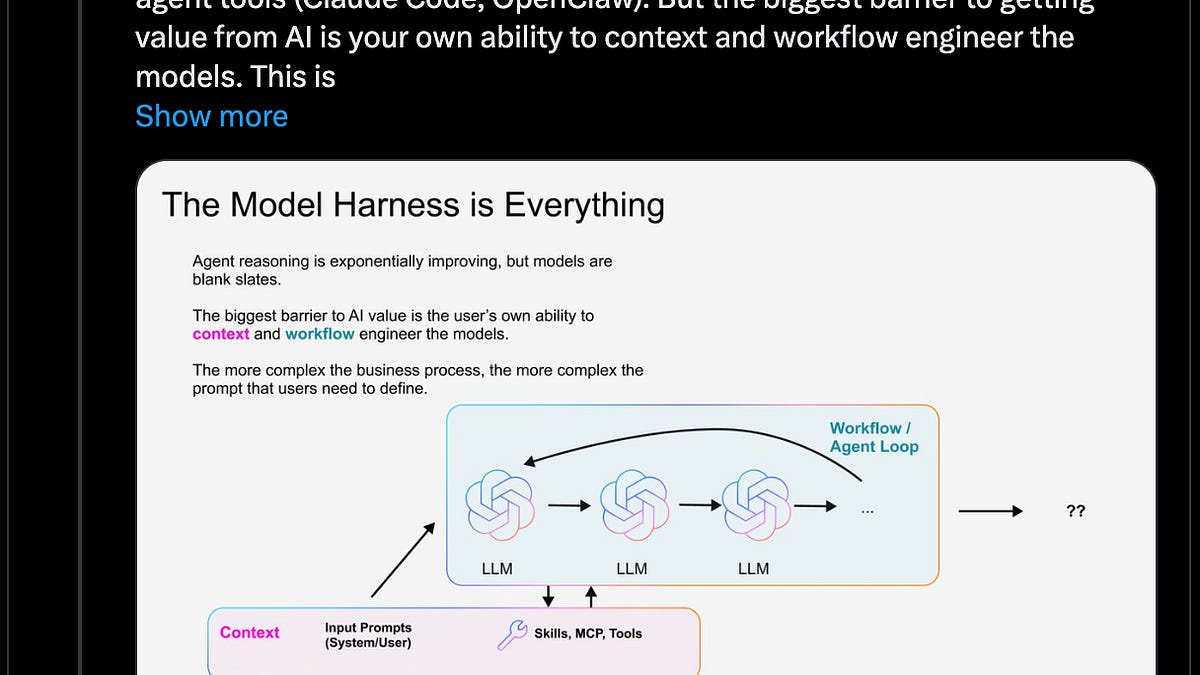
The same debate is currently raging in “Harness Engineering”, the systems subset of Agent Engineering, and the main job of Agent Labs. The central tension is between Big Model and Big Harness. [An AI framework founder you all know] once confided in me at an OpenAI event: “I’m not even sure these guys want me to exist.”
If you work with Anthropic’s models or OpenAI’s or Google’s or other models, particularly as a software engineer, you’re almost certainly doing it with an environment like Claude Code or OpenAI’s Codex. And the release of Claude Cowork caused quite a stir a few weeks ago.
These harnesses or environments that enable us to work more effectively with models are considered by some to be the secret source in the explosion and capability of these kinds of tools. in the last few months.
But do they matter that much? Is the work largely being done in the models, or is there something special that can be added by these kinds of harnesses? The folks over at Latent Space reflect on this today.