Components of A Coding Agent – by Sebastian Raschka, PhD
April 7, 2026
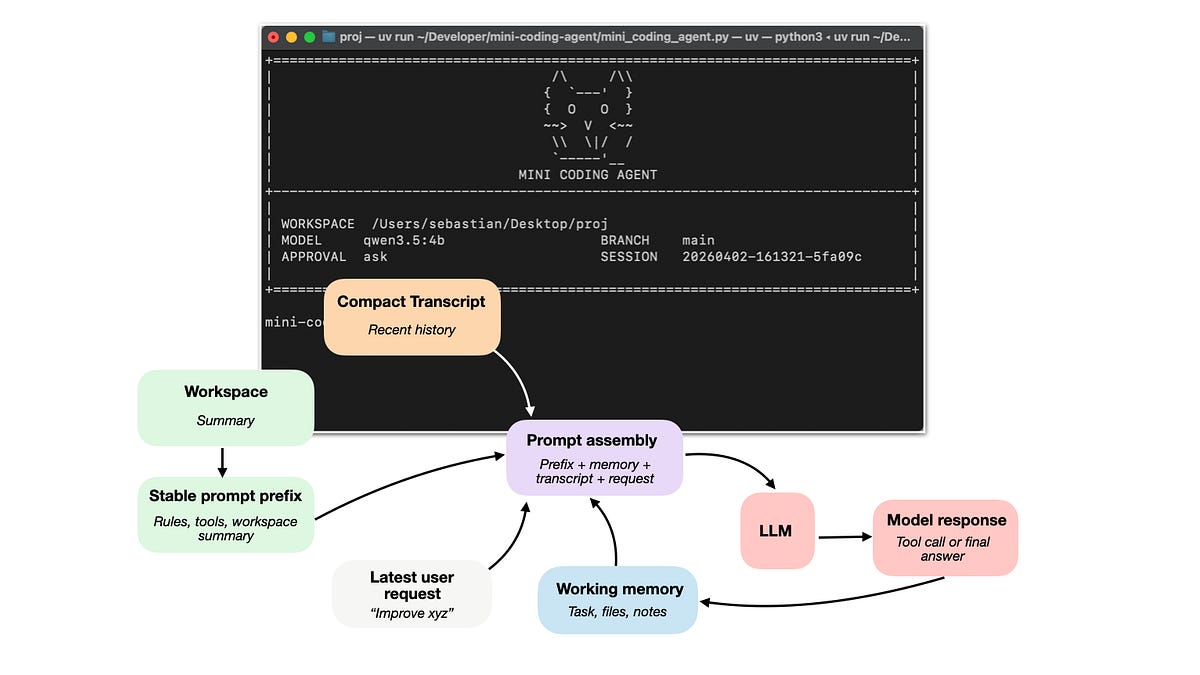
In this article, I want to cover the overall design of coding agents and agent harnesses: what they are, how they work, and how the different pieces fit together in practice. Readers of my Build a Large Language Model (From Scratch) and Build a Large Reasoning Model (From Scratch) books often ask about agents, so I thought it would be useful to write a reference I can point to.
More generally, agents have become an important topic because much of the recent progress in practical LLM systems is not just about better models, but about how we use them. In many real-world applications, the surrounding system, such as tool use, context management, and memory, plays as much of a role as the model itself. This also helps explain why systems like Claude Code or Codex can feel significantly more capable than the same models used in a plain chat interface.
Sebastian Raschka brought us the books Build a Large Language Model (From Scratch) and Build a Large Reasoning Model (From Scratch) And here it turns his attention to examining how coding agents or coding harnesses work.