


The city as interface: What neurodivergent experiences can teach us about designing for every mind
Fatemeh Aminpour Researcher & Sessional Academic UNSW Sydney
What does a cluttered footpath have in common with a confusing navigation menu? Drawing on in-depth walking interviews with neurodivergent adults navigating Sydney's public spaces, this keynote reframes neuroinclusion as a design systems challenge. The talk explores how predictability, sensory clarity, legibility and opportunities for recovery shape people's ability to participate in everyday life, and what these experiences can teach us about designing more inclusive environments, interfaces and systems for every mind.
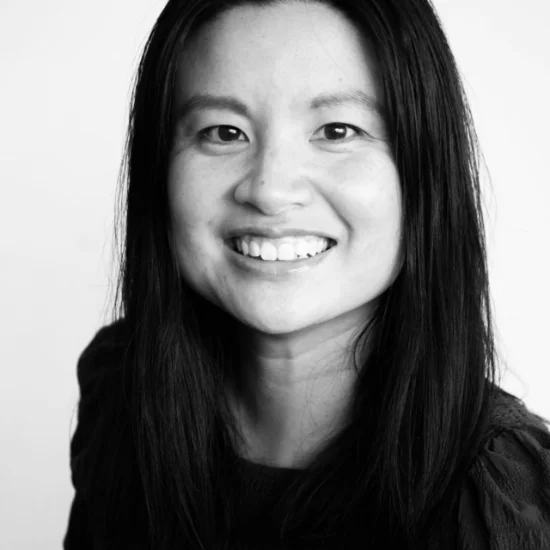
You're Not Designing the Experience. You're Inheriting It
Mina Giang Co-founder, Head of Product & Experiences Oexa
Most of what shapes a healthcare experience was decided before you were in the room – by legislation, conformance requirements, and the data models beneath the interface. If you don't understand what sits there, you're not practising healthcare UX. *You're decorating risk.* The Active Script List was designed to give Australians control over their own prescription data – portable, accessible, theirs. But not every risk was visible in the conformance requirements. And when the experience falls short, nobody blames the infrastructure. **They blame the product.** In healthcare, a form is never just a form. It is a decision-making tool whose data flows into clinical decisions, funding models. dispensing systems, and records stored for years. The wrong simplification doesn't just lose data – *it loses clinical meaning.* The most important UX decisions in healthcare are made upstream, before design even begins. The designers who make the biggest impact are the ones willing to go there – and **ask to be in the room where those decisions are made.**

Building your inclusive design toolkit
Maria Sereno Design leader
Designing inclusively is more crucial now than ever before. Given the current state of tech -- especially rapid advances in artificial intelligence and ever-higher stakes in data, privacy, and identity handling -- UX practitioners are poised to make impact on a massive scale. Thus, we hold a great deal of responsibility for ensuring we account for the full breadth of human experience.
It can be daunting to think of expanding our scope from accessibility, which primarily accounts for disability, to consider other aspects of human diversity. With so many aspects to consider -- gender, sexuality, race, cultural heritage, language, geography, socioeconomics, literacy, trauma, and so much more -- where do we even begin?
In this talk, I'll cover foundations and tools to embed inclusive design into your work. I'll discuss key concepts like intersectionality and lived experience, share what approaches have worked with me, and get real about working within limited constraints.
The aim is not to get you thinking about taking an inclusive design course "sometime next year" or to give you a few books to add to your to-be-read list. The aim is to get you started on your toolkit now: with concrete actions and tools you can use in your current project, learning and iterating as you develop your own inclusive design practice.