The rise of industrial software
January 9, 2026
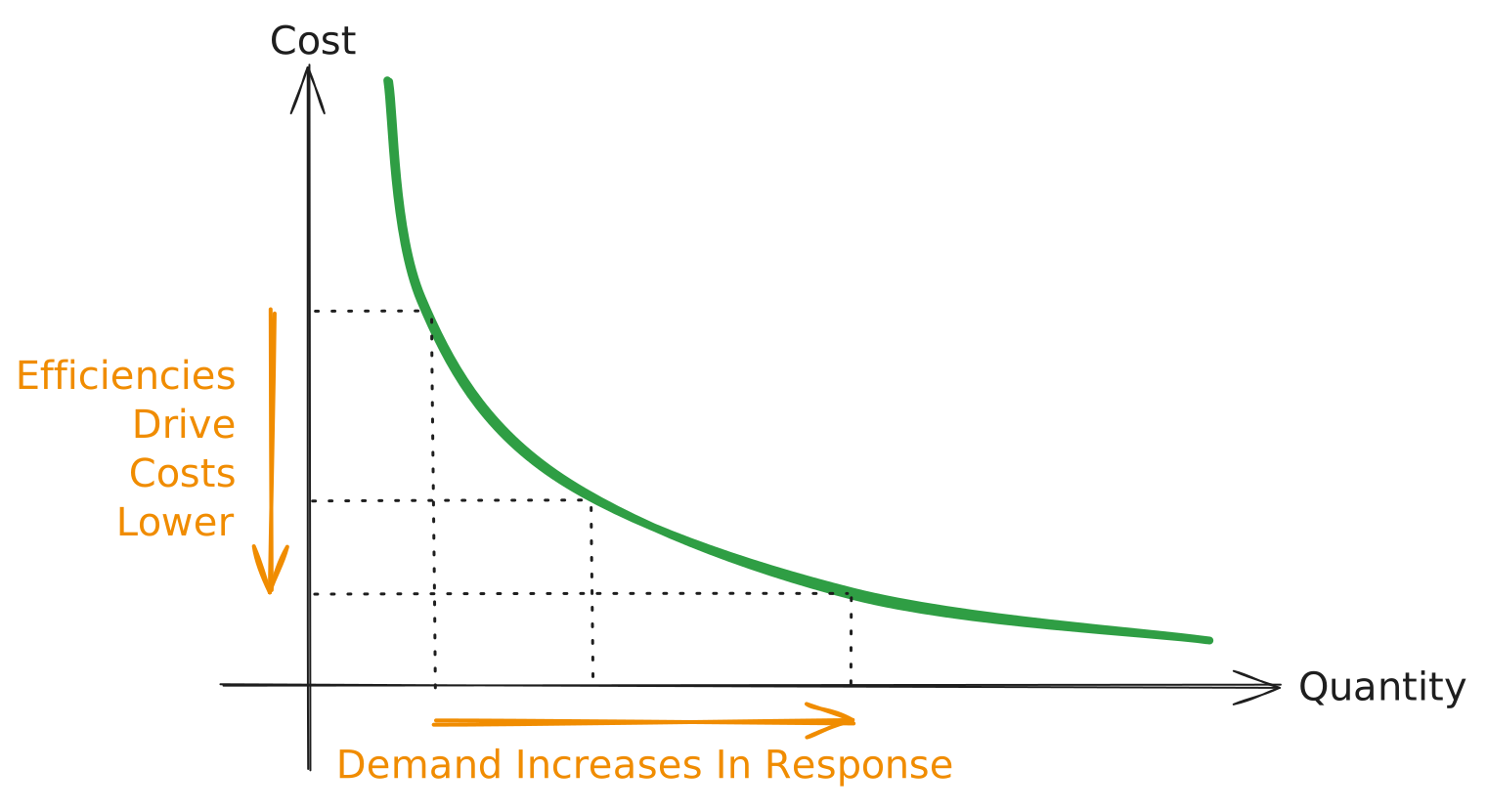
Traditionally, software has been expensive to produce, with expense driven largely by the labour costs of a highly skilled and specialised workforce. This workforce has also constituted a bottleneck for the possible scale of production, making software a valuable commodity to produce effectively.
Industrialisation of production, in any field, seeks to address both of these limitations at once, by using automation of processes to reduce the reliance on human labour, both lowering costs and also allowing greater scale and elasticity of production. Such changes relegate the human role to oversight, quality control, and optimisation of the industrial process.
As the cost of producing something decreases, what happens to that product or commodity? If it’s something produced by human experts, whether that be cloth in the early 19th century or software in the early 21st century, what are the implications for the producers, the labour that produces that product, that commodity?
It’s a particularly compelling question if you are a software engineer, as many of our readers are.
Do we end up like the weavers of the Industrial Revolution who went from highly paid, skilled artisans to essentially non-existence in a decade or so? Or will the industrialization of the production of software bring real benefits for software engineers? What happens to the profession? What happens to our practises?
All of these are very much open to debate. It’s not clear whether this question will be closed any time soon, but I think it’s one we should all very carefully consider.