
Agentic SAST: Building an AI Pipeline for Rule Synthesis and Root-Cause Vulnerability Analysis
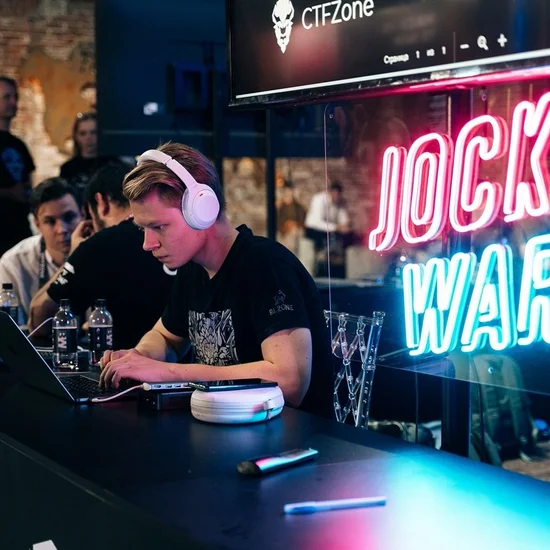
Danila Sashchenko Security Engineer, previously Offensive Security Engineer TikTok
Project Electrification is an agentic, AI-powered application security pipeline designed to eliminate vulnerabilities at their source. Autonomous agents scan large codebases, generate and execute custom SAST rules, and produce unified risk analytics through the ELK stack. Security engineers then convert these insights into SDK-level protections, ensuring the same classes of issues can’t reappear across the organization’s products. Instead of chasing findings, Electrification removes the root causes—at scale.

AI After an Apocalypse
Simon Knox Computer Programmer apartments.com.au
Cloud outages used to mean your site went down, maybe you couldn't deploy. Just small unimportant stuff. Now an outage means you can't even write any code. And unreliable connections cause the same problems as ever - random cutoffs partway through, lost or incomplete work. The broken assumption remains that we are online all the time, and not sometimes sitting far away coding in a forest.
This session is about making the big models more fault-tolerant, and having a better time with the little ones. How to ensure LLMs don't burn a hole in your pocket, literally or otherwise. Probably impractical in the event of a real apocalypse, but helpful all the same.

Stop vibing your agents to production: applying ML discipline to agent development
Justin Barias Lead AI Engineer Australian Government
When I joined my current team, it was a familiar pattern: 6-8 experiments over a year, each taking 10-12 weeks, 60-70% of the time burned on infrastructure, one thing in production held together with duct tape, and our entire agent lifecycle dependent on what our cloud provider made available in our region. The fix wasn't a new framework. It was an old playbook: ML engineering. Version artifacts like model checkpoints, define evaluators like loss functions, search hyperparameters systematically, and decouple your tooling from your cloud provider. The first experiment under this approach finished in 4 weeks, and other teams across the organisation started running their own experiments without us. In this talk, I'll walk through the methodology, the key trade-offs, and demo HoloDeck, the open-source distillation of everything I learned.

Fully Automated Luxury Gay Space Engineering
Daniel Rodgers-Pryor Head of Stile AI Labs Stile Education
Autocomplete is *so* 2023. Chatbots were already tedious by 2024. Running agents locally was cool... back in early 2025.
The future of engineering doesn't have a human in the coding loop at all.
When it's within the AI's — rapidly growing — capabilities, *you* are the bottleneck in shipping code. How many PRs can you review? How many Claude terminals can you monitor at once before you lose your mind?
I'll talk through our experiences building a fully automated maintenance loop at Stile Education, where we're scaling from 600k students in Australia to 6M across the US over the next 24 months. Issues from production are monitored, aggregated, ticketed, fixed, (increasingly) reviewed, and deployed without human involvement. Explain our conceptual models of how to build these systems, and highlight our hard won mistakes and lessons along the way.
Then, I'll fumble awkwardly towards the broader implications for our industry: What does it look like to step back and engineer a system that produces software, rather than being a cog in that machine directly? How do we all begin to work *on* the business rather than working in it?
12TB of AI coding agent logs - what works, what fails
Dave Slutzkin CEO Cadence
Three things matter for AI coding effectiveness: the tool, the codebase, the developer. When we look at the nuance of sessions, we can see patterns across all these - what works, what doesn't, what you can control, what you can't. I can't fix everything for you but I'll give you a few useful steps forward.

Slop is a standards problem
David Lewis Engineering Manager Nine Entertainment
Your feed is full of warnings about an incoming tidal wave of AI slop. Unmaintainable code. Crushing tech debt. Anyone with a prompt and ten minutes shipping production code. The fear is real, but it misses what's actually going wrong.
Slop happens when the standard isn't stated. AI drives for done. Without a bar to clear, done is all you get. The way through is configuration: writing the standard down, once, in a file the machine and the human can both point at.
David makes the case that the same technology we fear will flood us with slop is the technology that can elevate the bar, if you set one. You'll leave with a simple framework to get started, a model for turning AI into a quality multiplier, and honest caveats about where this breaks down.