Design Thinking for AI: The 5-Stage Framework Every Builder Needs
November 25, 2025
AI has changed the texture of design. We’re not designing for people alone anymore, we’re designing with/for intelligence. That changes everything. I’m obviously not the only person thinking about how Design frameworks evolve.
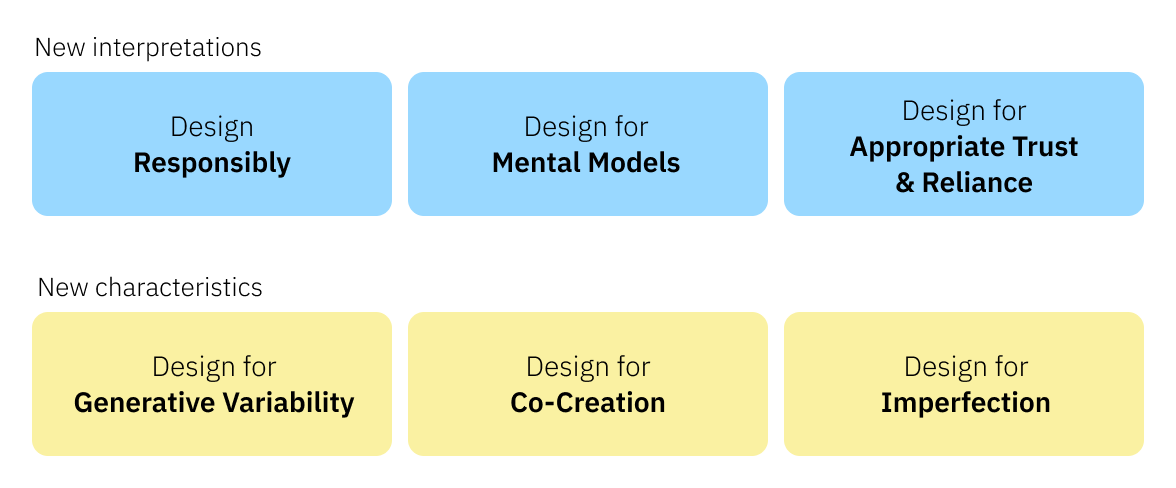
Recent research has started reframing what this looks like. Adam Fard calls it “AI-First Design Thinking.” Weisz, He, and Muller (2024) propose six design principles for generative AI that move beyond the empathy-prototype-test loop:
Source: Design Thinking for AI: The 5-Stage Framework Every Builder Needs
I don’t think it’s entirely coincidental that all of today’s links are about intersection AI and design. Something I’ve mentioned recently, and we’ve been covering a lot, the software engineers have been thinking about in the context of our work, but that’s not to say designers aren’t also thinking deeply about this as well.